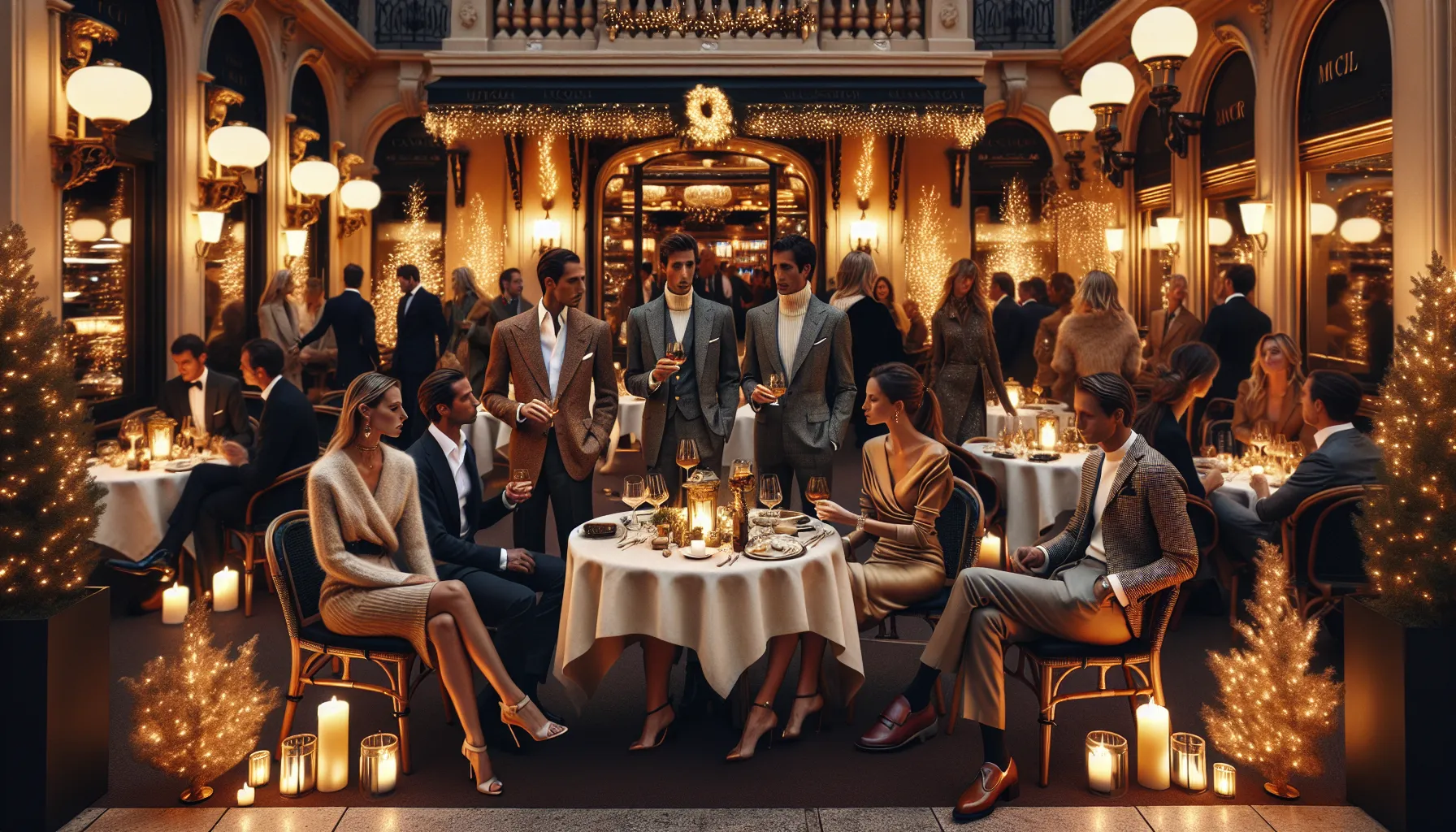
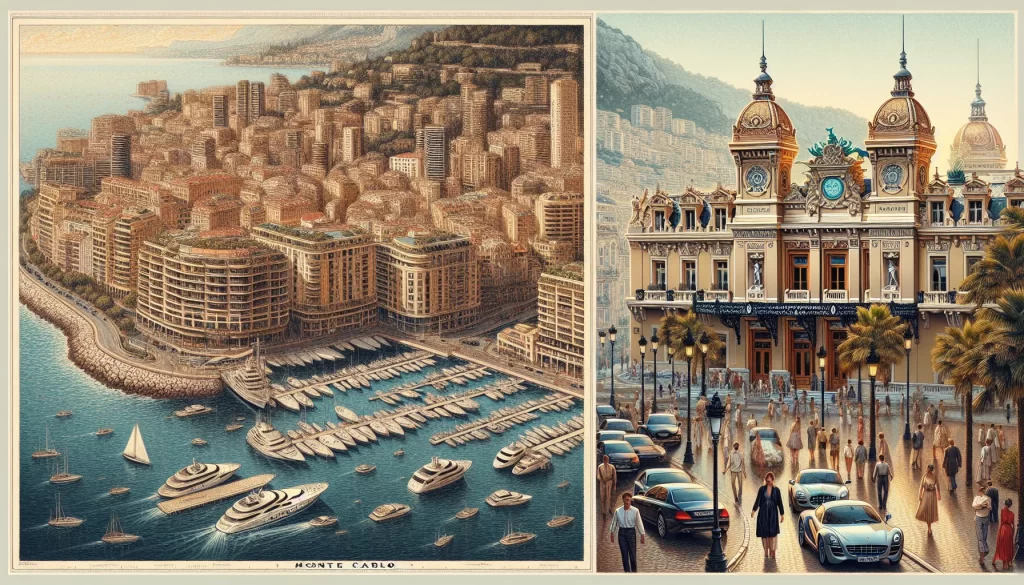
Monaco’s winter fashion reflects the same understated sophistication that defines life on the Riviera. Rather than dramatic seasonal changes or trend-driven wardrobes, the colder months simply bring a subtle shift toward elegant outerwear and refined layering.
At the center of this seasonal style is the coat. During winter, a well-chosen coat becomes the foundation of many outfits seen throughout the principality. Whether strolling along Port Hercule in the morning light or enjoying an afternoon coffee near the Monte Carlo Casino, the coat often defines the entire look. Several elements consistently shape Monaco’s winter aesthetic.
Elegant coats as the centerpiece of the outfit. Tailored wool coats, belted silhouettes, and refined textures create a polished appearance while remaining perfectly suited to the Riviera’s mild winter climate.
A lighter, Mediterranean color palette. Ivory, cream, camel, and soft neutrals reflect the coastal light beautifully and contribute to the distinctive elegance often seen in Monaco’s streets.
Timeless tailoring over seasonal trends. Rather than constantly changing wardrobes, many residents favor well-cut pieces that remain stylish year after year.
Practical pieces that still feel refined. Lightweight puffers and casual winter coats appear frequently during morning walks and daily errands, but they still maintain clean lines and balanced proportions.
Together, these elements create a style that feels both effortless and quietly sophisticated.
Monaco winter fashion does not attempt to compete with the bold statements seen in larger fashion capitals. Instead, it reflects something more enduring — a culture that values elegance, quality, and a sense of personal style that evolves gracefully over time.
Winter Style on the Riviera
Winter arrives differently on the Côte d’Azur than it does across much of Europe.
While northern cities prepare for months of grey skies and heavy layers, the Riviera enters a quieter, more luminous season. The mornings turn crisp, the sunlight softens, and the Mediterranean reflects a cooler palette of blues.
So, what to wear in Monte Carlo in winter? The answer lies in a style that adapts to this climate in its own elegant way. Here, the coat becomes the defining piece of the season, a statement of refined simplicity rather than a necessity against harsh cold.
You begin to notice it everywhere: along Port Hercule, on café terraces in Monte Carlo, and along the boulevards where residents move with the quiet sophistication the principality is known for.
This approach to winter fashion prioritizes timeless tailoring, elegant colors, and quality fabrics over fleeting trends. It feels perfectly aligned with the Riviera itself — refined, relaxed, and effortlessly polished. Even when the temperature drops just enough to justify a proper winter coat, Monaco never loses its sense of understated elegance.
A Personal Note About What to Wear in Monte Carlo in Winter
Living on the Côte d’Azur for many years has taught me that style here often evolves quietly.
When people imagine the Riviera, they usually think of summer — flowing dresses, yachts in the harbor, beach clubs, and warm Mediterranean evenings. But winter brings a different kind of beauty to Monaco, one that feels more intimate and reflective.
During the cooler months, the streets become calmer, the light over the sea softens, and daily walks through Monaco reveal small details that might go unnoticed during the busy summer season.
It was during one of my quiet winter walks along Port Hercule that I began to notice something interesting about Riviera fashion. The coats people wore were rarely bulky or overly trendy. Instead, they felt timeless — tailored silhouettes, soft neutral colors, and pieces that seemed designed to last for many seasons.
I realized that winter style in Monaco is less about following fashion and more about expressing a sense of quiet confidence. People choose coats that feel elegant but practical, refined but effortless.
That philosophy resonated with me deeply.
It reflects something I’ve come to appreciate about life on the Riviera: simplicity often carries the most elegance.
The Coat as the Centerpiece of Monte Carlo’s Winter Style
If summer on the Côte d’Azur belongs to linen dresses, sunglasses, and light resort wear, winter quietly shifts the spotlight to one essential piece: the coat.
In Monaco, where winters remain mild but mornings and evenings carry a noticeable chill, the coat becomes the defining element of an outfit. Rather than layering multiple bulky garments, people often rely on one beautifully chosen coat that brings both warmth and elegance.
Walking through Monte Carlo during the cooler months, you quickly begin to notice how coats shape the visual rhythm of the streets. Along Port Hercule, elegant silhouettes move past the marina while the sea reflects the pale winter sun. In the Carré d’Or shopping district, coats glide between boutiques and cafés, often paired with simple trousers, boots, or understated accessories.
What stands out is the preference for structure and balance. Coats here are rarely oversized or overly casual. Instead, they tend to follow classic lines that flatter the body and create a sense of refined proportion.
Belted coats are particularly common because they define the waist while maintaining a graceful silhouette. Midi-length coats are also popular, offering both warmth and elegance without feeling heavy. Details such as wide collars, subtle textures, and carefully placed buttons add visual interest while keeping the overall look timeless.
Another characteristic of Monaco winter style is restraint. The coat is often allowed to speak for itself. Rather than competing with bold layers underneath, it becomes the focal point of the outfit.
This simplicity is part of what gives Riviera winter fashion its distinctive charm. The elegance is never forced. Instead, it emerges naturally from well-chosen pieces that reflect quality, balance, and an appreciation for understated style.
On the Côte d’Azur, winter fashion may be quieter than the vibrant summer wardrobes seen along the beaches and terraces, but it carries a sophistication of its own. And in Monaco, that sophistication often begins with a beautifully tailored coat.
The Riviera Color Palette
One of the most noticeable differences between winter fashion on the Côte d’Azur and winter style in many northern cities is the color palette.
In colder regions, winter wardrobes often become dominated by dark tones — deep blacks, heavy greys, and muted shades that reflect the darker skies and colder atmosphere of the season. While those colors certainly appear in Monaco as well, the Riviera tends to approach winter fashion with a lighter touch. The Mediterranean light plays an important role in this.
Even during the cooler months, Monaco receives a remarkable amount of sunshine. The sea reflects the light across the harbor, the pastel buildings along the coastline glow softly in the afternoon, and the entire landscape feels brighter than what many people associate with winter.
Because of this natural luminosity, lighter colors often look particularly striking during the Riviera winter.
Ivory, cream, soft beige, and camel coats appear frequently along the promenades and terraces of Monaco. These tones feel harmonious with the environment. They reflect the winter sunlight, soften the overall look of an outfit, and create a sense of quiet elegance that feels perfectly suited to the Mediterranean setting.
Black coats remain a classic choice, especially for evening outings or more formal occasions. They provide contrast and timeless sophistication, particularly when paired with tailored silhouettes or elegant accessories.
But many people on the Riviera choose to balance darker tones with lighter neutrals. The result is a winter wardrobe that feels refined rather than heavy. This subtle shift in color is one of the small details that gives Monaco winter fashion its distinctive identity. The style reflects not only personal taste but also the environment itself — the sea, the light, and the relaxed elegance that defines life along the Côte d’Azur.
Tailoring Over Trends
One of the most striking aspects of winter style in Monaco is how little it relies on fast-moving fashion trends. While many fashion capitals around the world chase the latest seasonal silhouettes, Riviera style tends to move at a slower, more deliberate pace. The emphasis is less on what is new and more on what remains elegant year after year.
This is where tailoring plays such an important role.
A well-cut coat instantly changes the way an outfit looks and feels. Structured shoulders create balance. Clean vertical lines elongate the body. A belt or subtle waist shaping brings definition and elegance without appearing overly styled.
These details may seem simple, but together they create a silhouette that feels timeless.
This emphasis on tailoring extends to the choice of individual pieces. Rather than chasing fleeting trends, the focus is on craftsmanship and longevity. A beautifully tailored coat, for instance, is seen as an investment — a piece designed to last for many seasons, adapting effortlessly to different outfits and occasions. This commitment to quality over quantity is a hallmark of Riviera style.
Another characteristic of Riviera tailoring is restraint. The cuts are rarely exaggerated, and the proportions tend to remain balanced and refined. Rather than oversized shapes or dramatic seasonal experimentation, the focus stays on classic lines that complement the wearer naturally.
This approach reflects a broader cultural attitude toward style in Monaco.
Fashion here is not about attracting attention through trends alone. Instead, it is about cultivating a sense of personal elegance that evolves slowly over time. A beautifully tailored coat becomes something that can be worn for many seasons, adapting effortlessly to different outfits and occasions.
In this way, Monaco winter fashion often feels less like a seasonal statement and more like a continuation of a long tradition of understated sophistication.
Practical Luxury: Puffers and Cold Morning Walks
While tailored wool coats may define the more elegant side of Monaco’s winter wardrobe, everyday life on the Riviera also calls for something a little more practical.
Winter mornings along the Mediterranean can be surprisingly crisp. The sea breeze moves through the harbor, and shaded streets can feel cooler than the temperature might suggest. On those days, especially in the early hours, lighter puffer coats begin to appear more frequently along the promenades.
Unlike the heavy, oversized parkas often seen in colder northern cities, Riviera puffers tend to maintain a sleek and polished look. They are designed to provide warmth without sacrificing silhouette. Many feature subtle waist shaping, longer cuts, or elegant details that help them feel refined rather than purely functional. These coats are particularly common during morning routines — a walk along the harbor, a stop at a neighborhood café, or a stroll through the quieter streets before the day fully begins.
You might see someone walking along Port Hercule wrapped in a long puffer coat while the sunlight begins to reflect across the water. Others move between local bakeries, grocery shops, and cafés, balancing practicality with the understated elegance that defines Monaco style.
Even in these casual moments, there is a certain attention to detail.
Footwear remains polished, accessories are minimal but carefully chosen, and coats still follow clean, flattering lines. The result is a kind of practical luxury — clothing that serves everyday needs while still reflecting the refined aesthetic of the Riviera.
This balance between comfort and elegance is one of the reasons Monaco winter style feels so effortless. Even the more functional pieces maintain a sense of quiet sophistication that fits naturally into the rhythm of life along the Côte d’Azur.
Where Monaco Winter Style Comes to Life
Part of what makes winter fashion in Monaco so distinctive is the setting itself. Clothing here rarely feels isolated from its surroundings. Instead, it becomes part of the landscape — blending naturally with the architecture, the sea, and the daily rhythm of life in the principality.
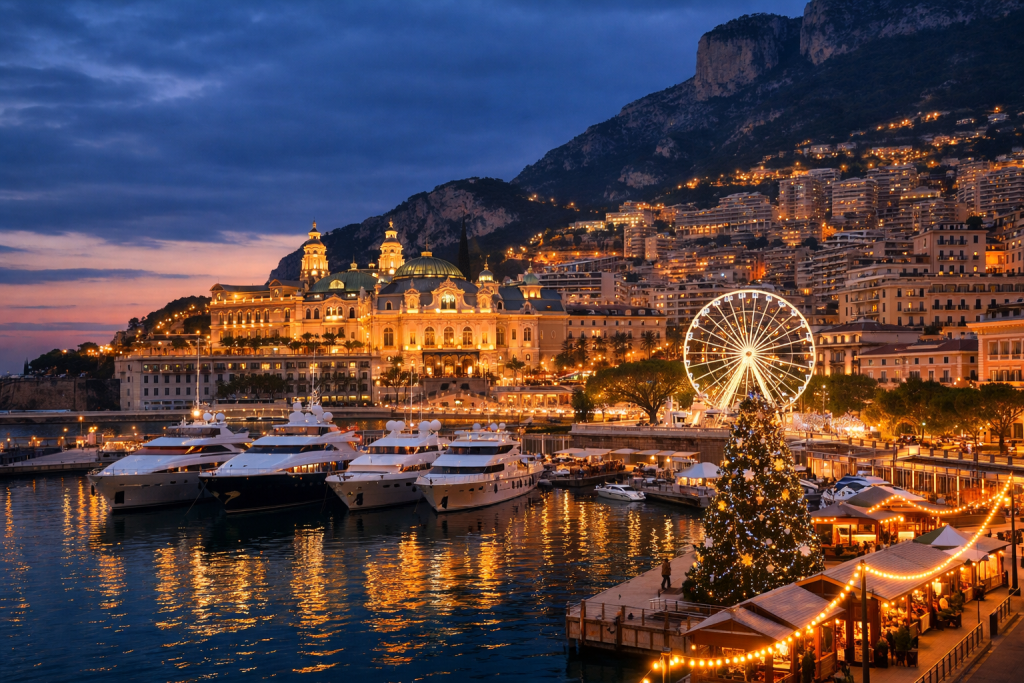
A winter morning along Port Hercule offers one of the clearest glimpses of this atmosphere. As the sun rises over the harbor, the light reflects across the water and illuminates the rows of yachts anchored along the quay. People begin their day with quiet walks along the waterfront, often wrapped in elegant coats that protect them from the cool sea breeze.
Not far away, the streets around Monte Carlo reveal another side of Monaco’s winter style. Here the pace becomes slightly more animated. Visitors and residents move between cafés, boutiques, and hotel entrances, creating a steady flow of polished silhouettes. Coats are draped casually over shoulders or buttoned neatly as people pause for coffee or conversation on the terraces.
The nearby Carré d’Or shopping district adds yet another layer to the scene. This small but iconic neighborhood has long been associated with Monaco’s refined lifestyle. During the cooler months, elegant coats become especially noticeable as shoppers move between the luxury boutiques and quiet streets lined with palm trees. What makes these moments particularly interesting is that nothing feels staged. The style emerges naturally from daily routines — a morning walk, an afternoon coffee, an evening dinner overlooking the sea.
In Monaco, fashion rarely demands attention. Instead, it simply becomes part of the atmosphere, reflecting the same balance of elegance and ease that defines life along the Riviera.
Monaco Winter Fashion Insider Tips
After years of observing daily life in Monaco and the surrounding Riviera towns, a few style patterns begin to appear.
These small details often define the distinctive elegance that visitors notice when they spend time here.
Invest in one beautiful coat rather than many average ones. Many residents prefer owning a few well-chosen pieces instead of constantly updating their wardrobes with seasonal trends.
Neutral colors dominate the Riviera wardrobe. Ivory, camel, beige, navy, and black are the colors that appear again and again throughout Monaco.
Structure matters more than decoration. Tailored lines, balanced proportions, and subtle details often create a more sophisticated look than bold fashion statements.
Simplicity creates elegance. Often the most refined outfits consist of just a few elements: a beautiful coat, classic footwear, and minimal accessories.
These observations may seem subtle, but together they form the foundation of Riviera style.
Must-Pack Winter Coats for a Stylish Trip to Monaco
If you’re planning a trip to Monaco, I also wrote a practical guide on what to pack and wear in Monaco in winter — complete with capsule wardrobe ideas and outfit combinations.
During the cooler months, I often reach for a few classic coat styles that feel perfectly suited to Monaco’s winter climate. These are the pieces that have become staples in my own wardrobe, and I see them worn again and again throughout the principality.
The Tailored Wool Coat — This is perhaps the most versatile piece. A well-fitted wool coat in ivory, camel, or navy works beautifully for everything from morning walks along Port Hercule to afternoon coffee meetings in Monte Carlo. The structure and weight of quality wool create an elegant silhouette that feels both polished and effortless.
The Belted Silhouette — A coat with a subtle belt or waist definition changes everything. It creates a flattering shape, adds visual interest without appearing overdone, and works beautifully across different body types and ages. This style is particularly popular among women throughout Monaco during the winter months.
The Lightweight Puffer — For practical morning walks and everyday errands, a sleek puffer coat maintains elegance while providing genuine warmth. Unlike bulky parkas, refined puffers feature clean lines, subtle colors, and tailored cuts that keep the overall look polished.
These three styles form the foundation of my winter wardrobe here on the Riviera. Each piece is designed to last for many seasons, adapting effortlessly to different occasions and outfits. I love pairing mine with black trousers and simple leather boots — the coat does the talking. Together, they embody the philosophy that defines Monaco winter style — quality over quantity, timelessness over trends, and elegance in simplicity.
Where Monaco Winter Style Comes to Life
If you enjoy exploring lifestyle and culture on the Côte d’Azur, there are many other aspects of Monaco worth discovering.
Some of the most enjoyable winter experiences include:
Walking along the harbor in the early morning light
Exploring the smaller streets of Monaco-Ville
Enjoying quiet coffee terraces during the cooler months
Discovering scenic viewpoints overlooking the Mediterranean
Visiting nearby Riviera towns during the off-season
Winter often reveals a more authentic side of the region, when daily life slows down and the beauty of the coastline becomes even more noticeable.
Further Riviera Inspiration & Recommended Reading
For readers interested in learning more about Riviera lifestyle, culture, and travel, the following resources can offer additional inspiration.
For readers who would like to explore the Riviera lifestyle more deeply, there are many wonderful resources that provide cultural context, travel inspiration, and insight into the unique elegance that defines Monaco and the Côte d’Azur.
Whether you are planning a visit, dreaming about the Mediterranean from afar, or simply interested in the timeless lifestyle of the French Riviera, the following books and resources offer beautiful perspectives on the region.
Books About Monaco and the French Riviera Winter Style
Several travel and lifestyle books capture the atmosphere of Monaco and the surrounding Riviera towns particularly well. Guides such as Lonely Planet Nice & Monaco or regional travel guides to the Provence–Alpes–Côte d’Azur provide helpful information about local neighborhoods, cultural landmarks, scenic walks, and historic sites.
These guides are especially useful for readers who want to explore the Riviera beyond the most famous attractions and discover smaller villages, coastal viewpoints, and lesser-known cultural treasures along the Mediterranean.
Riviera Lifestyle and Mediterranean Living
The Riviera has long inspired books about elegant coastal living, architecture, and interior design. Titles such as “Côte d’Azur Living: The Residences and Interiors of the French Riviera” beautifully showcase the villas, gardens, and interiors that define the region’s distinctive style.
Lifestyle books like “Little Book of Riviera Style” explore the relaxed sophistication that has shaped fashion, culture, and everyday life along the Côte d’Azur for decades. These works offer a deeper appreciation for the understated elegance that is reflected not only in architecture and interiors but also in the way people dress and live throughout the region.
Photography and Coffee-Table Books
Photography collections are another wonderful way to experience the Riviera. Coffee-table books dedicated to the French Riviera often capture the extraordinary Mediterranean light, pastel architecture, palm-lined promenades, and dramatic coastal landscapes that make this region so recognizable.
Historic photography collections also reveal how Monaco and the surrounding coastline evolved over time, documenting everything from Belle Époque villas to the early glamour that helped establish the Riviera as one of Europe’s most iconic destinations.
Travel Writing and Cultural Perspectives
Readers who enjoy literary travel writing may also appreciate classic works such as “A Little Tour in France” by Henry James, which offers thoughtful reflections on French towns, landscapes, and cultural traditions.
Although written in the nineteenth century, books like this continue to inspire modern travelers by capturing the enduring charm of France and the quiet beauty of its regions — qualities that are still very much present along the Côte d’Azur today.
Finding Inspiration for Future Riviera Visits
Many readers enjoy browsing travel and lifestyle books available through Amazon and major bookstores when planning trips to Monaco and the French Riviera. Travel guides, photography collections, and Riviera lifestyle books can provide valuable inspiration for discovering the region’s culture, architecture, and landscapes.
Whether you are preparing for your first visit to Monaco or simply enjoying the Riviera through books and photography, these resources offer a wonderful way to deepen your connection to this remarkable Mediterranean destination.
My Final Reflection About What to Wear in Monte Carlo in Winter
The elegance of Monaco is not only found in its grand hotels or famous harbor views. It often appears in the small details — the light over the sea, the calm rhythm of winter mornings, and the timeless style that seems to define life on the Riviera.
Winter may be the quieter season along the Côte d’Azur, but it reveals a side of Monaco that feels particularly authentic.
Sometimes all it takes is a beautiful coat, a walk along the Mediterranean, and a moment to appreciate the understated elegance that makes this place so unique.
Frequently Asked Questions About Winter Style in Monaco
What to wear in Monte Carlo in winter?
Winter fashion in Monaco tends to remain elegant and understated. Because the climate is relatively mild compared to much of Europe, heavy winter layers are rarely necessary. Instead, many people rely on well-tailored coats, light knitwear, and polished footwear that can transition easily from daytime walks to evening outings. Classic wool coats, belted silhouettes, and lightweight puffers are among the most common outerwear choices during the colder months.
Is winter cold in Monaco?
Monaco winters are generally mild. Daytime temperatures often range between 10°C and 16°C (50°F to 60°F), with cooler mornings and evenings. While the sea breeze can occasionally make the air feel brisk, the climate rarely requires the kind of heavy winter gear seen in northern Europe.
This mild weather allows residents and visitors to maintain a more elegant winter wardrobe, often centered around tailored coats rather than bulky parkas.
Are light-colored coats common on the Riviera?
Yes, lighter colors are surprisingly common during winter on the Côte d’Azur.
Ivory, cream, camel, and soft beige coats often appear along Monaco’s promenades and terraces. These tones complement the Mediterranean light and create a softer, more luminous winter look than darker winter palettes typically seen in colder climates.
Black coats remain a classic option as well, particularly for evening events or formal occasions.
Do people dress formally in Monaco during winter?
Monaco style tends to lean toward refined rather than overly formal. Many people prefer clothing that feels polished but still comfortable for everyday activities such as walking through town, meeting friends at cafés, or enjoying the waterfront.
Tailored coats, well-fitted trousers, and elegant accessories often create a look that feels sophisticated without appearing overly dressed.
What makes Riviera winter fashion unique?
The distinctive character of Riviera winter fashion comes from the combination of climate, lifestyle, and environment.
Because winters remain relatively mild, clothing choices can prioritize elegance as much as warmth. The Mediterranean light also influences color choices, encouraging softer neutrals and lighter tones.
Ultimately, Monaco winter style reflects the same quiet sophistication that defines life along the Côte d’Azur — timeless pieces, balanced silhouettes, and an effortless sense of refinement.
Join the Conversation about the Riviera Winter Fashion
One of the most enjoyable parts of writing about Monaco and the Côte d’Azur is hearing the experiences of others who love this region.
Have you visited Monaco during the winter months?
Perhaps you have discovered your own favorite walks along the harbor, quiet café terraces, or hidden viewpoints overlooking the Mediterranean. I would love to hear about your experiences.
Feel free to share your thoughts and observations in the comments below. Your stories often add new perspectives and inspiration for readers who are discovering the Riviera for the first time.
Visiting Monaco in winter might not sound obvious, but one of the season’s most charming surprises is the Monaco ice rink at Port Hercule.
Set right beside the harbor, this outdoor rink transforms the famous marina into a festive winter village, complete with twinkling lights, palm trees, and Mediterranean views.
I still remember the first time I saw the Monaco ice rink at Port Hercule in winter. The harbor, usually filled with sleek yachts glinting in the sunshine, had transformed into something straight out of a snow globe. Lights shimmered across the water, music drifted through the cool air, and right in the middle of it all was a real ice rink, glowing under the Mediterranean sky.
It smelled like roasted chestnuts and hot chocolate. Children were laughing, teenagers were trying to impress each other with slightly wobbly spins, and a few determined grandparents clung to the rail with the same focus they once used to steady their children’s first steps.
If you’ve ever wondered whether Monaco is actually fun in winter, or if it’s only a summer playground, I can tell you this: winter here has its own quiet magic. And the seasonal ice rink at Port Hercule sits right at the heart of it.
In this guide, I’ll walk you through what the Monaco ice rink is really like in winter, who it’s best for, when to go, what to expect on the ice, and how to turn your visit into a relaxed and memorable winter day in Monaco and it is updated for the winter season and current visitor experience at Port Hercule.
Key Takeaways
Monaco ice rink fun at Port Hercule in winter combines a full-size outdoor rink with harbor views, palm trees, and a cozy winter village atmosphere.
The seasonal ice rink typically runs from early December to late February, with quieter weekday afternoons and more festive, lively evenings under twinkling lights.
Skating works for all ages and skill levels, from nervous beginners clinging to the rail to confident skaters enjoying wide open stretches of ice.
Beyond skating, visitors can enjoy food stalls, small rides, gift chalets, and easy access to nearby highlights like Monaco’s Old Town, the Christmas market, and harborfront cafés.
To stay comfortable, dress in layers with ankle-covering socks and thin gloves, check session times and prices in advance, and use simple safety habits like starting slowly and giving faster skaters space.
Why Port Hercule Turns Into A Winter Wonderland
I’ve visited the Monaco ice rink at Port Hercule across several winter seasons and watched how the atmosphere shifts from calm weekday afternoons to lively festive evenings.
Port Hercule is Monaco’s working harbor, so for most of the year it’s all polished decks, bobbing boats, and the occasional superyacht that looks bigger than a small hotel. But in winter, usually from early December, the whole area softens.
The city sets up a winter village along the waterfront, wooden chalets, string lights, and seasonal decorations that make you forget you’re only a few steps from the sea. Right at the center of this scene is the ice rink.
I love the contrast: palm trees on one side, an ice rink on the other. It feels slightly impossible, like someone slipped a piece of the Alps down to the Riviera by mistake.
And that’s the charm. You get the best of both worlds:
The glow of a traditional winter fair
The mild Mediterranean climate (usually much kinder than the deep-freeze you get inland)
The view of the harbor and the Prince’s Palace up on the rock, watching over it all
As the sun sets early, the rink lights come on, casting a silver sheen over the ice. It’s not just about skating: it’s about that feeling of being wrapped in winter without actually freezing solid.
Afternoons are gentle and bright. You’ll see families with small children holding hands, hesitant first-timers clinging to the rail, and relaxed locals taking a few laps after work.
Evenings feel different. The lights are stronger, the music a bit livelier, and there’s a cozy bustle to the place. You might hear a Christmas song in December, then more pop music as the season goes on. It’s not wild, just pleasantly alive.
The layout
The rink itself is a full-size outdoor ice rink set right on the harbor. Around it, you’ll usually find:
Ticket booth and skate rental at one side
Benches and seating for putting on skates (or waiting, if you’re the “I’ll just watch, thanks” type)
Food stands nearby with hot chocolate, crêpes, and snacks
Toilets and first aid close enough that you don’t have to trek far in skates
There’s enough space for confident skaters to glide while beginners hug the edges. And if you’re anything like me, you’ll do both in the same visit.
Skating at the Monaco Ice Rink for Every Age and Skill Level
One of the reasons I keep going back is that the rink genuinely works for everyone. I’ve seen tiny toddlers barely out of pushchairs and seniors who look like they could teach a class in graceful gliding.
If you’re a total beginner
If you’ve never been on skates before, don’t worry, you won’t be alone. The edges of the rink are lined with people discovering that standing on ice is, in fact, a special skill.
My approach the first time? One hand on the rail, one hand on the friend I had foolishly claimed I didn’t need. I wobbled, laughed, and spent the first ten minutes convinced I might never let go.
The ice staff keep an eye on people and the atmosphere is kind, not competitive. You’ll pick it up faster than you think.
If you’re more experienced
If you’ve skated before, you’ll have room to stretch out. There are times (especially midweek or slightly off-peak hours) when you can enjoy wide, open stretches of ice and settle into a good rhythm.
I’ve watched a few local teens doing spins that looked suspiciously like they’d been copying Olympic routines. It adds a bit of theater for the rest of us.
For kids and older adults
Children generally adapt faster than adults, it’s almost embarrassing. They fall, they bounce, they’re off again.
For older adults, I always say: go at your own pace. There’s no rule that says you have to cross the middle of the rink. You can stay close to the side, skate for a few minutes, then step off for a warm drink and just enjoy the atmosphere. Even one cautious lap still counts as Monaco ice rink fun in my book.
Family-Friendly Activities Beyond Skating
The ice rink is the star, but it’s not the only show.
Depending on the year’s setup, you’ll often find a winter village alongside the rink with:
Craft or gift stalls with cute souvenirs or seasonal items
I like to plan an entire afternoon there. A bit of skating, a pause for something warm and chocolatey, then a slow stroll along the harbor to watch the lights reflecting on the water.
If you’re with grandchildren, it’s easy to break the time into small pieces: 20–30 minutes on the ice, then a snack, then another quick whirl. And if anyone in the group isn’t keen on skating, they still have plenty to do and see.
Some years there are themed events or special shows on or near the rink, check the current program when you’re planning your trip. I’ve stumbled into more than one cheerful surprise performance that way.
Planning Your Visit: Best Times, Tickets, And Budget Tips
I’ve learned a few tricks over my visits that make the whole experience smoother, and a bit kinder on the wallet.
Best times to go
Mornings or early afternoons on weekdays tend to be the quietest
After-school hours and weekends are busier, but also more lively
Evenings are lovely if you want the full twinkling-lights experience, especially close to Christmas and New Year
If you prefer fewer people on the ice, I drift toward earlier in the day. If you like atmosphere and don’t mind a bit of a crowd, early evening is perfect.
Tickets and rentals
Prices vary slightly each year, but you usually pay a small fee for a timed skating session, with skate rental included or available for a modest extra charge. Bring a bit of ID or a small deposit just in case they ask.
You can sometimes find up-to-date prices on the official Monaco website or local event pages before you go, which helps with budgeting.
Budget-friendly tips
Check session lengths so you don’t overpay for time you won’t use
Share snacks: one big cone of churros can go a long way
Walk or use public transport if you can: parking in Monaco can add up
Even though Monaco has a luxurious reputation, an afternoon at the Port Hercule ice rink doesn’t have to be expensive. A single skating session and a shared treat can still feel special without turning into a grand production.
What To Expect On The Day: Weather, What To Wear, And Safety
Monaco in winter isn’t like a ski resort. You’re unlikely to be buried in snow, but it can still feel surprisingly chilly by the water, especially when you’re standing on ice.
Weather
Expect cool, often crisp days, with temperatures that can feel colder in the evening breeze by the harbor. It’s the kind of cold that sneaks in at your ankles if you’re not prepared.
What to wear
Here’s what I reach for when I’m heading to the rink:
Warm but comfortable jacket (you do warm up once you start moving)
Long trousers or leggings (nothing that drags over your skates)
Socks that cover your ankles – very important with rental skates
Thin gloves (they keep your fingers warm and protect you if you take a gentle tumble)
A hat or headband is nice for evenings, and I always bring a small bag I can leave with a non-skating friend or on the side.
Safety and comfort
I’ve seen all sorts of falls, most of them ending in nothing more than laughter and a slightly bruised ego. The ice staff monitor things, and people are generally considerate.
A few common-sense tips I follow:
Don’t rush your first few steps on the ice
Keep an eye out for fast skaters and give them space
If you fall, take your time to get up, or let someone help you
And if at any point you feel tired, there’s no shame in stepping off, handing back the skates, and shifting to the noble role of official photographer.
Things to Do Near the Monaco Ice Rink at Port Hercule
One thing I love about Port Hercule is how easy it is to turn “just a bit of skating” into a full winter’s day out in Monaco.
Here are some of my favorite combinations:
Old Town (Le Rocher): After skating, I sometimes take the elevators or the path up to the old town, where the Prince’s Palace, narrow streets, and quiet squares feel a world away from the harbor bustle.
Monaco Christmas market (when it’s on): The winter village by the harbor often doubles as a Christmas market in December, full of decorations, treats, and gifts.
Monaco’s cafés: There’s something deeply satisfying about warming up with a proper coffee or hot chocolate after an hour on the ice. I like to sit where I can still see the harbor.
Evening harbor walk: Even if you do nothing else, a simple stroll along the water after your skating session, with the city lights reflecting off the sea, feels like a little movie moment.
Because Monaco is compact, you can fit a lot into a few hours without ever feeling rushed.
Before wrapping up, here are a few practical tips that can help you enjoy the Monaco ice rink at Port Hercule more comfortably and make the most of your time by the harbor.
Quick Tips for Visiting the Monaco Ice Rink at Port Hercule
Weekday afternoons are usually the quietest time to visit the Monaco ice rink, while early evenings offer the most atmosphere with lights reflecting on the harbor. If you are unsure how long you will want to skate, it helps to check session lengths before paying, as shorter time slots are often more than enough for beginners and families.
Wearing socks that fully cover your ankles makes a noticeable difference when using rental skates, and thin gloves help keep hands warm while also offering a bit of protection in case of a fall. Rental skates can feel stiff at first, but they usually become more comfortable after a few minutes on the ice.
If not everyone in your group wants to skate, the area around the rink makes it easy to enjoy the experience from the sidelines. Benches, nearby cafés, and food stalls allow non-skaters to relax, watch the activity on the ice, and still feel part of the winter atmosphere at Port Hercule.
Conclusion
Making The Most Of Monaco’s Winter Magic At Port Hercule
When I think of Monaco, I don’t just picture sunshine and Formula 1 anymore. I think of winter evenings at Port Hercule, lacing up skates at an unhurried pace, and watching the harbor glow as the lights come on.
I picture the ice rink at Port Hercule in winter, the soft scrape of blades cutting into the ice, the mix of nervous laughter and quiet concentration, and that unexpected feeling of warmth that comes from sharing a playful moment in a place better known for polish and glamour.
It isn’t about being a perfect skater. It’s about trying something lighthearted in a setting that feels both elegant and surprisingly down to earth.
If you ever find yourself in Monaco during the winter months, give yourself permission to do it. Rent the skates, hold the rail if you need to, laugh when you wobble, warm your hands around a cup of hot chocolate afterward, and linger by the water as the harbor lights begin to sparkle.
Then, when someone asks you what Monaco is like in winter, you won’t have to guess. You’ll be able to say, from experience, that it’s a little bit magical — especially down by the ice at Port Hercule.
Frequently Asked Questions About Monaco Ice Rink Fun at Port Hercule
When is the Monaco ice rink at Port Hercule open in winter?
The Monaco ice rink at Port Hercule is usually open from early December through to the end of February. Exact dates and opening hours can change slightly each year, so it’s best to check the official Monaco tourism site or the Mairie de Monaco page before planning your visit.
What can I expect from the atmosphere at the Monaco ice rink in winter?
Afternoons at the Monaco ice rink are calm and family-friendly, with beginners and children taking their time on the ice. Evenings feel livelier, with stronger lights, music, and a cozy winter-village buzz around the harbor, especially near Christmas and New Year, without becoming too crowded or wild.
Is the Port Hercule ice rink suitable for beginners, kids, and older adults?
Yes. The Port Hercule ice rink is designed for all ages and skill levels. Beginners can stay close to the rail, kids usually pick it up quickly, and older adults can skate at their own pace, taking breaks for hot drinks or simply enjoying the waterfront winter atmosphere from the sidelines.
How much does it cost to skate at the Monaco ice rink at Port Hercule?
Ticket prices for the Monaco ice rink vary slightly each year, but you typically pay a small fee for a timed skating session, with skate rental included or available for a modest extra charge. To budget properly, check current prices on the official Monaco website or local event listings before you go.
What should I wear to skate comfortably at the Monaco ice rink in winter?
Monaco in winter is milder than the Alps, but it’s still chilly by the harbor. Wear a warm but light jacket, long trousers or leggings, ankle-covering socks, and thin gloves. A hat or headband is helpful in the evening. Avoid clothing that drags on the ice or restricts movement while skating.
Is Monaco worth visiting in winter or is it only a summer destination?
Monaco is absolutely worth visiting in winter. The Port Hercule ice rink, winter village, and Christmas market create a festive atmosphere, while crowds are generally smaller than in summer. You still enjoy Mediterranean views, cafés, and walks by the harbor, but with a quieter, more magical seasonal feel.
Picture this: it’s December, the sea is a deep blue, the lights of Monaco are twinkling like a jewelry box, and you’re stepping out of your hotel looking…perfectly dressed. Not shivering, not sweating, not wishing you’d packed “just one more jacket.” Just confident.
That’s what I want for you.
When I first planned a December trip to Monaco, I imagined either heavy coats and snow or summer dresses and yachts. Spoiler: it’s neither. The weather is mild-but-chilly, the style is elevated-but-subtle, and the whole place feels like Christmas met a luxury magazine.
So let’s treat this like we’re chatting over tea. I’ll walk you through exactly what to wear in Monaco in December, what the weather really feels like, how glamorous people actually dress, and how to pack a small, smart suitcase that still feels special. You’ll know what to wear for coastal walks, candlelit dinners, and even a cheeky visit to the casino…without overpacking half your wardrobe.
By the end, you’ll have a clear, realistic packing list, and maybe a little excitement about planning outfits that are as fun as the trip itself.
Understanding Monaco’s December Weather And Vibe
Daytime Temperatures, Rain, And Wind
Let’s start with the practical bit: the weather. Monaco in December is not a deep-freeze winter wonderland, but it’s definitely not beach-weather either.
Daytime temperatures usually sit around the 50–57°F (10–14°C) range. Think: cool spring day, but with shorter daylight and a bit more breeze off the water. Mornings and evenings feel colder, often dipping to the mid-40s°F (around 7°C), especially if you’re near the harbor.
You’ll likely get:
Mildly chilly days – a light to medium coat is enough.
Some rain – not monsoon-level, but expect a few showers.
Coastal wind – the breeze can make 52°F feel closer to 45°F if you’re not layered.
So, when I think about what to wear in Monaco in December, I don’t picture heavy ski jackets. I picture clever layering: a warm base layer, a chic sweater, and a coat you’re happy to be photographed in.
If you’d be comfortable in a wool coat and a scarf on a cold autumn day at home, you’ll be just about right in Monaco.
Dress Codes, Glamour, And Local Style Expectations
Now the fun part: the vibe.
Monaco in December is glamorous, but not in a loud, flashy way. The style is more:
Tailored rather than tight
Polished rather than overdone
Understated luxury rather than big logos everywhere
Locals and regular visitors tend to wear neutral colors, great fabrics, and good shoes. Even casual outfits are…let’s say “well thought-out.” You won’t see many people in sloppy hoodies and worn-out trainers unless they’re clearly off-duty locals walking dogs.
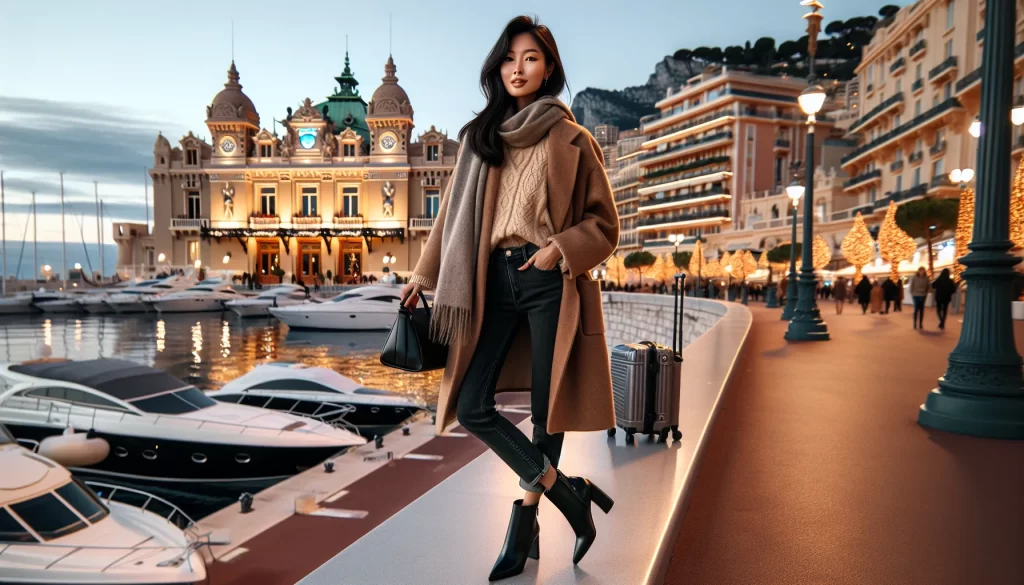
The unwritten dress code feels like: “Dress like you respect yourself and the place, but don’t look like you’re trying too hard.” A simple wool coat, dark jeans, leather boots, and a pretty scarf can fit in nicely almost anywhere during the day.
In the evenings, especially around Christmas and New Year, you’ll see more sparkle, higher heels, sharper blazers, and elegant dresses, but still with that European restraint. Think “nice restaurant in a big city,” upgraded with a hint of Riviera flair.
Building A Versatile Winter Capsule Wardrobe For Monaco
Essential Layers: Base, Mid, And Outerwear
To keep things simple, I like to build a capsule wardrobe for Monaco in December, pieces that mix and match, so I don’t end up wrestling with an overstuffed suitcase on the hotel floor.
I think in three layers:
Base layer (closest to your skin)
Lightweight thermal tops (not bulky, just thin and warm)
Long-sleeve tees or thin merino wool tops
Tights or thermal leggings if you run cold
Mid layer (the cozy part)
Fine-knit sweaters (merino, cashmere, or good quality cotton blends)
A chic cardigan or two
A smart long-sleeve blouse or shirt for dressing up
Outerwear (what everyone actually sees)
A knee-length wool coat or tailored wrap coat
Optional: a lighter jacket or blazer if you like layering for evenings
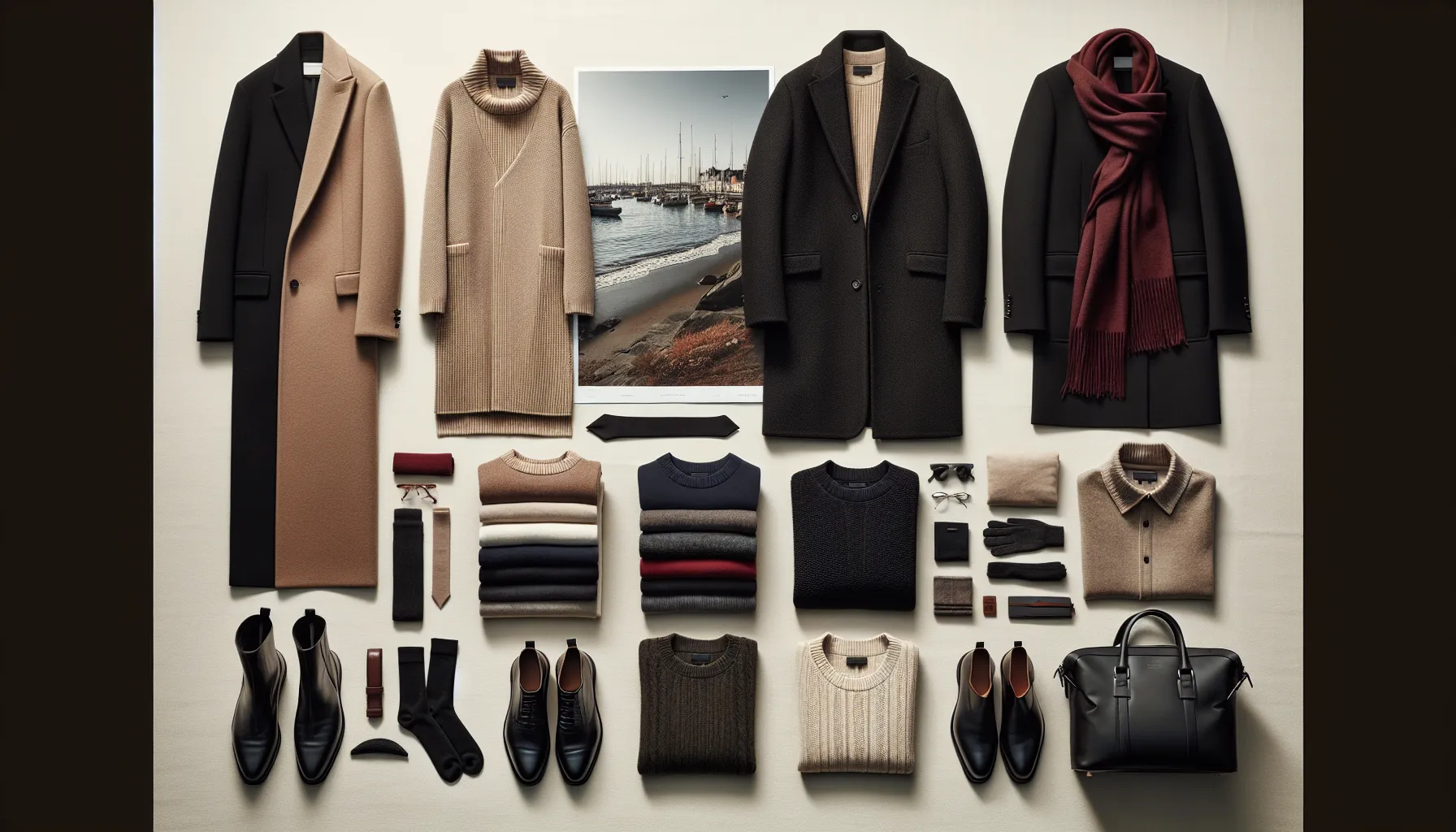
When I pack, I aim for 2–3 base layers, 2–3 mid layers, and 1–2 outerwear pieces that go with everything. That’s usually enough for a 3–5 day December trip without feeling like I’m repeating outfits in every photo.
Core Color Palette And Fabrics That Work Best
To keep outfits chic with zero effort, I pick a color palette before I even open the suitcase. For Monaco in December, I love something like:
Neutrals: black, navy, cream, camel, charcoal
Accent colors: deep red, forest green, burgundy, or soft blush
You don’t need all of these. Even black + camel + white can look wonderfully pulled-together.
Fabrics that work beautifully in Monaco’s winter:
Wool and cashmere – warm but refined, perfect for coats and sweaters.
Merino – great for base or mid layers, doesn’t feel bulky.
Cotton with a bit of stretch – comfortable for shirts and trousers.
Leather (or good faux leather) – for shoes and bags that can handle a bit of rain.
I try to avoid fabrics that crease badly (linen) or feel too summery (very thin, floaty cotton dresses) unless I’m layering them under sweaters and coats. The goal is to look effortlessly put-together, without freezing the minute the wind picks up along the harbor.
What To Wear During The Day In Monaco In December
Sightseeing, Cafés, And Christmas Markets
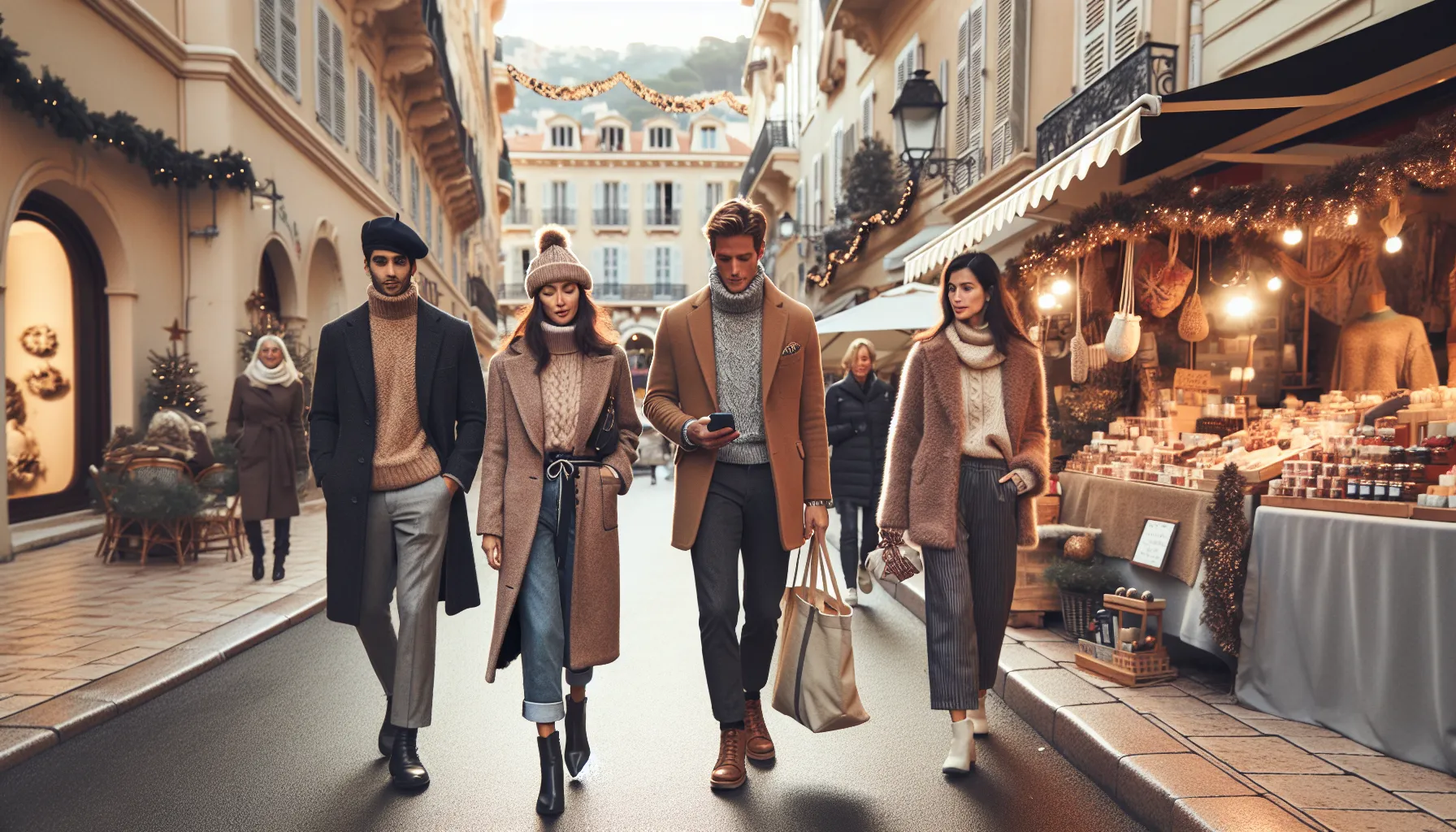
Daytime in Monaco in December is all about comfortable elegance. You’ll likely be walking up and down hills, wandering through the old town, popping into cafés, and, if you time it right, enjoying pretty Christmas lights and markets.
For this, I usually reach for:
Slim or straight-leg jeans or tailored trousers
A thin thermal top + knit sweater
A wool coat
A cozy scarf
Comfortable ankle boots
That’s your “I can walk for hours but still look nice in photos” uniform.
If you like dresses, a knit dress with tights and ankle boots is perfect. Add a belt if you want a bit more shape, and a wool coat over the top. You’ll look instantly put-together with almost zero effort.
What To Wear For Coastal Walks And Day Trips
For coastal walks along the harbor or a day trip to nearby towns (like Nice or Èze), you’ll want something warm enough for the breeze but easy to move in.
I’d wear:
Comfortable jeans or thicker leggings (not see-through gym ones)
Long-sleeve base layer
A warm sweater or fleece-lined sweatshirt with a nice cut
A wool coat or a slightly more casual padded jacket
A hat (a chic beanie works) if you get cold ears
Shoes matter here. The paths and streets can be:
Hilly
Cobblestoned in older areas
Sometimes slippery after rain
So, leave the delicate stilettos for dinner. For daytime, I prefer low-heeled ankle boots, loafers with a good sole, or sleek sneakers that still look city-appropriate.
I also like to tuck a foldable tote into my bag for any little Christmas gifts or market finds. Monaco has a way of tempting you into “just a quick look” at the shops.
What To Wear In The Evenings: Dining, Bars, And Casinos
Smart-Casual To Dressy Outfits For Dinner And Drinks
Evenings in Monaco are where you can really enjoy dressing up a bit. December dinners feel cozy and festive, with candles, twinkling lights, and a dress code that leans smart-casual to elegant.
For women, I’d pack:
1–2 nice dresses (a knit dress, wrap dress, or a simple black dress you can style up)
Or: tailored trousers + a silk or satin blouse
A light blazer or chic cardigan (optional but useful)
For men, think:
Dark jeans or chinos + a button-down shirt
Or: wool trousers + a fine-knit sweater
A blazer if you like a sharper look
Shoes can be block-heel ankle boots, classic pumps, or polished loafers. You’ll be indoors most of the evening, so you don’t need heavy snow-proof footwear, just something you can comfortably walk a few blocks in.
The trick is to combine comfort and polish. You want to feel like yourself, just a slightly dressier version.
Casino And Nightlife Dress Codes For Men And Women
Daytime can be a bit more relaxed, but evenings are definitely dressier.
For women, I’d go with:
A refined dress (knee-length or midi works well)
Or elegant trousers with a dressy top
Heels or smart flats (nothing too chunky or sporty)
For men:
A collared shirt, dark trousers, and closed shoes are the minimum
A blazer is strongly recommended in the evening, and you’ll never feel overdone in one there
If you’re wondering what to wear in Monaco in December for a “big night out,” this is where a simple, well-fitting outfit in good fabric beats anything too fussy or revealing. Classic always wins in Monaco.
Footwear And Accessories For Comfort And Polish
Shoes That Handle Hills, Marble Floors, And Occasional Rain
Let’s be honest: shoes can make or break a trip.
Monaco has hills, stairs, and slippery marble or tiled floors in many buildings. In December, mix in a bit of rain and you’ll be grateful for a sensible sole.
Here’s what I like to pack:
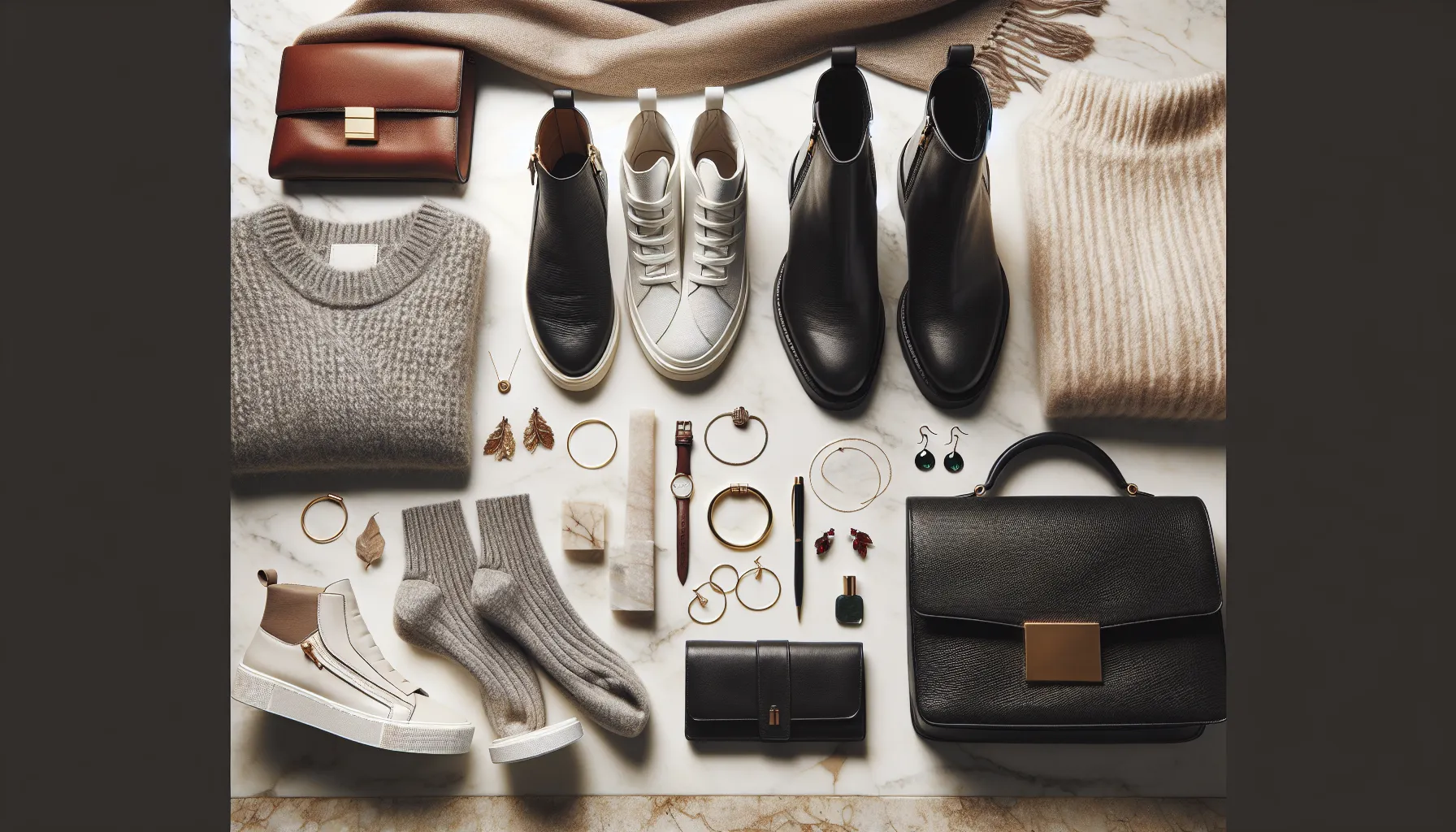
Comfortable ankle boots (water-resistant if possible, with a low to mid heel)
Smart sneakers (clean, minimal, not gym trainers)
Dressy flats or loafers for evenings when you don’t want heels
If you love heels, bring one pair of stable heels, think block heel or kitten heel, not sky-high stilettos you’ll curse on cobblestones.
Bags, Scarves, Jewelry, And Other Finishing Touches
Accessories are where you can have fun without taking up half your suitcase.
I usually bring:
One crossbody bag for daytime (hands free, secure, fits phone, glasses, small wallet)
One small evening bag or clutch for dinners and the casino
1–2 scarves – a warm wool or cashmere scarf in a neutral, and maybe one in a festive color
Jewelry – simple gold or silver pieces, plus one “statement” pair of earrings or a necklace
A good scarf in December is like traveling with your own little portable blanket. You can wrap up on windy viewpoints, or just drape it over your shoulders indoors when you want to feel extra cozy and chic.
These small touches make even basic jeans and a sweater feel like an outfit you’d happily be photographed in front of the Christmas lights.
Special Considerations: Events, Holidays, And Etiquette
What To Wear For Holiday Events And Luxury Experiences
December in Monaco may include:
Holiday concerts or performances
Fancy afternoon teas
Luxury spa visits
Upscale restaurant reservations
For slightly more formal events, I like to have one “just in case” outfit that feels a bit elevated:
For women:
A midi dress in a classic color (black, navy, deep green)
Or tailored trousers + a dressy top with subtle shine or lace
A pair of elegant shoes you can walk in
For men:
Dark trousers + a crisp shirt + blazer
Or a fine-knit sweater over a shirt, with smart shoes
Nothing needs to scream “gala.” You’re aiming for refined, not red carpet, unless you’re actually going to a gala, in which case, absolutely bring the gown.
Cultural Norms To Avoid Looking Under- Or Overdressed
A few gentle etiquette notes when you’re deciding what to wear in Monaco in December:
Athleisure (gym leggings, hoodies) is fine for actual exercise, but not ideal for restaurants or sights.
Beachwear really is just for the beach or pool, even if it’s layered under other clothes.
Logos and super-flashy designer looks can stand out in a way that feels more tourist than chic.
Instead, focus on:
Clean lines
Good fabrics
Clothes that fit well and aren’t too tight or too revealing
You don’t need to spend a fortune: you just want to look like you’ve made a bit of an effort. Monaco appreciates that.
Sample Packing List For A 3–5 Day December Trip
Women’s Sample Packing List
Here’s a realistic, mix-and-match list for a 3–5 day December stay.
Clothing
1 wool or cashmere coat (knee-length)
1 lighter jacket or blazer (optional but handy)
2 sweaters (one neutral, one with a bit of color)
2 long-sleeve tops or thin thermals
1 knit dress or simple black dress
1 pair of jeans (dark or black)
1 pair of tailored trousers
1 “nicer” blouse or top for dinners
Tights or thermal leggings if you get cold
Shoes
1 pair ankle boots (comfortable, good sole)
1 pair smart sneakers or loafers
1 pair dressier shoes (heels or elegant flats)
Accessories
2 scarves (one neutral, one more fun)
Simple jewelry + 1 statement piece
1 daytime crossbody bag
1 small evening bag
Gloves and a hat if you feel the cold
With this, you can easily rotate: jeans + sweater: trousers + blouse: dress + boots: and never look like you’re repeating yourself.
Men’s Sample Packing List
For men, here’s a similar 3–5 day Monaco in December packing list.
Clothing
1 smart wool coat
1 blazer (optional but great for dinners and the casino)
2 fine-knit sweaters
2 shirts (one more casual, one dressier)
1–2 long-sleeve tees or light base layers
1 pair dark jeans
1 pair chinos or wool trousers
Shoes
1 pair leather or suede boots (weather-friendly)
1 pair smart sneakers or loafers
1 pair more formal shoes if you plan fancier evenings
Accessories
1–2 scarves
Belt that matches shoes
1 everyday bag (satchel or sleek backpack)
Gloves and hat if you run cold
This keeps your suitcase light but your options open, from coastal walks to casino nights.
Conclusion
When I think about what to wear in Monaco in December now, it feels less like a puzzle and more like a pleasant little styling game: a good coat, some thoughtful layers, shoes that can handle hills, and one or two outfits that make you feel quietly fabulous.
You don’t need an enormous wardrobe. You just need the right pieces: warm, polished, and easy to mix and match. With those in your suitcase, you can wander the Christmas markets, linger over coffee, dress up for dinner, and even swan into the casino feeling like you belong there.
If you’re still hesitating over that wool coat or those ankle boots, take this as your gentle nudge. Pack them. Future-you, strolling along the harbor under the December lights, will be very glad you did.
Frequently Asked Questions
What should I wear in Monaco in December during the day?
For daytime in Monaco in December, aim for comfortable elegance: slim or straight-leg jeans or tailored trousers, a thin thermal or long-sleeve top, a knit sweater, and a knee‑length wool coat. Add a cozy scarf and comfortable ankle boots so you can walk hills and explore while looking polished.
How cold does it get in Monaco in December and how should I dress for the weather?
Monaco in December is mildly chilly, not freezing. Daytime temperatures are usually 50–57°F (10–14°C), dropping to the mid‑40s°F (around 7°C) in the mornings and evenings. Plan on clever layering: a warm base layer, a chic sweater, and a wool coat, plus a scarf for coastal wind.
What to wear in Monaco in December for evenings, dinners, and bars?
For evenings, think smart‑casual to elegant. Women can wear a knit or simple black dress, or tailored trousers with a silk or satin blouse, plus ankle boots or pumps. Men should pack dark jeans or chinos with a button‑down or fine‑knit sweater, and optionally a blazer for a sharper look.
What is the dress code for the Casino de Monte-Carlo in December?
The Casino de Monte‑Carlo has a refined dress code, especially at night. No sportswear, beachwear, flip‑flops, or ripped jeans. Women should opt for an elegant dress or tailored trousers with a dressy top and smart shoes. Men need a collared shirt, dark trousers, closed shoes, and ideally a blazer.
Is a heavy winter coat necessary, or what to wear in Monaco in December instead?
You don’t need a bulky ski jacket in Monaco in December. A well‑fitting wool or cashmere coat, worn over light thermals and fine‑knit sweaters, is usually enough. Pair it with ankle boots, a scarf, and optional hat or gloves if you run cold. Focus on warm, layered, yet sleek pieces.
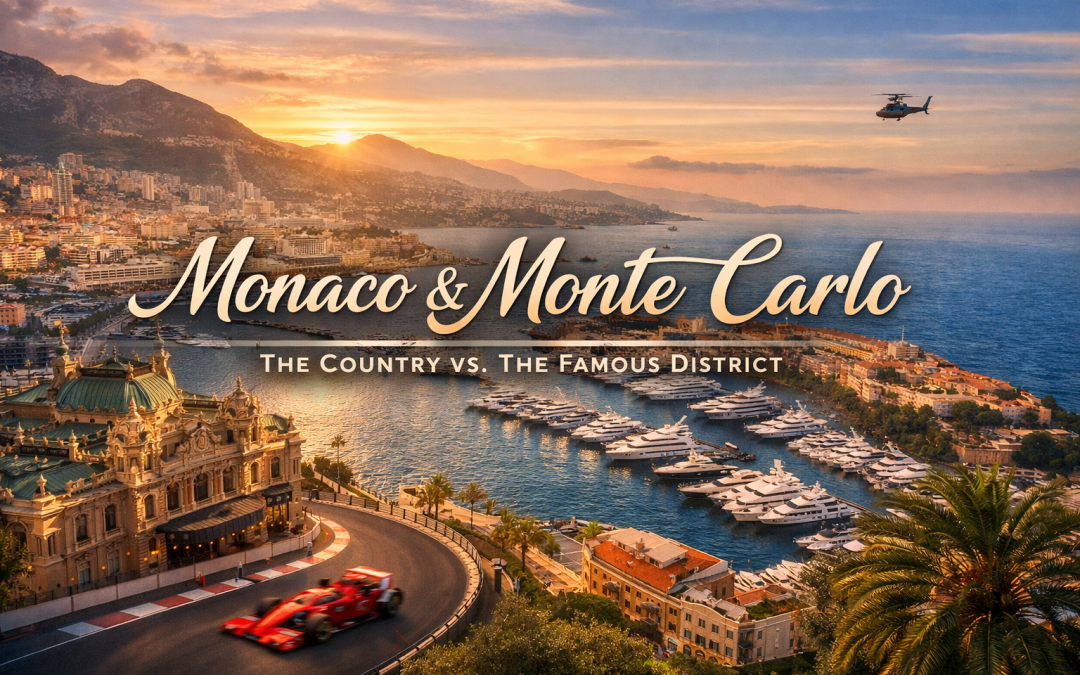
Monaco Is the Country and Monte Carlo Is Its Most Famous District
Imagine you’re sitting in your favorite armchair, feet up, a cup of tea warming your hands. On the TV, a glittering coastline flashes by: blue sea, white yachts, red race cars screaming around tight corners. The commentator keeps saying “Monte Carlo,” but the caption on the screen says “Monaco.” You squint, sip your tea, and think: “Alright, which is it? What’s the actual difference between Monaco and Monte Carlo?”
That little moment of confusion is exactly where this story begins.
When I first tried to figure this out, I felt like I’d opened one of those old family recipes where half the ingredients are written in shorthand. It made sense to someone once, but not to me, yet. Then, slowly, it all clicked into place, and I realized it’s actually quite simple, and even a bit charming.
In this guide, I’ll walk you through Monaco and Monte Carlo like we’re strolling along the harbor together. We’ll talk about the tiny country, the famous district, the casinos, the Grand Prix, and even how to address a postcard properly so it doesn’t go wandering around Europe. By the end, you’ll not only know the real difference between Monaco and Monte Carlo, you’ll also have a great little story to share over tea with your friends.
Key Takeaways
The core difference between Monaco and Monte Carlo is that Monaco is a sovereign country, while Monte Carlo is just one of its districts.
Monaco is a tiny city-state with its own government, laws, and UN seat, organized into several districts including Monaco-Ville, La Condamine, Fontvieille, and Monte Carlo.
Monte Carlo sits within Monaco and is famous for the Casino de Monte-Carlo, luxury hotels, designer shopping, and a glamorous nightlife image.
In practical terms, travel bookings, official forms, and mailing addresses use Monaco as the country name, with Monte Carlo appearing only as the neighborhood or district.
Major events like the Monaco Grand Prix and the Monte-Carlo Masters all take place within the same small country, with the choice of Monaco vs. Monte Carlo in event names driven mostly by branding.
Understanding Monaco: The Tiny Country On The Riviera
Before I talk about Monte Carlo, I need to start with Monaco itself, because Monte Carlo lives inside Monaco.
Geography And Political Status Of Monaco
Monaco is a country. A real, independent, fully recognized country, just very, very small. It’s tucked along the French Riviera, squeezed between southern France and the Mediterranean Sea, with Italy not far away.
To give you a sense of scale, I like to say this: “You could walk across much of Monaco in about an hour or so”. It’s about 2 square kilometers (less than a square mile). If you took a medium-sized neighborhood in a big city, you’d be close.
Monaco is a constitutional monarchy, ruled by the Prince of Monaco (the Grimaldi family has been in charge there, on and off, since the 1200s). It has:
Its own government
Its own laws
Its own flag and national anthem
Even a seat at the United Nations
French is the official language, the euro is the currency, and the people are called Monegasques (that’s a fun one to roll around on your tongue).
So when someone says, “I’m going to Monaco,” they’re talking about visiting the country.
Districts Of Monaco And How The City-State Is Organized
Here’s where it gets interesting. Monaco is a city-state, which means the entire country is basically one big city, divided into districts or quarters.
The main districts are:
Monaco-Ville – the old town on the rock, with the Prince’s Palace
Monte Carlo – the glamorous area famous for the casino
La Condamine – the port area with the harbor
Fontvieille – a newer district built partly on reclaimed land from the sea
There are a few more named areas, but these are the stars.
So if I picture Monaco as a little jewelry box, each district is a separate compartment. Monte Carlo is just one compartment in that box, sparkly, loud, and dramatic, but still only one part of the whole.
And that’s the first key difference between Monaco and Monte Carlo:
Monaco = the entire country
Monte Carlo = one district within that country
Monte Carlo Explained: District, Lifestyle, And Myth
Now, let me zoom in on Monte Carlo, because this is where the confusion usually begins.
Where Monte Carlo Fits Inside Monaco
Monte Carlo sits on a hill above the sea, like a glamorous balcony looking over the Mediterranean. On a map of Monaco, you’ll see it as one of the central, most famous districts.
What’s actually in Monte Carlo?
The legendary Casino de Monte-Carlo
Luxury hotels (the kind with more chandeliers than you have light bulbs at home)
Designer shops
Elegant restaurants and bars
And streets where you’re more likely to see a Ferrari than a family minivan
People sometimes imagine Monte Carlo as a separate city or even its own country. But no: Monte Carlo is part of Monaco, like a neighborhood. Think of it as the “Las Vegas strip” of Monaco, only with the sea, old-world architecture, and a lot more diamonds.
Why Monte Carlo Became More Famous Than Monaco
So if Monaco is the country, why do I hear “Monte Carlo” in movies and TV more often than “Monaco”?
Because Monte Carlo became a brand.
In the 19th century, Monaco was struggling financially. Then came an idea: build a casino and resort area to attract the wealthy. They chose the location that became Monte Carlo, and named it after Prince Charles III (Carlo = Charles in Italian).
The formula worked. The rich and curious poured in, the casino became legendary, and Monte Carlo turned into a shorthand for:
Glamour
High-stakes gambling
Evening gowns and tuxedos
Luxury cars and yachts
Hollywood loved this image. So did novelists and advertisers. Saying “Monte Carlo” sounded more dramatic and mysterious than “Monaco.” Over time, people began to use Monte Carlo when they really meant Monaco, kind of like saying “Hollywood” when you actually mean the wider Los Angeles film world.
That’s how Monte Carlo, a district, ended up more famous in popular culture than Monaco, the country that contains it.
Monaco vs. Monte Carlo: Key Differences At A Glance
Now I’ll line things up more clearly, like putting two recipe cards side by side.
Government, Population, And Everyday Life
Monaco:
Is a sovereign country with a prince, government, and its own legal system.
Has a population of around 38,000–39,000 people in total.
Has ordinary life going on: schools, supermarkets, offices, apartment buildings.
Monte Carlo:
Is not a country and has no separate government. It’s governed by Monaco.
Is one of the country’s districts, so its residents are counted as living in Monaco.
Is more associated with tourism, nightlife, and luxury than everyday chores and errands (though people do live there).
So when we talk about laws, elections, or citizenship, we’re talking about Monaco. Monte Carlo doesn’t make its own rules: it follows Monaco’s.
Tourism, Casinos, And Luxury Experiences
Here’s where Monte Carlo really steals the spotlight.
Monaco, as a whole, is known for being chic and wealthy, but Monte Carlo is the dramatic stage where that image is most obvious.
In Monaco overall, visitors can:
Walk around the old town (Monaco-Ville) and see the Prince’s Palace
Visit the Oceanographic Museum above the sea
Stroll around different neighborhoods and marinas
Enjoy gardens, viewpoints, and quieter streets
In Monte Carlo specifically, the focus is on:
The Casino de Monte-Carlo – a masterpiece of Belle Époque architecture
Iconic luxury hotels like the Hôtel de Paris
High-end shopping streets
Bars and restaurants where the bill can be as dazzling as the chandeliers
So if someone says, “I want to see the casino and all the glam,” they’re really saying, “Take me to Monte Carlo.” If they say, “I want to explore the whole place, museums, palace, and all,” they’re talking about seeing Monaco.
Addresses, Maps, And Practical Travel Details
Now for the practical side, the bit that matters when you’re booking a trip or sending a postcard.
On maps:
You’ll see Monaco as a tiny country along the coast.
Zoom in, and you’ll see districts like Monte Carlo, Monaco-Ville, La Condamine, and Fontvieille.
On addresses:
A hotel in Monte Carlo might write something like:
[Hotel Name] Avenue de Monte-Carlo 98000 Monaco
Notice the last line: it ends with Monaco, not Monte Carlo. That’s because the country is Monaco. Monte Carlo is used like a neighborhood name within the address.
When you travel:
You don’t fly into “Monte Carlo Airport.” You typically fly into Nice, France, then travel by car, bus, train, or even helicopter into Monaco.
Your booking sites will usually say “Monaco” as the location, and may specify Monte Carlo as the neighborhood.
So, when I keep it simple in my head:
Monaco is what you write on a map and passport forms.
Monte Carlo is what you look for when you want the casino, race views, and extra sparkle.
Common Misconceptions And How To Avoid Confusion
Once you know the difference, you start hearing people mix the two up all the time. It’s a bit like listening to someone call your daughter by your granddaughter’s name, you know what they mean, but it’s technically wrong.
When People Say “Monte Carlo” But Mean Monaco
Here are a few common mix-ups I notice:
“Monaco? Oh yes, I love Monte Carlo, that country is so pretty.”
“He’s the Prince of Monte Carlo.”
“We’re flying into Monte Carlo next week.”
In almost all of those, the person means Monaco, the country.
Why do people say Monte Carlo instead?
Movies and TV made Monte Carlo sound more glamorous.
The casino scenes and race footage are usually filmed there.
It’s a catchy name, so it sticks.
The good news? Locals and travel staff are used to this confusion. If you say, “I’m going to Monte Carlo,” they’ll understand you’re heading to Monaco and likely want the casino district.
But if you like getting things right (I do), it helps to be precise.
Using The Right Name For Travel, Events, And Mail
Here’s how I keep it straight when there’s something important at stake, like tickets, reservations, or making sure Grandma’s postcard arrives.
For travel bookings:
When you book flights, trains, or transfers, search for Monaco (or Nice, France, as the nearest big hub).
When choosing a hotel, check if its neighborhood is Monte Carlo or another district, depending on the atmosphere you want.
For events and tickets:
Big events might have Monaco in the official title even if they take place around Monte Carlo.
Always read the location details on the ticket: it may say “Circuit de Monaco (Monte Carlo area)” or list a specific district.
For mail and packages:
The country line of the address should say Monaco.
You can include Monte Carlo as part of the street address or neighborhood, but the country is always Monaco.
If you remember that Monte Carlo can be in the middle of the address, but Monaco belongs at the bottom line as the country, you’ll avoid most of the confusion.
Monaco, Monte Carlo, And The World Of Sports And Events
Sports and big events are another place where the names get tangled, especially with all the marketing.
Grand Prix, Yachting, And Other Major Attractions
When I picture Monaco, I almost hear the scream of Formula 1 engines.
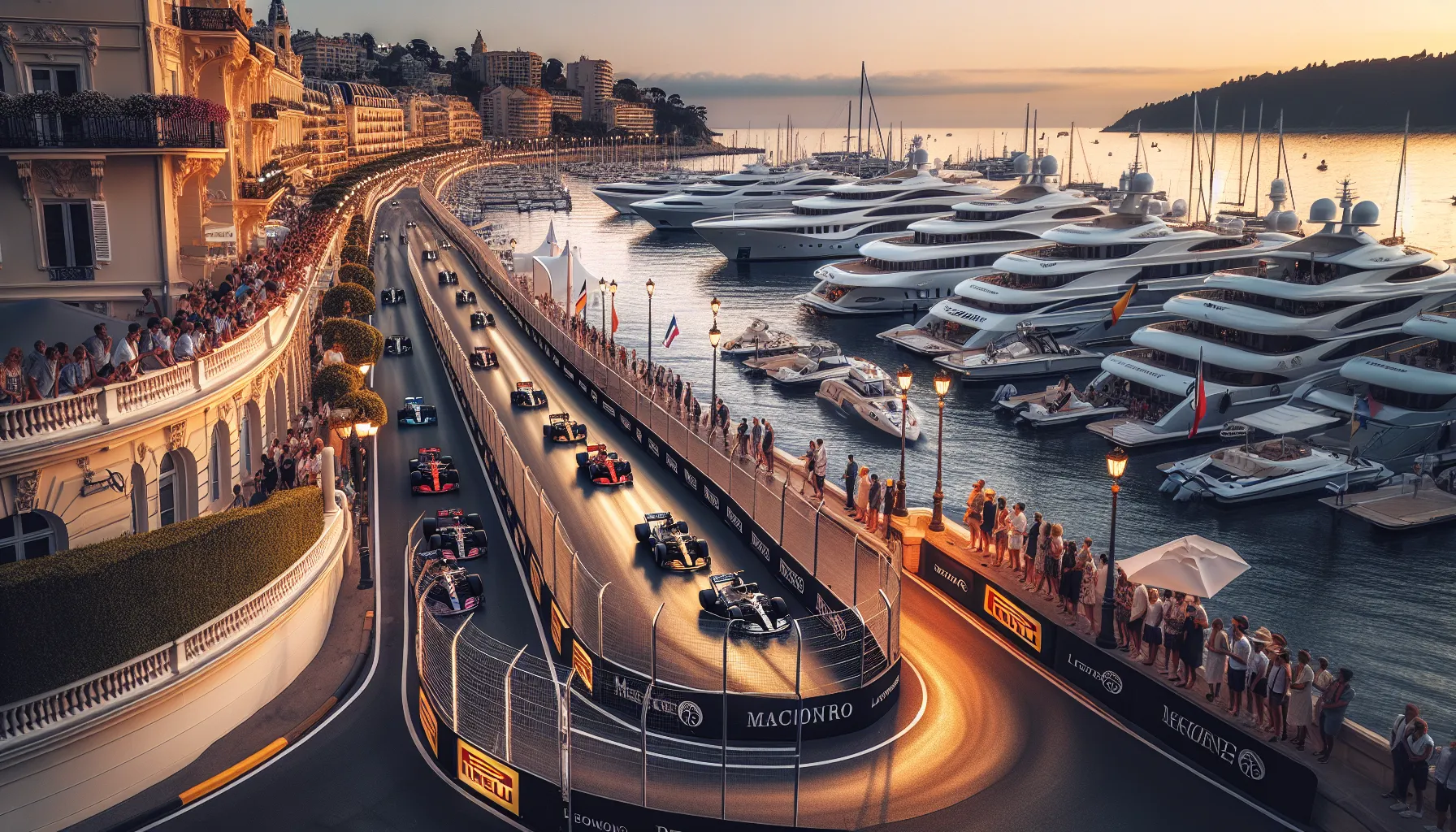
The Monaco Grand Prix is one of the most famous car races in the world. The track winds right through the streets of Monaco, including the Monte Carlo area. The race is officially called the Grand Prix de Monaco, not the “Monte Carlo Grand Prix,” even though some people say it that way casually.
The circuit passes by:
The harbor filled with superyachts
The tight, twisting streets near the casino
Tunnels and corners that make even experienced drivers sweat
On top of the Grand Prix, Monaco hosts:
The Monaco Yacht Show, full of jaw-dropping boats
Tennis tournaments like the Monte-Carlo Masters (here’s that name again.)
Various fashion, arts, and charity events
How Events Are Branded: Monaco vs. Monte Carlo
Event names are where you really see how both labels get used:
Monaco Grand Prix – Uses the country name (Monaco), even though the route includes Monte Carlo.
Monte-Carlo Masters (tennis) – Uses the district name (Monte Carlo), even though the event is associated with the whole Principality.
Sometimes organizers choose Monaco to emphasize prestige and the country itself. Other times they use Monte Carlo to tap into that glamorous, casino-and-nightlife image.
So if you’re ever wondering, “What’s the difference between Monaco and Monte Carlo in this event name?” the short answer is:
The location is within the same tiny country.
The choice of Monaco vs. Monte Carlo is often about marketing and tradition, not about a change of country.
Once I understood that, I stopped overthinking it. Whether it’s the Monaco Yacht Show or the Monte-Carlo Masters, I know they’re all happening in that same small stretch of coastline, just in different corners of it.
Conclusion
When I strip away the glitz and the movie scenes, the answer to what is the difference between Monaco and Monte Carlo is actually quite homely and simple:
Monaco is the country.
Monte Carlo is one famous district inside that country.
Monaco holds the history, the government, the flag, the citizenship, and all the everyday life that doesn’t make it into the films. Monte Carlo holds much of the glitter: the casino, the luxury hotels, the racing images you see on television.
Knowing the difference means you can:
Book your trip more confidently
Address postcards correctly
And gently impress your friends when they mix up “the Prince of Monte Carlo” and “the Prince of Monaco.”
So the next time you see those bright race cars dashing past the harbor and someone sighs, “Ah, Monte Carlo… what a country,” you’ll smile to yourself. You’ll know the secret: it’s Monaco, the tiny principality, and Monte Carlo is just its most flamboyant neighborhood.
And that, I think, is a lovely little travel fact to tuck into your mental recipe book and share over your next cup of tea.
Frequently Asked Questions About Monaco and Monte Carlo
What is the difference between Monaco and Monte Carlo?
Monaco is a sovereign microstate on the French Riviera, with its own government, laws, and UN seat. Monte Carlo is one of Monaco’s districts, famous for the casino, luxury hotels, and nightlife. In short: Monaco is the country, Monte Carlo is a glamorous neighborhood within it.
Is Monte Carlo a separate country from Monaco?
No. Monte Carlo is not a separate country; it’s a district of Monaco. It has no independent government or borders of its own and is fully governed by Monaco. Residents of Monte Carlo are counted as living in Monaco, the principality that encompasses several districts.
Why is Monte Carlo more famous than Monaco in movies and TV?
Monte Carlo became a global “brand” after Monaco developed it in the 19th century as a casino and resort area. The Casino de Monte-Carlo, luxury hotels, and high-stakes glamour made it a favorite setting for films, novels, and ads, so people often say Monte Carlo when they really mean Monaco.
How does the Monaco Grand Prix relate to Monte Carlo?
The Monaco Grand Prix is a Formula 1 race that runs through Monaco’s streets, including parts of Monte Carlo. Officially it’s the Grand Prix de Monaco, but TV shots of the casino, harbor, and tight corners in Monte Carlo make some viewers assume the event is separate from Monaco itself.
How do I correctly write an address in Monte Carlo, Monaco?
When addressing mail to Monte Carlo, you treat Monte Carlo as the district and Monaco as the country. A typical format is: [Name], [Street + Monte Carlo], 98000 Monaco. The bottom line must say “Monaco,” since that’s the sovereign state recognized by postal and travel systems.
When planning a trip, should I search for Monaco or Monte Carlo hotels?
For travel bookings, search for “Monaco” as the destination, then filter by neighborhood if you specifically want Monte Carlo’s casino, race views, and luxury atmosphere. Staying elsewhere in Monaco—like Monaco-Ville or La Condamine—offers easier access to sights such as the Prince’s Palace and the Oceanographic Museum.
When I first wondered what people in Monaco do for a living, I pictured one very specific scene: everyone in sunglasses, gliding off superyachts, casually checking their diamonds the way I check my pockets for my keys.
And yes, there are yachts and diamonds. Plenty of them. But that’s only the glossy postcard.
If you and I were sitting together in your favorite chair, tea in hand, I’d tell you that behind every glamorous photo of Monaco, there’s a surprising amount of very normal work happening. Accounting. Teaching. Construction. Office jobs. Bus driving. People cooking breakfast in hotel kitchens before the sun even rises over the harbor.
Monaco is tiny, smaller than many neighborhoods, but its economy is like a well‑packed jewelry box: every inch is used, and almost nothing is random. As I dug into how this little principality actually functions, I found stories and jobs you’d happily retell to your friends: the banker who commutes from France, the teacher who hears six languages at recess, the mechanic who only works on cars most of us will only ever see on TV.
Let me walk you through it, piece by piece, so that by the time you finish reading, you’ll be able to answer, with a small smile, when someone asks, “So what do Monaco people even do all day?”
Article at a Glance (If We’re Being Honest)
Monaco’s economy revolves around money, property, service, and precision, but the work behind it is often quieter and more ordinary than the image suggests.
Banking, real estate, hospitality, retail, events, and public services all coexist in an extremely small space, creating a dense and unusual working rhythm.
Many of the people who keep Monaco running don’t live there, commuting daily from nearby France and Italy.
Languages matter. So do discretion, reputation, and knowing how to move comfortably in international environments.
Behind the yachts and headlines is a city held together by teachers, nurses, planners, cleaners, technicians, and office workers who rarely appear in photographs.
A Different Way to Look at Monaco’s Working Life
Monaco’s job market isn’t just unusual because of how much money flows through it. It’s unusual because of how compressed everything is.
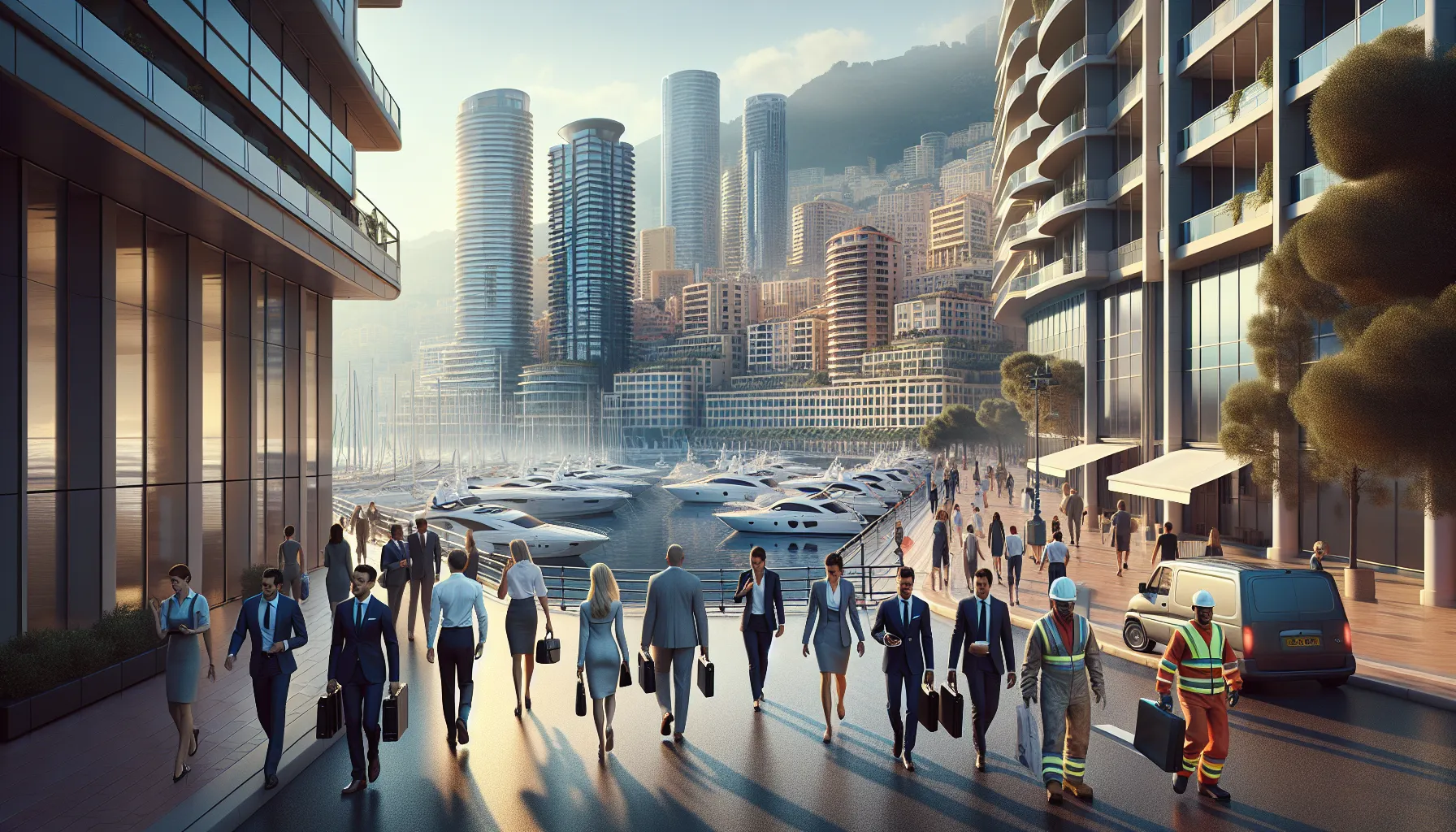
In just over two square kilometers, you’ll find private banks managing enormous fortunes, construction crews carving new space out of rock and sea, hotel kitchens waking before dawn, luxury shops opening their doors with quiet precision, and public workers making sure the whole place stays clean, safe, and functional.
It’s a place where extremes live side by side. A banker and a bus driver might pass each other on the same narrow street. A yacht broker and a nurse might ride the same early train home.
For outsiders, Monaco often looks like a self-contained world of wealth. In reality, it’s a carefully balanced system that depends on thousands of people doing very real, very human work every day — often out of sight.
This article isn’t about how to get a job in Monaco, or how to optimize a career there. It’s about understanding what kind of work actually happens, who does it, and how the principality functions once you look past the postcard.
If you’ve ever wondered what keeps Monaco running when the champagne glasses are empty and the yachts are quiet, you’re in the right place.
Let me show you.
Who Actually Lives And Works In Monaco
When people think of Monaco, they often imagine it’s full of movie stars and billionaires living off investments while their money quietly multiplies in the background. Some of that is true. But here’s the twist: a lot of the people who work in Monaco don’t actually live there at all.
Monaco has roughly 38,000 residents, but more than 60,000 people come into Monaco to work on a typical weekday. So from Monday to Friday, the country literally has more workers coming in than people living there.
I like to think of it like this: Monaco is the fancy living room, but most of the people who dust, polish, cook, count, and organize that living room go home to nearby France or Italy at night.
Here’s who you’ll find:
Wealthy residents: business owners, investors, celebrities, retired executives. Many of them don’t “go to work” in a traditional sense. Their money often works harder than they do.
Professionals: bankers, lawyers, accountants, managers, tech workers, consultants. Some live in Monaco, but many commute from the surrounding region.
Service workers: hotel staff, restaurant workers, cleaners, security guards, shop assistants, hairdressers, drivers.
Skilled trades: electricians, plumbers, construction workers, mechanics, technicians.
Public sector staff: teachers, police, health workers, administrative staff.
So when I talk about what people in Monaco do for a living, I’m really talking about two overlapping groups:
Residents who often work in high‑paying sectors like finance, real estate, and executive roles.
Commuters from France and Italy who keep the restaurants, hotels, offices, and public services running day to day.
It’s not just a playground for the rich. It’s also a very busy workplace squeezed into less than one square mile.
The Structure Of Monaco’s Economy
For such a tiny place, Monaco’s economy is surprisingly diverse. If it were a kitchen, it would be that small but perfectly organized one where every drawer has a purpose.
Monaco doesn’t survive on natural resources, no oil, no big farms, no mines. Instead, it leans on services, especially high‑end ones.
The main pillars are:
Finance and banking
Real estate and construction
Tourism and hospitality
Luxury services and retail
Yachting, events, and entertainment
Public services, health, and education
There’s also a smaller slice of light industry and tech: pharmaceutical labs, cosmetics, some advanced manufacturing, and digital services. You don’t really see those as a tourist, but they’re there in the background.
Another big piece of the puzzle is Monaco’s tax system. For most residents, there’s no personal income tax, which attracts high‑net‑worth individuals and entrepreneurs. That, in turn, creates demand for wealth managers, lawyers, property agents, and all the other professionals who help manage significant sums of money.
So if you’re trying to picture what people in Monaco do for a living, think less “factory belts” and more “offices, meetings, hotels, and harbor docks.” It’s a white‑collar and service‑heavy economy, wrapped in luxury packaging.
Finance And Banking: The Backbone Of White‑Collar Work
If Monaco’s economy had a nervous system, finance and banking would be it.
A lot of Monaco residents are wealthy, sometimes extremely so. They need places to put that money and people they trust to manage it. That’s where Monaco’s financial sector steps in.
Some of the main roles you’ll find:
Private bankers and wealth managers – They help wealthy clients invest their money, plan inheritance, and organize their global finances.
Portfolio managers – People who decide where to put large sums of money: stocks, bonds, funds, sometimes private investments.
Compliance and risk officers – They make sure everything follows international rules against money laundering and fraud.
Accountants and auditors – Keeping the books straight for companies and wealthy families alike.
Legal and tax advisors – Especially for cross‑border issues: many clients have homes, companies, or investments in multiple countries.
It’s not the sort of work that makes for glamorous Instagram photos, but it’s central to what people in Monaco do for a living. The image might be champagne and casinos, but the reality often looks more like spreadsheets and very polite meetings.
And because the money involved is huge, these jobs can pay extremely well. That’s part of why so many professionals are willing to deal with tiny offices, high rents, and crowded train rides into Monaco each morning.
Luxury Real Estate, Construction, And Property Management
In Monaco, space is the real luxury. There’s almost no land left, so what do they do? They build up and sometimes even out into the sea.
That creates a whole ecosystem of work:
Real estate agents showing apartments that cost more than entire apartment buildings elsewhere.
Property managers handling tenants, maintenance, security, and services in high‑end residences.
Construction workers and engineers building or renovating towers, tunnels, and even land‑reclamation projects.
Architects and interior designers specializing in squeezing comfort and style into every square meter.
Imagine working on a building where a single apartment might sell for several million euros. Every tile and window becomes a serious decision.
Because the demand for homes and offices in Monaco is sky‑high and the space is tiny, real estate prices are among the highest in the world. That keeps this sector buzzing:
Developers plan new towers
Construction crews work in incredibly tight spaces
Maintenance staff quietly keep everything spotless for residents who are used to perfection
So yes, some people in Monaco make their living by literally carving out more Monaco, one construction site, balcony, and underground parking level at a time.
Tourism, Hospitality, And Luxury Services
Now we’re getting to the Monaco most visitors recognize: hotels, restaurants, casinos, and luxury everything.
Tourism is a huge employer. When people arrive expecting glamour, someone has to provide it.
You’ll find:
Hotel staff – from reception and concierge to housekeepers, chefs, and room service.
Restaurant and café workers – waiters, bartenders, sommeliers, dishwashers, managers.
Casino employees – croupiers, security staff, hosts, bar staff.
Spa and wellness staff – therapists, beauticians, personal trainers.
Luxury retail workers – people selling jewelry, watches, designer clothes, and perfumes.
A lot of these jobs are fast‑paced and demanding. Long hours, high expectations, international guests who arrive tired and want everything “just so.” But many of the workers I read about or spoke to described a strange joy in it: you might serve breakfast to a famous singer one day and help a nervous newlywed find the perfect anniversary gift the next.
This is also where Monaco’s reputation for excellent service comes from. Tips can be generous, but the standards are, too. You can’t really hide in a place this small: word gets around quickly if a restaurant or hotel doesn’t live up to the image.
So when you see photos of people clinking glasses at a rooftop bar with the harbor behind them, remember: there’s a whole team of locals and commuters who made that moment look effortless.
Yachting, Events, And Entertainment Industries
If finance is Monaco’s brain, yachting and events are its show business side.
Look at a picture of Monaco’s harbor during the summer or the Grand Prix, and you’ll see yachts packed so tightly it looks like you could walk from one side of the bay to the other just by hopping from deck to deck.
Behind those boats are:
Captains and crew – often living on board, working long seasons.
Yacht brokers – the real‑estate agents of the sea.
Maintenance and technical staff – engineers, electricians, cleaners, painters.
Provisioning services – people who supply yachts with everything from fuel to fresh strawberries and vintage champagne.
Then there are the events:
The Monaco Grand Prix (Formula 1)
The Monaco Yacht Show
High‑profile charity galas and cultural festivals
These bring work for:
Event planners and coordinators
Sound and lighting technicians
Security staff and ushers
Caterers and bartenders
Media crews, photographers, and logistics teams
For a lot of people, especially freelancers, these major events are like harvest season. The weeks around the Grand Prix can be absolutely exhausting but also some of the most profitable of the year.
So yes, some people in Monaco literally make their living making sure other people have the time of their lives.
Formula 1, Sports, and the Business of Big Events
When people think about work in Monaco, Formula 1 usually flashes through their mind at some point — the roar of engines, the yachts lined up like front-row seats, the sense that the entire city has turned into a stage.
And for a few days each year, it really does feel that way.
But what most people don’t realize is that the Monaco Grand Prix isn’t just a long weekend of noise and champagne. It’s the visible tip of a year-round operation that keeps a surprising number of people busy long before the first car ever touches the track.
Months ahead of race week, teams are already at work planning how to turn everyday streets into a race circuit. Barriers have to be installed and removed. Grandstands appear where traffic lights usually stand. Timing systems, safety infrastructure, and broadcast equipment are mapped out in meticulous detail.
For the people involved, this isn’t glamorous work. It’s logistics, project planning, and coordination carried out in one of the most tightly packed urban spaces in the world. The fact that the city returns to normal within days of the race ending is, in itself, a small miracle — and the result of careful, often invisible labor.
Then there’s the hospitality side of Formula 1, which operates almost like a parallel industry. Corporate guests, sponsors, and long-time attendees don’t just show up; their experience is curated months in advance. Private viewing terraces, yacht access, catered events, and invitation-only gatherings all require teams of people who specialize in managing expectations at the highest level.
And while race week is intense, much of this work happens quietly throughout the year: planning, selling, coordinating, refining.
Formula 1 may be the headline, but it’s far from the only sporting engine in Monaco.
Beyond the Grand Prix, the principality hosts a steady calendar of major events — international tennis tournaments, yachting showcases, charity competitions, and cultural exhibitions that blur the line between sport, business, and social life. Each one brings its own ecosystem of planners, technicians, marketers, security teams, venue staff, and behind-the-scenes organizers.
What ties all of these events together is scale and proximity. Monaco is small, which means the same people often cross paths from one event to the next. Relationships matter. Reputation matters. If someone handles pressure well during one major event, they’re remembered for the next.
There are also quieter roles connected to sport that never make it into highlight reels. Facilities need maintenance year-round. Stadiums, courts, and training spaces don’t look after themselves. Schedules have to be coordinated around international calendars, media needs, and visiting teams.
And then there’s sponsorship — the subtle art of connecting luxury brands, wealthy patrons, and global audiences. Much of that work happens in meetings, not arenas. Conversations over coffee. Long email threads. Carefully negotiated partnerships that keep events financially viable while preserving Monaco’s polished image.
From the outside, it can look like Monaco simply hosts glamorous events. From the inside, it feels more like a permanent backstage area — full of people making sure the spotlight lands exactly where it should, every single time.
So when the engines fade and the streets reopen, the work doesn’t really stop. It just shifts shape, waiting quietly for the next moment when the city once again turns itself into a spectacle — and then, just as quickly, back into a place where people still have to get to work the next morning.
Luxury Retail: The Quiet Theatre of Shopping
If you walk through Monaco’s shopping streets slowly — not rushing between appointments, not ducking into a store just to look — you start to notice how different retail feels here.
The windows are immaculate. The lighting is soft and deliberate. Inside, things move at an unhurried pace. No sales racks. No loud promotions. No one asking if you’re “just browsing.” Browsing, in Monaco, is almost beside the point.
Luxury shopping here isn’t really about impulse. It’s about relationships.
Most of the big global brands are present, of course. But what distinguishes Monaco’s retail scene isn’t the logos — it’s the clientele. Many customers are regulars. Some stop in every season. Some every time they’re in town. Staff know their preferences, their sizes, the colors they avoid, the pieces they already own.
A purchase might take ten minutes. Or it might take weeks.
Behind the scenes, this creates a very particular kind of work. Retail staff here aren’t just selling objects; they’re managing long-term relationships. They remember anniversaries. They coordinate private appointments. They quietly source items before they ever reach the shop floor. Sometimes they deliver purchases directly to homes or yachts, where the transaction feels more like a continuation of a conversation than a sale.
From the outside, it looks serene. Inside, it’s precise.
There are also boutiques that don’t belong to a single brand — carefully curated spaces where clothing, jewelry, and accessories are selected almost like pieces in a gallery. These shops reflect the taste of the people who run them, and the trust they’ve built with their clients. Nothing is accidental. Nothing is overstocked.
Then there’s the more invisible side of luxury retail: personal shoppers and stylists who don’t belong to any one store at all. They move between brands, between boutiques, sometimes between countries. Their work often happens away from the shop floor — in fitting rooms after hours, in private residences, on yachts preparing for a gala or a long summer season.
Some clients want help building a wardrobe from scratch. Others want someone who knows what to replace, what to keep, what to quietly retire. It’s part fashion, part psychology, part logistics.
What’s striking is how calm all of this feels on the surface.
There’s very little pressure. Very little urgency. Everything is designed to feel effortless — even though a great deal of effort is involved. In a place as small as Monaco, discretion matters as much as taste. Word travels quickly. Trust, once broken, is hard to rebuild.
So while luxury retail elsewhere can feel flashy or transactional, in Monaco it often feels almost domestic. Familiar. Personal. Like being welcomed back into a space where someone already knows your story.
And if you pause long enough outside one of those spotless windows, you might realize that the real work isn’t in selling at all — it’s in remembering, anticipating, and quietly getting things exactly right.
Public Sector, Education, and Essential Local Services: The Quiet Structure Beneath the Shine
Under all the glitz, Monaco is still a place where kids need schools, sick people need doctors, buses have to run on time, and trash needs to be collected. None of that happens by magic — or by money alone.
A solid share of people in Monaco earn their living doing work that rarely appears in glossy photos but makes daily life possible. Teachers unlock classrooms each morning. Nurses start night shifts in quiet hospital corridors. Police officers patrol streets so calmly and consistently that safety becomes something people barely think about.
It’s easy to forget how much effort that takes.
Behind the scenes, Monaco’s public sector hums along at a steady pace. Government offices open their doors. Forms are processed. Permits are issued. Systems are checked and checked again. It’s the kind of work that only draws attention when something goes wrong — which, in Monaco, is rarely.
These roles attract people who value structure and continuity in a city otherwise defined by movement and spectacle. Compared to finance, hospitality, or events, public sector work follows a different rhythm. The days are more predictable. The pressure is quieter. The goal isn’t to impress, but to keep things working — smoothly, reliably, without drama.
Teachers work in classrooms that often sound like miniature versions of the United Nations. Children speak several languages before lunchtime. Lessons unfold against a backdrop of international families constantly arriving and departing, which makes patience and adaptability just as important as subject matter.
Healthcare workers move through immaculate clinics and hospital wards, tending to residents and visitors alike. Night shifts pass in a low, steady hum. Daytime clinics run on tight schedules. Care is delivered efficiently and calmly, without spectacle.
Then there are the people most visitors never notice at all: bus drivers navigating narrow streets, maintenance crews working before dawn, traffic teams managing the flow during major events, utility workers keeping water, electricity, and waste systems running without interruption.
Monaco’s reputation for safety, cleanliness, and order doesn’t happen by accident. It’s the result of people showing up every day and doing work that rarely earns applause.
Whenever someone says, “Everyone in Monaco is rich,” I think of a nurse halfway through a night shift, or a teacher trying to explain fractions to a classroom full of kids who each learned math in a different language last year.
They may not be famous. They may not live in penthouses or arrive by yacht. But they are the reason Monaco works at all.
And in a place built on precision, that kind of quiet reliability might be the most valuable work there is.
Cross‑Border Commuters And Hidden Workforce Dynamics
Here’s one of the most interesting things I learned while figuring out what people in Monaco do for a living: most of the workforce doesn’t sleep there.
Tens of thousands of people commute every day from:
France (especially from towns like Nice, Menton, Beausoleil)
Italy (from just over the border)
They come by train, bus, scooter, car, some leave home before sunrise and don’t get back until late evening.
Why? Two main reasons:
Housing in Monaco is extremely expensive. Many workers simply can’t afford to live there.
The jobs are in Monaco, but the affordable homes are outside it.
So you get this interesting pattern:
Wealthier residents and executives are more likely to live in Monaco itself.
Many service workers, tradespeople, and even mid‑level professionals live nearby and cross the border daily.
It means that during work hours, Monaco swells with life and activity. After dark, especially outside the summer season, it can feel surprisingly quiet. Almost like a theater after the audience has left and the set has been cleared.
When I think about what keeps Monaco running, I picture that early‑morning train: full of chefs, cleaners, office workers, engineers, and shop staff, all heading into this tiny country that depends on them.
Income Levels, Cost Of Living, And Career Paths In Monaco
Talking about what people in Monaco do for a living isn’t complete without touching on money, both how much people earn and how much it costs just to exist there.
A few key truths:
Salaries can be high, especially in finance, executive roles, and specialized luxury services.
The cost of living is also extremely high, mainly because of housing.
So you get this split:
A top‑level banker or successful entrepreneur might live in a waterfront apartment and send their kids to private schools.
A hotel cleaner or shop assistant might earn more than they would in many other places, but still find housing in Monaco totally out of reach, so they commute.
Career paths often look like this:
In finance: assistant → analyst → manager → director/partner.
In hotels and restaurants: trainee → waiter or receptionist → supervisor → manager.
In public services: competitive exams and structured progress over many years.
In yachting and events: seasonal work that can turn into stable careers for those who build strong networks.
Because Monaco is small, reputation matters a lot. If you’re reliable, discreet, and good at your job, word can spread quickly. That helps people climb the ladder faster than they might in a big anonymous city.
On the flip side, if someone is careless or unprofessional, that can spread quickly too. It’s a village wrapped in skyscrapers and luxury brands.
Conclusion
When I step back and look at everything people in Monaco do for a living, the picture is much richer than the postcard of yachts and champagne.
Yes, there are the ultra‑wealthy residents, the glittering events, and the famous harbor. But there are also:
Bankers in modest offices carefully managing giant fortunes.
Teachers greeting kids from all over the world every morning.
Nurses on night shifts in quietly humming hospital corridors.
Bakers shaping croissants before dawn for hotel breakfasts.
Mechanics fixing engines on boats most of us will only ever see in magazines.
Monaco may be tiny, but its working life is packed: finance, real estate, tourism, yachting, events, public services, and an army of cross‑border commuters who slip in and out each day like a hidden tide.
So the next time someone shrugs and says, “Oh, Monaco, that’s just where rich people go to play,” you’ll know better. You’ll know about the early trains, the busy kitchens, the quiet offices, and the patient teachers behind the sparkle.
And if you share any of this over tea with friends, you can smile and say, “Let me tell you what really goes on in that little country by the sea.”
Frequently Asked Questions about What People in Monaco Do for a Living
What is the average salary in Monaco?
The average salary in Monaco exceeds €65,000 annually across all sectors, approximately 50% higher than neighboring French regions. However, this figure obscures substantial variation between industries, with financial services and real estate professionals earning significantly more than this average. Entry-level professional positions typically start at €45,000-€55,000, while mid-career roles in Monaco’s core industries frequently exceed €100,000 annually. For more context on the region, you can explore where Monaco is in the world.
What do people in Monaco do for a living besides being rich or retired?
Beyond wealthy residents and retirees, many people in Monaco work in finance, banking, real estate, tourism, hospitality, yachting, events, education, healthcare, public administration, and essential services. There’s a large mix of white‑collar professionals, service workers, and skilled trades who keep the city‑state running every day.
Is everyone who lives and works in Monaco rich?
No. Monaco has some of the world’s wealthiest residents, but many workers are regular middle‑income earners. Hotel staff, cleaners, teachers, nurses, bus drivers, and shop assistants often earn decent salaries but cannot afford housing in Monaco, so they commute daily from nearby France and Italy.
What are the main jobs and industries in Monaco’s economy?
The main industries in Monaco are finance and banking, real estate and construction, tourism and hospitality, luxury retail and services, yachting, major events like the Grand Prix, and public services such as health, education, and administration. There’s also some light industry, pharmaceuticals, cosmetics, and tech‑related services.
How do you get a job in Monaco if you don’t live there?
Many workers live in France or Italy and commute, so it’s possible to get a job without residing in Monaco. Typically, you need the right to work in the EU or relevant permits, French or English language skills, and a strong CV. Hospitality, retail, finance, and construction are common entry paths.
Why do so many people commute to Monaco for work every day?
More than 60,000 people commute to Monaco on workdays mainly because housing in the principality is extremely expensive and space is limited. Many jobs—especially in services, trades, and even mid‑level professional roles—are based in Monaco, while more affordable homes are found in nearby French and Italian towns.