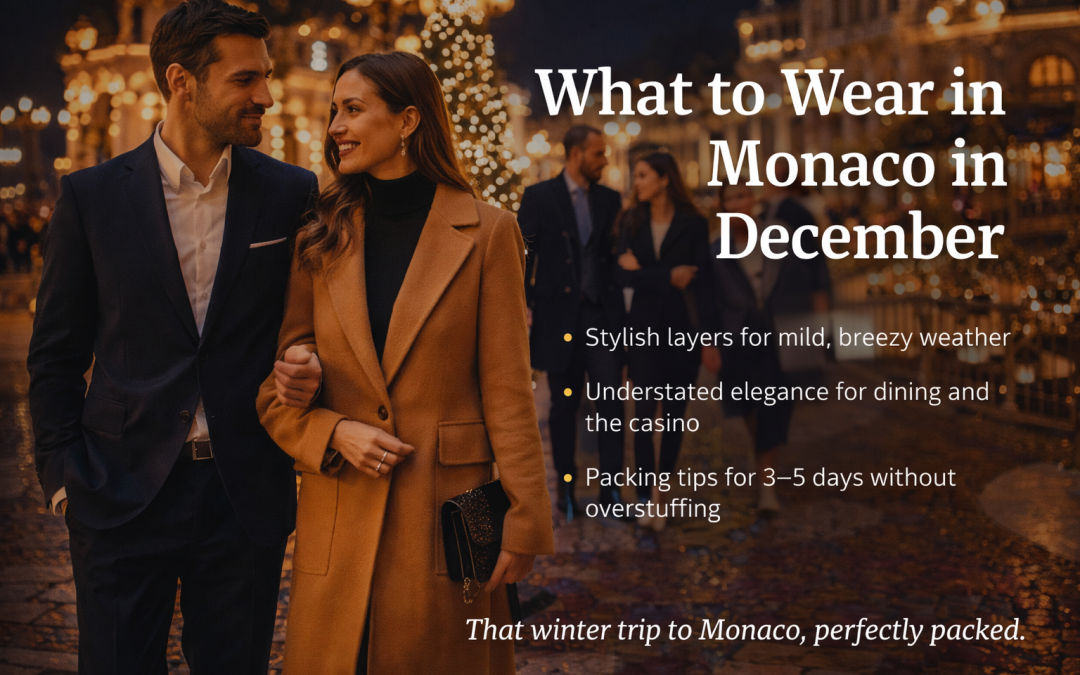
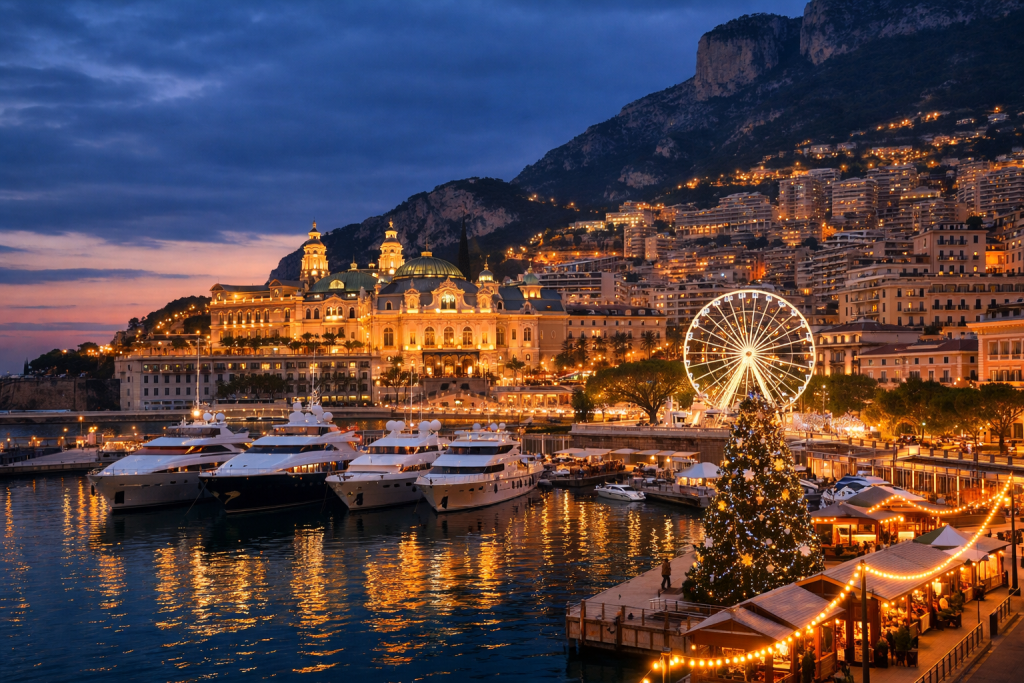
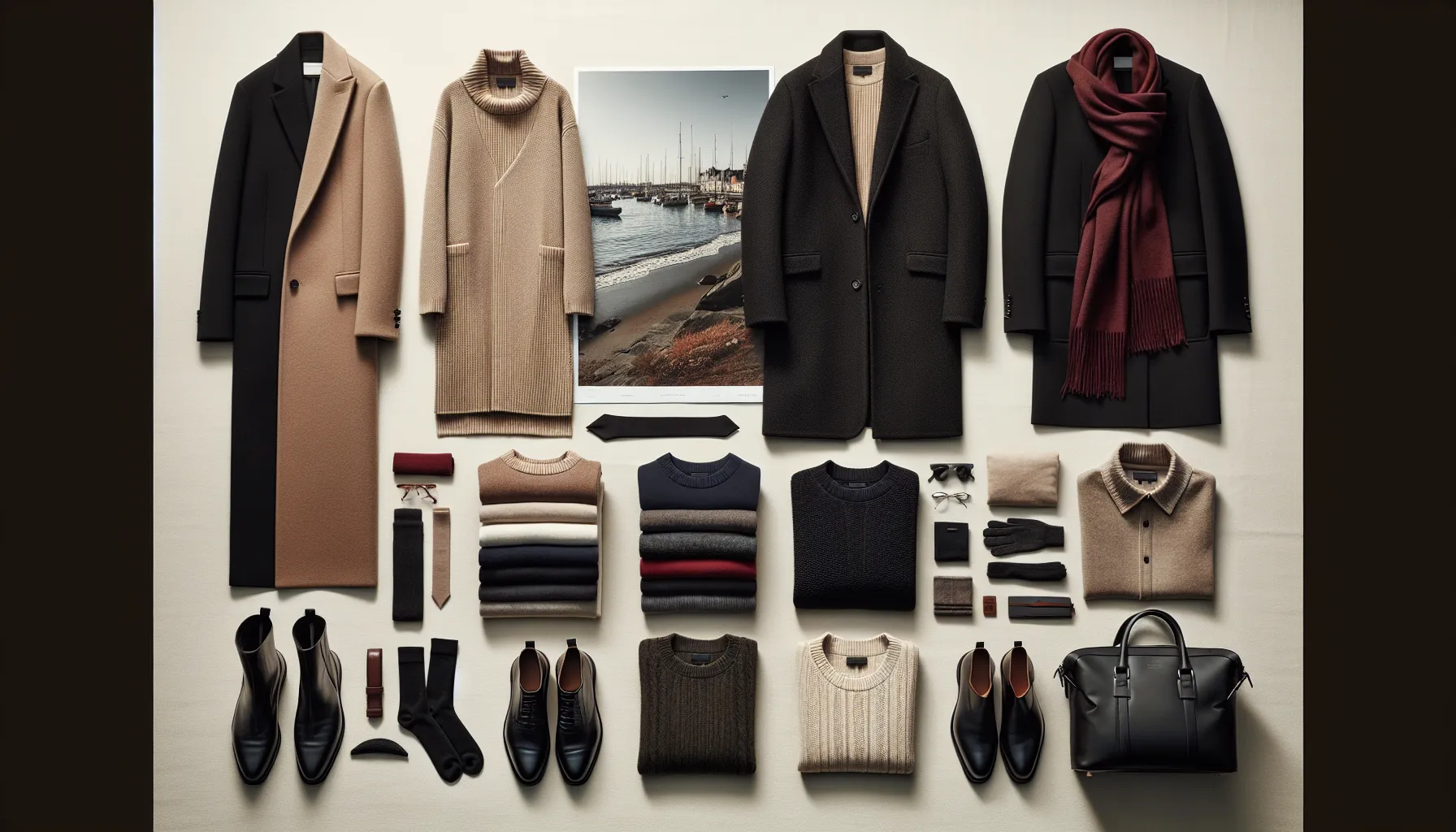
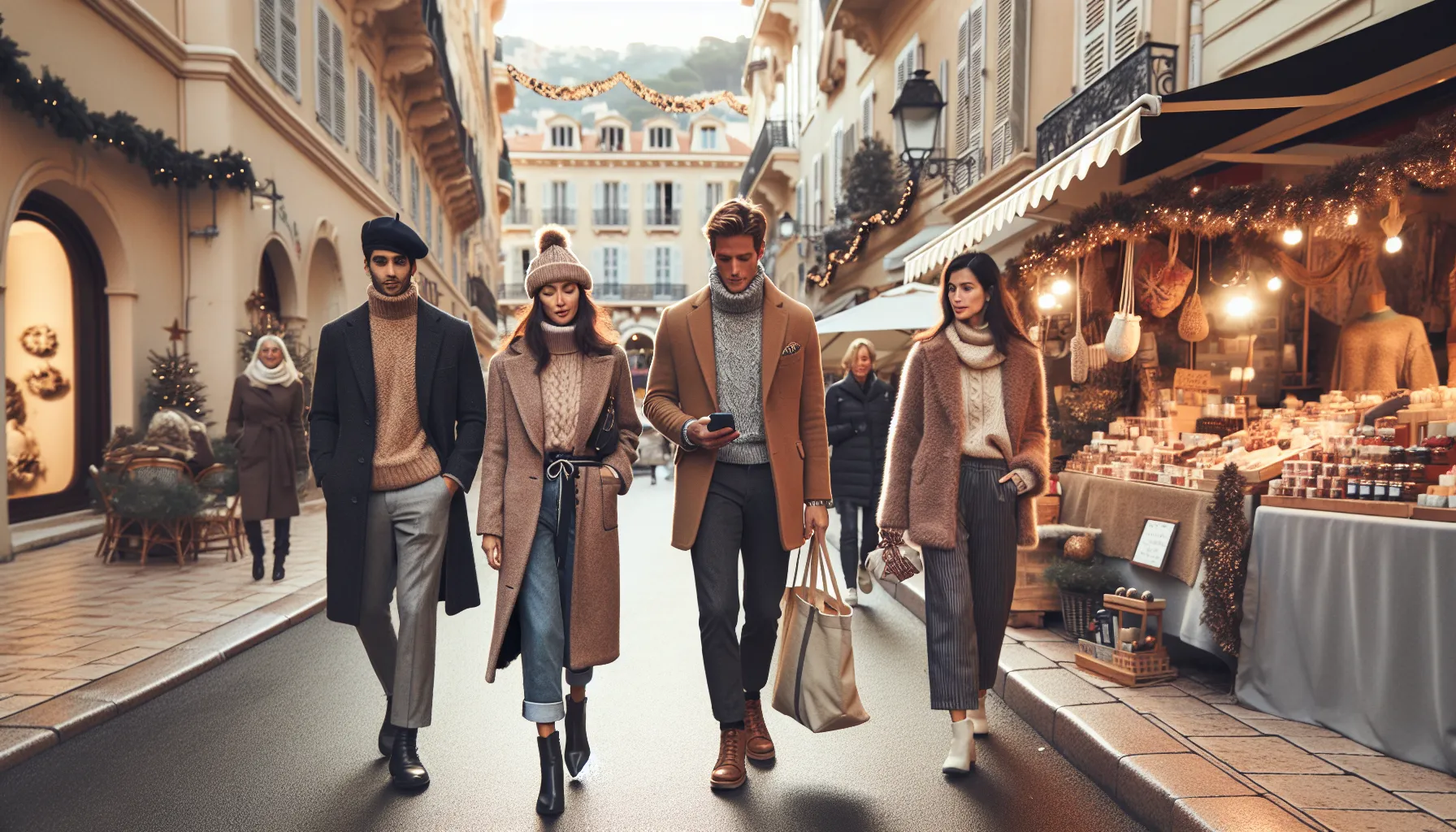
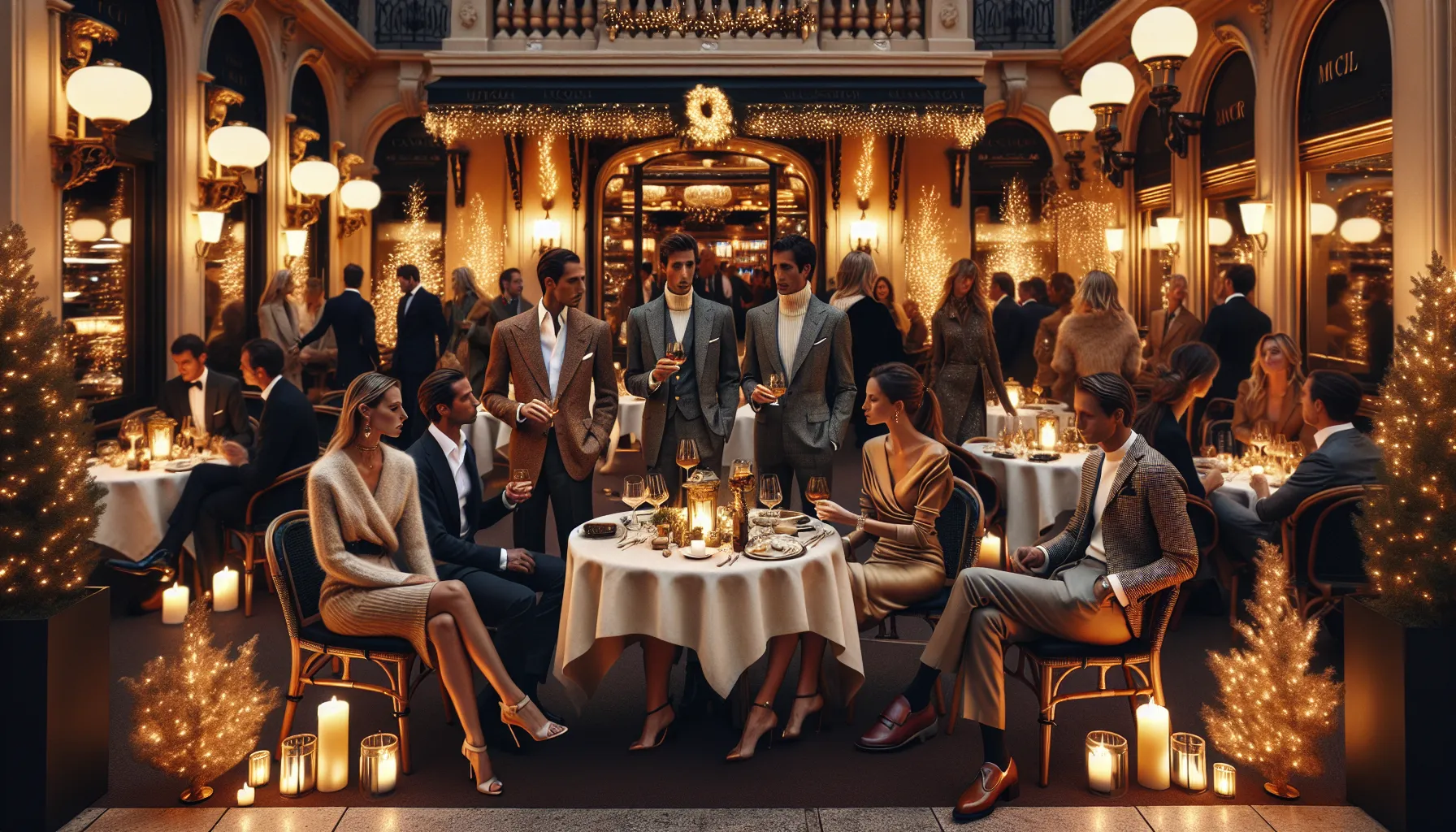
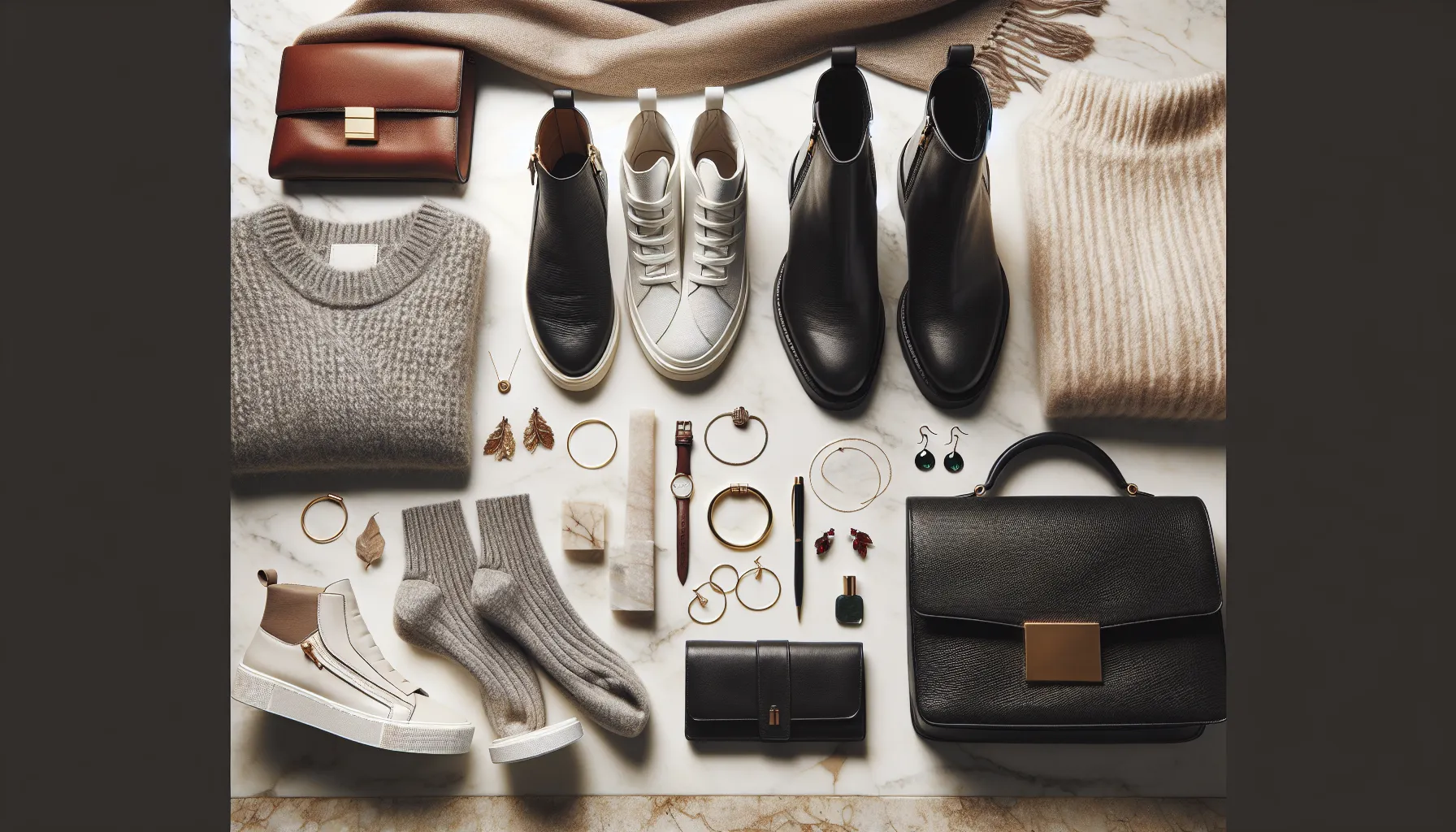
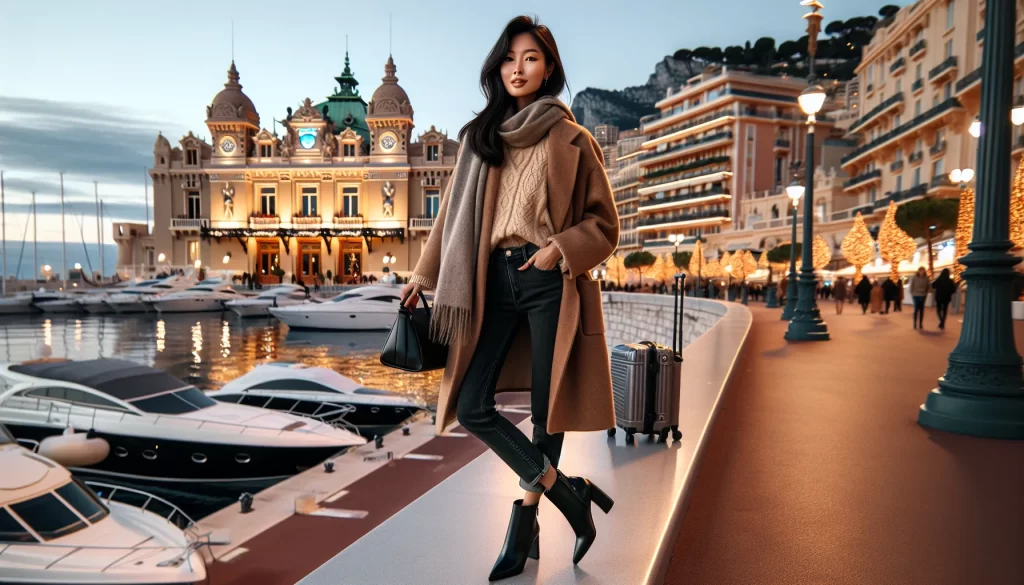
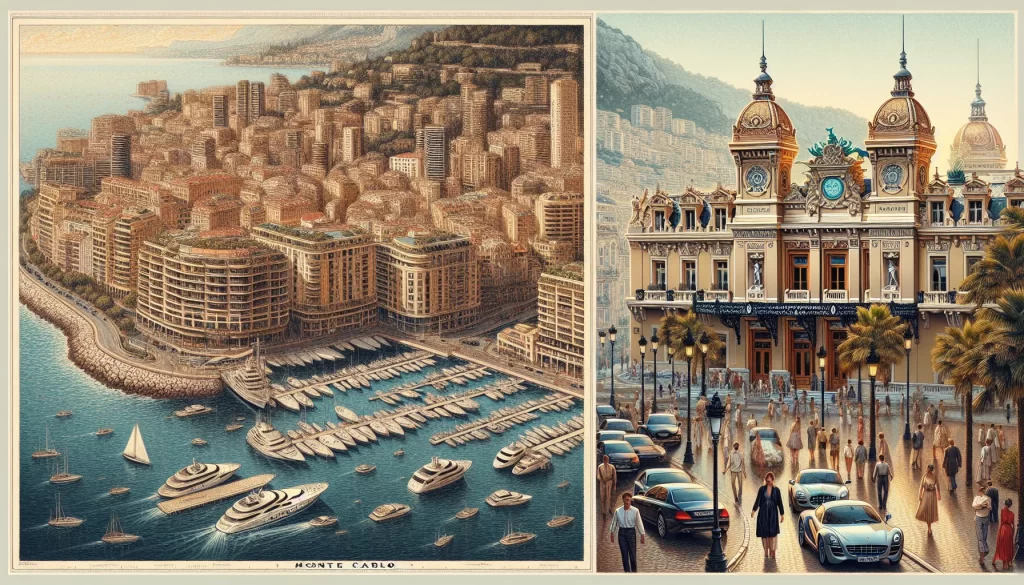
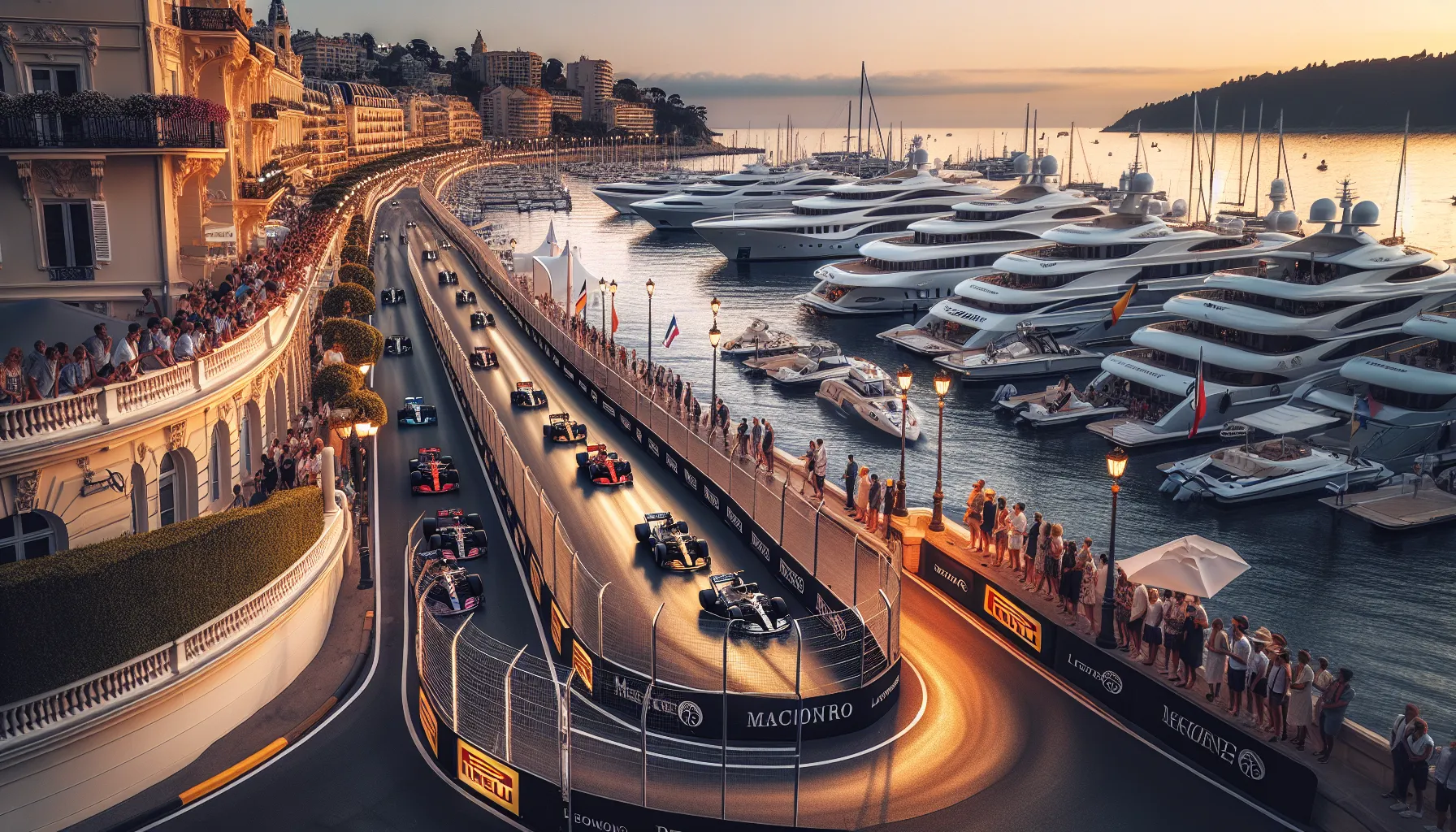
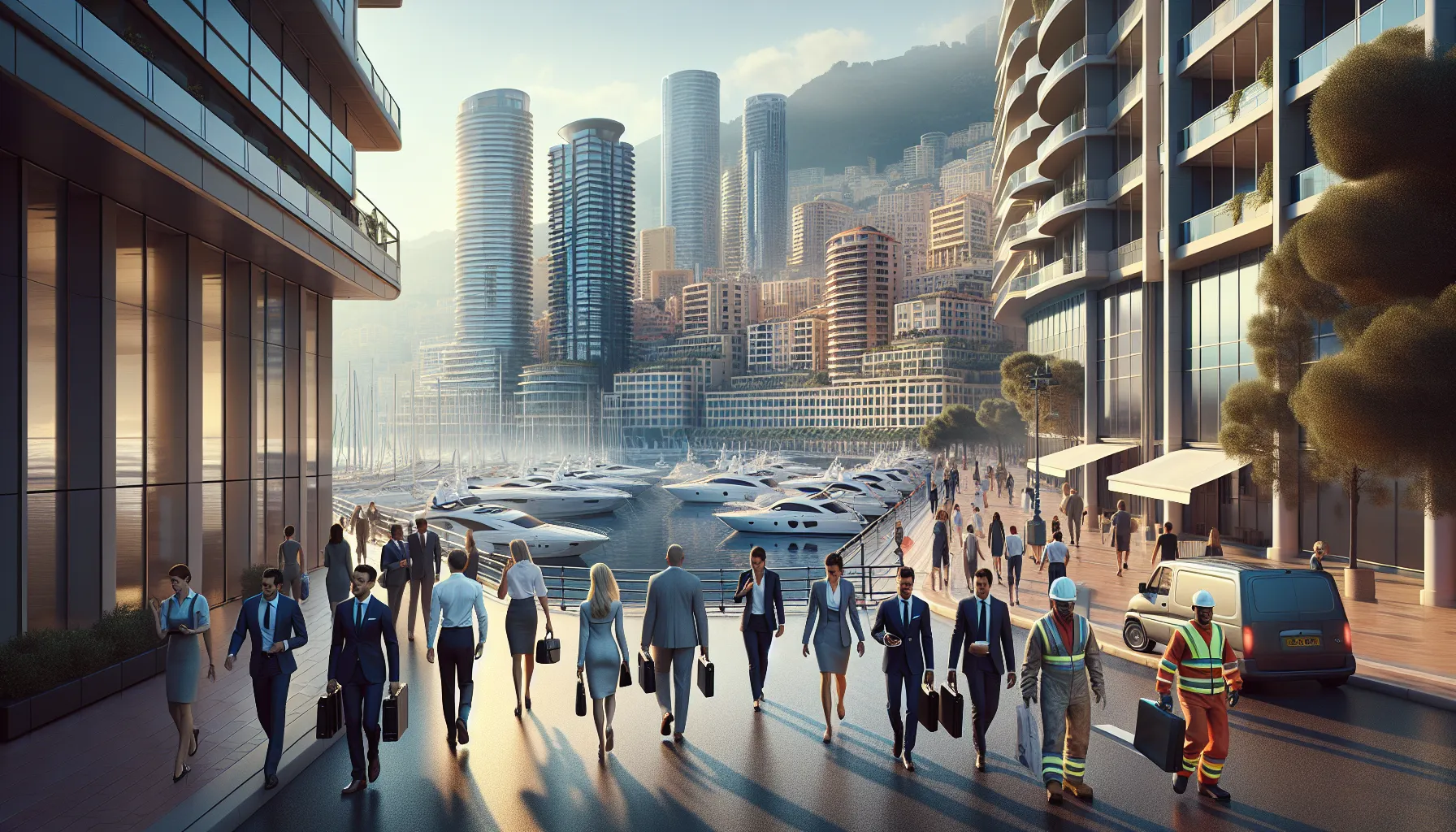
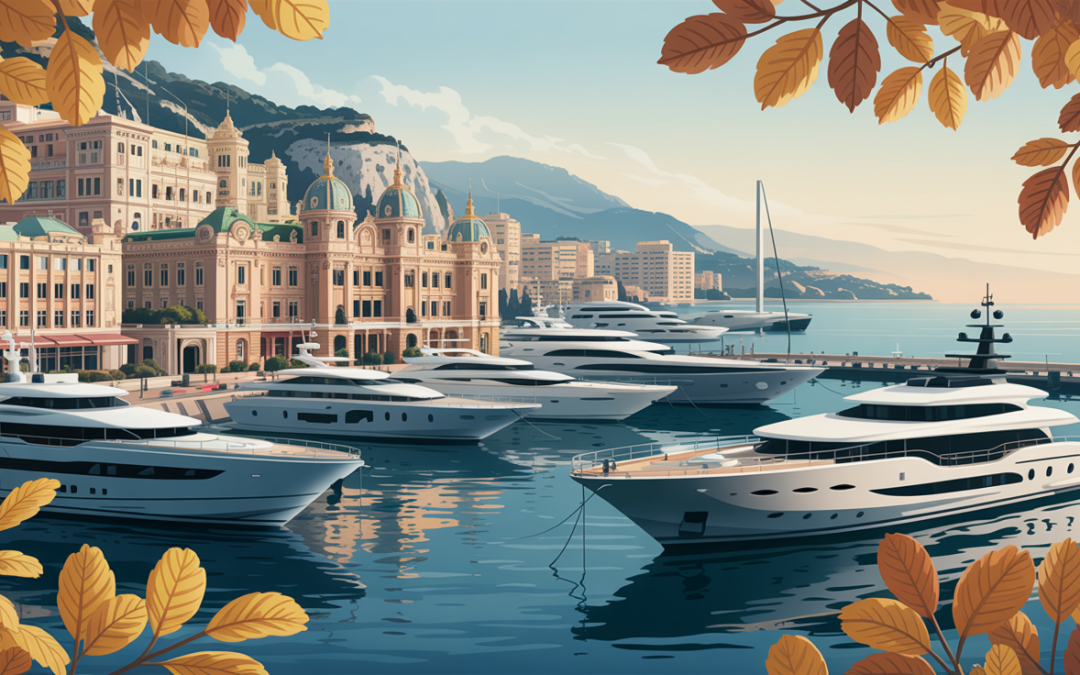
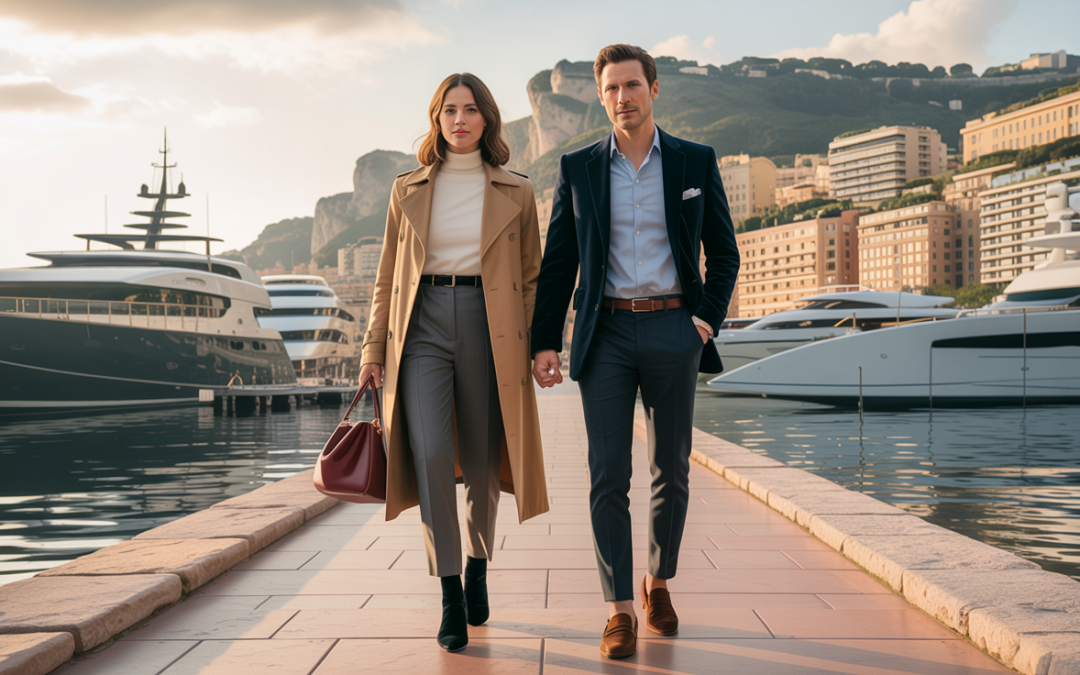
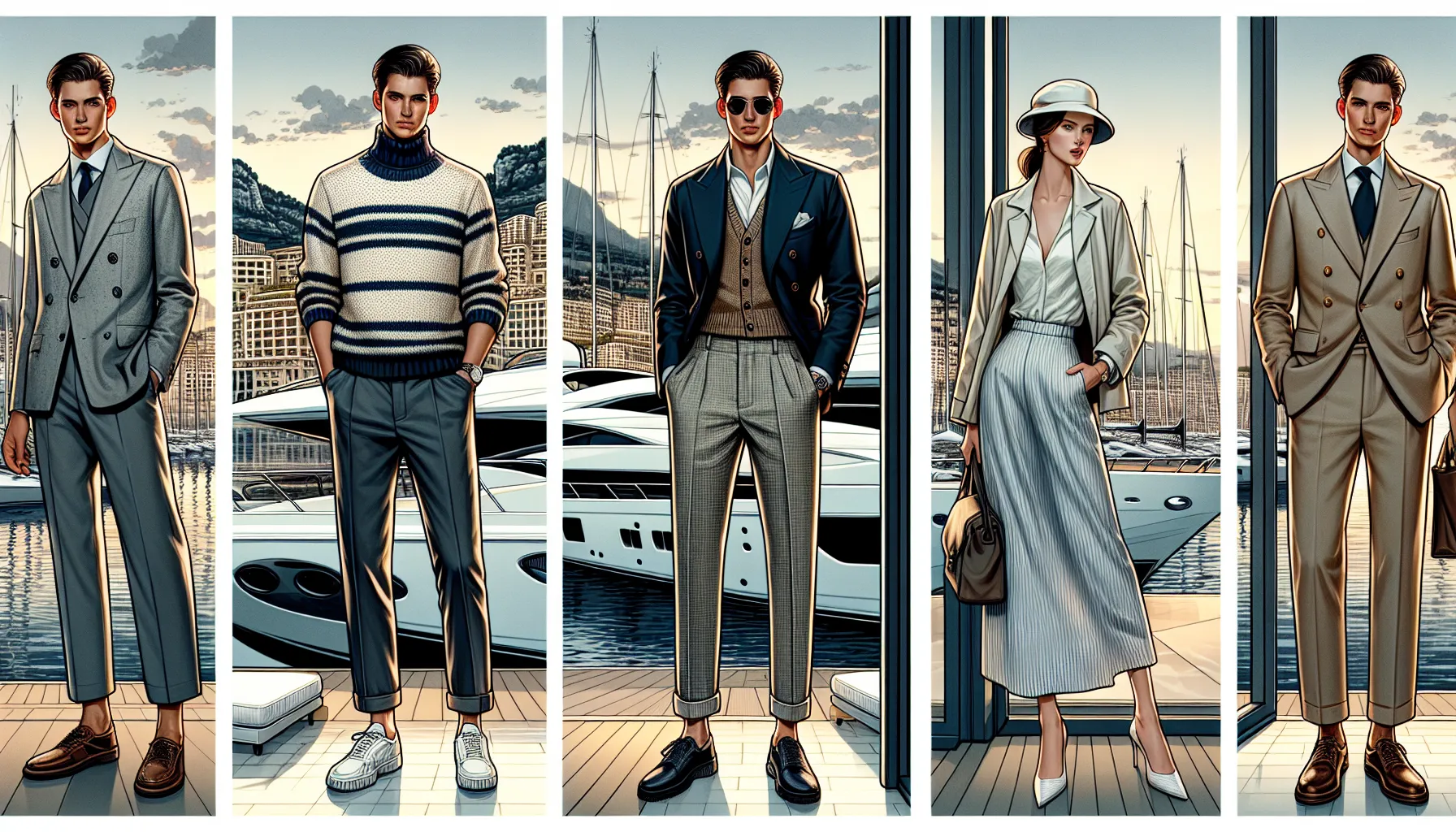
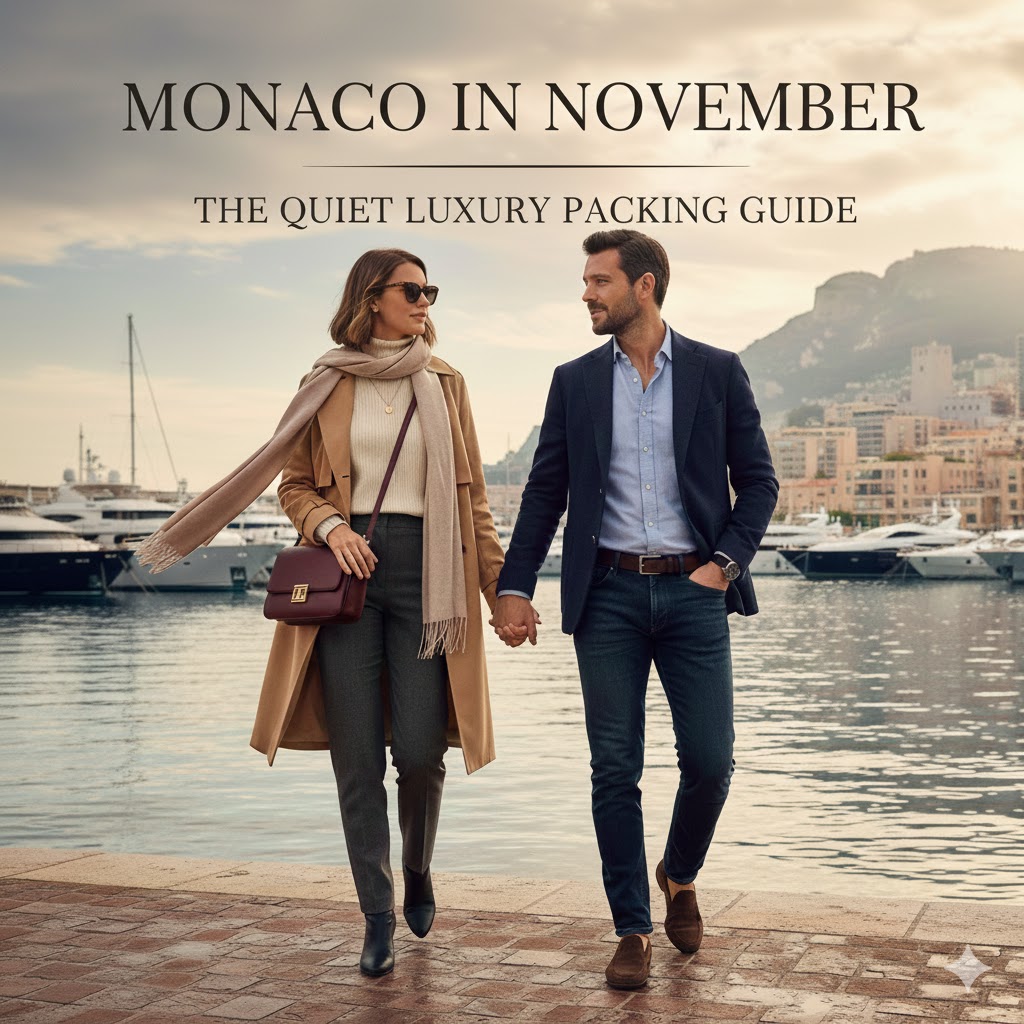
Monaco’s winter fashion reflects the same understated sophistication that defines life on the Riviera. Rather than dramatic seasonal changes or trend-driven wardrobes, the colder months simply bring a subtle shift toward elegant outerwear and refined layering.
At the center of this seasonal style is the coat. During winter, a well-chosen coat becomes the foundation of many outfits seen throughout the principality. Whether strolling along Port Hercule in the morning light or enjoying an afternoon coffee near the Monte Carlo Casino, the coat often defines the entire look. Several elements consistently shape Monaco’s winter aesthetic.
Elegant coats as the centerpiece of the outfit. Tailored wool coats, belted silhouettes, and refined textures create a polished appearance while remaining perfectly suited to the Riviera’s mild winter climate.
A lighter, Mediterranean color palette. Ivory, cream, camel, and soft neutrals reflect the coastal light beautifully and contribute to the distinctive elegance often seen in Monaco’s streets.
Timeless tailoring over seasonal trends. Rather than constantly changing wardrobes, many residents favor well-cut pieces that remain stylish year after year.
Practical pieces that still feel refined. Lightweight puffers and casual winter coats appear frequently during morning walks and daily errands, but they still maintain clean lines and balanced proportions.
Together, these elements create a style that feels both effortless and quietly sophisticated.
Monaco winter fashion does not attempt to compete with the bold statements seen in larger fashion capitals. Instead, it reflects something more enduring — a culture that values elegance, quality, and a sense of personal style that evolves gracefully over time.
Winter Style on the Riviera
Winter arrives differently on the Côte d’Azur than it does across much of Europe.
While northern cities prepare for months of grey skies and heavy layers, the Riviera enters a quieter, more luminous season. The mornings turn crisp, the sunlight softens, and the Mediterranean reflects a cooler palette of blues.
So, what to wear in Monte Carlo in winter? The answer lies in a style that adapts to this climate in its own elegant way. Here, the coat becomes the defining piece of the season, a statement of refined simplicity rather than a necessity against harsh cold.
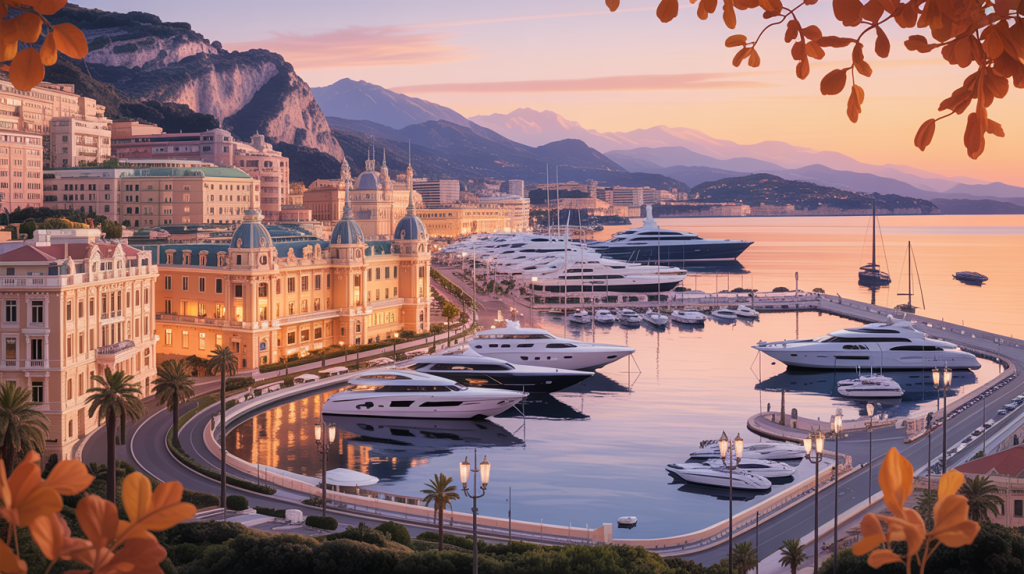
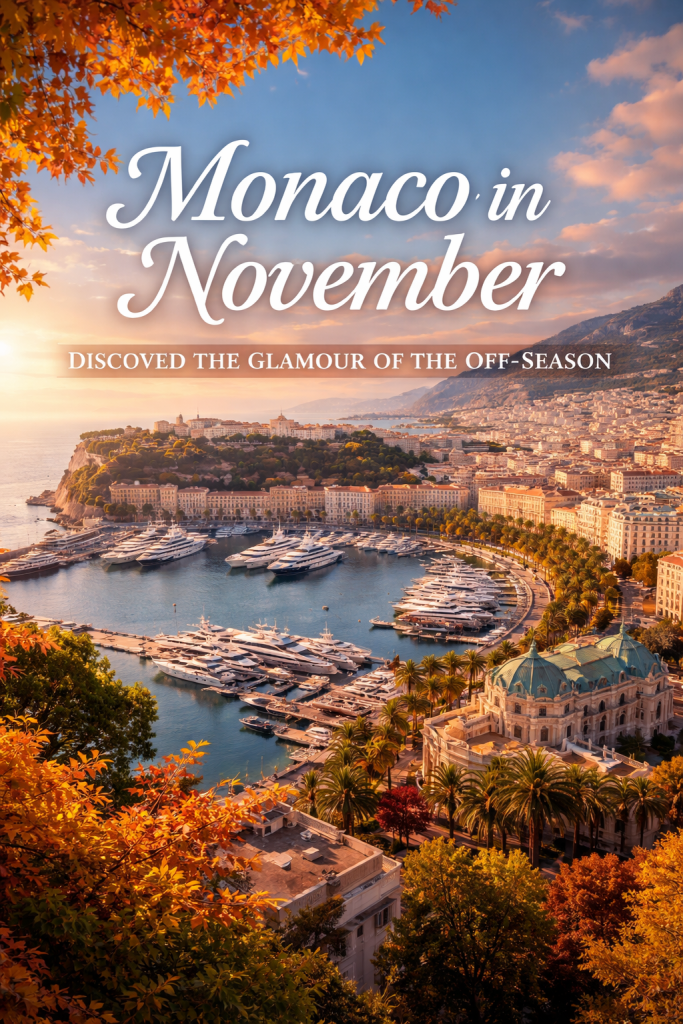
You begin to notice it everywhere: along Port Hercule, on café terraces in Monte Carlo, and along the boulevards where residents move with the quiet sophistication the principality is known for.
This approach to winter fashion prioritizes timeless tailoring, elegant colors, and quality fabrics over fleeting trends. It feels perfectly aligned with the Riviera itself — refined, relaxed, and effortlessly polished. Even when the temperature drops just enough to justify a proper winter coat, Monaco never loses its sense of understated elegance.
A Personal Note About What to Wear in Monte Carlo in Winter
Living on the Côte d’Azur for many years has taught me that style here often evolves quietly.
When people imagine the Riviera, they usually think of summer — flowing dresses, yachts in the harbor, beach clubs, and warm Mediterranean evenings. But winter brings a different kind of beauty to Monaco, one that feels more intimate and reflective.
During the cooler months, the streets become calmer, the light over the sea softens, and daily walks through Monaco reveal small details that might go unnoticed during the busy summer season.
It was during one of my quiet winter walks along Port Hercule that I began to notice something interesting about Riviera fashion. The coats people wore were rarely bulky or overly trendy. Instead, they felt timeless — tailored silhouettes, soft neutral colors, and pieces that seemed designed to last for many seasons.
I realized that winter style in Monaco is less about following fashion and more about expressing a sense of quiet confidence. People choose coats that feel elegant but practical, refined but effortless.
That philosophy resonated with me deeply.
It reflects something I’ve come to appreciate about life on the Riviera: simplicity often carries the most elegance.
The Coat as the Centerpiece of Monte Carlo’s Winter Style
If summer on the Côte d’Azur belongs to linen dresses, sunglasses, and light resort wear, winter quietly shifts the spotlight to one essential piece: the coat.
In Monaco, where winters remain mild but mornings and evenings carry a noticeable chill, the coat becomes the defining element of an outfit. Rather than layering multiple bulky garments, people often rely on one beautifully chosen coat that brings both warmth and elegance.
Walking through Monte Carlo during the cooler months, you quickly begin to notice how coats shape the visual rhythm of the streets. Along Port Hercule, elegant silhouettes move past the marina while the sea reflects the pale winter sun. In the Carré d’Or shopping district, coats glide between boutiques and cafés, often paired with simple trousers, boots, or understated accessories.
What stands out is the preference for structure and balance. Coats here are rarely oversized or overly casual. Instead, they tend to follow classic lines that flatter the body and create a sense of refined proportion.
Belted coats are particularly common because they define the waist while maintaining a graceful silhouette. Midi-length coats are also popular, offering both warmth and elegance without feeling heavy. Details such as wide collars, subtle textures, and carefully placed buttons add visual interest while keeping the overall look timeless.
Another characteristic of Monaco winter style is restraint. The coat is often allowed to speak for itself. Rather than competing with bold layers underneath, it becomes the focal point of the outfit.
This simplicity is part of what gives Riviera winter fashion its distinctive charm. The elegance is never forced. Instead, it emerges naturally from well-chosen pieces that reflect quality, balance, and an appreciation for understated style.
On the Côte d’Azur, winter fashion may be quieter than the vibrant summer wardrobes seen along the beaches and terraces, but it carries a sophistication of its own. And in Monaco, that sophistication often begins with a beautifully tailored coat.
The Riviera Color Palette
One of the most noticeable differences between winter fashion on the Côte d’Azur and winter style in many northern cities is the color palette.
In colder regions, winter wardrobes often become dominated by dark tones — deep blacks, heavy greys, and muted shades that reflect the darker skies and colder atmosphere of the season. While those colors certainly appear in Monaco as well, the Riviera tends to approach winter fashion with a lighter touch. The Mediterranean light plays an important role in this.
Even during the cooler months, Monaco receives a remarkable amount of sunshine. The sea reflects the light across the harbor, the pastel buildings along the coastline glow softly in the afternoon, and the entire landscape feels brighter than what many people associate with winter.
Because of this natural luminosity, lighter colors often look particularly striking during the Riviera winter.
Ivory, cream, soft beige, and camel coats appear frequently along the promenades and terraces of Monaco. These tones feel harmonious with the environment. They reflect the winter sunlight, soften the overall look of an outfit, and create a sense of quiet elegance that feels perfectly suited to the Mediterranean setting.
Black coats remain a classic choice, especially for evening outings or more formal occasions. They provide contrast and timeless sophistication, particularly when paired with tailored silhouettes or elegant accessories.
But many people on the Riviera choose to balance darker tones with lighter neutrals. The result is a winter wardrobe that feels refined rather than heavy. This subtle shift in color is one of the small details that gives Monaco winter fashion its distinctive identity. The style reflects not only personal taste but also the environment itself — the sea, the light, and the relaxed elegance that defines life along the Côte d’Azur.
Tailoring Over Trends
One of the most striking aspects of winter style in Monaco is how little it relies on fast-moving fashion trends. While many fashion capitals around the world chase the latest seasonal silhouettes, Riviera style tends to move at a slower, more deliberate pace. The emphasis is less on what is new and more on what remains elegant year after year.
This is where tailoring plays such an important role.
A well-cut coat instantly changes the way an outfit looks and feels. Structured shoulders create balance. Clean vertical lines elongate the body. A belt or subtle waist shaping brings definition and elegance without appearing overly styled.
These details may seem simple, but together they create a silhouette that feels timeless.
This emphasis on tailoring extends to the choice of individual pieces. Rather than chasing fleeting trends, the focus is on craftsmanship and longevity. A beautifully tailored coat, for instance, is seen as an investment — a piece designed to last for many seasons, adapting effortlessly to different outfits and occasions. This commitment to quality over quantity is a hallmark of Riviera style.
Another characteristic of Riviera tailoring is restraint. The cuts are rarely exaggerated, and the proportions tend to remain balanced and refined. Rather than oversized shapes or dramatic seasonal experimentation, the focus stays on classic lines that complement the wearer naturally.
This approach reflects a broader cultural attitude toward style in Monaco.
Fashion here is not about attracting attention through trends alone. Instead, it is about cultivating a sense of personal elegance that evolves slowly over time. A beautifully tailored coat becomes something that can be worn for many seasons, adapting effortlessly to different outfits and occasions.
In this way, Monaco winter fashion often feels less like a seasonal statement and more like a continuation of a long tradition of understated sophistication.
Practical Luxury: Puffers and Cold Morning Walks
While tailored wool coats may define the more elegant side of Monaco’s winter wardrobe, everyday life on the Riviera also calls for something a little more practical.
Winter mornings along the Mediterranean can be surprisingly crisp. The sea breeze moves through the harbor, and shaded streets can feel cooler than the temperature might suggest. On those days, especially in the early hours, lighter puffer coats begin to appear more frequently along the promenades.
Unlike the heavy, oversized parkas often seen in colder northern cities, Riviera puffers tend to maintain a sleek and polished look. They are designed to provide warmth without sacrificing silhouette. Many feature subtle waist shaping, longer cuts, or elegant details that help them feel refined rather than purely functional. These coats are particularly common during morning routines — a walk along the harbor, a stop at a neighborhood café, or a stroll through the quieter streets before the day fully begins.
You might see someone walking along Port Hercule wrapped in a long puffer coat while the sunlight begins to reflect across the water. Others move between local bakeries, grocery shops, and cafés, balancing practicality with the understated elegance that defines Monaco style.
Even in these casual moments, there is a certain attention to detail.
Footwear remains polished, accessories are minimal but carefully chosen, and coats still follow clean, flattering lines. The result is a kind of practical luxury — clothing that serves everyday needs while still reflecting the refined aesthetic of the Riviera.
This balance between comfort and elegance is one of the reasons Monaco winter style feels so effortless. Even the more functional pieces maintain a sense of quiet sophistication that fits naturally into the rhythm of life along the Côte d’Azur.
Where Monaco Winter Style Comes to Life
Part of what makes winter fashion in Monaco so distinctive is the setting itself. Clothing here rarely feels isolated from its surroundings. Instead, it becomes part of the landscape — blending naturally with the architecture, the sea, and the daily rhythm of life in the principality.
A winter morning along Port Hercule offers one of the clearest glimpses of this atmosphere. As the sun rises over the harbor, the light reflects across the water and illuminates the rows of yachts anchored along the quay. People begin their day with quiet walks along the waterfront, often wrapped in elegant coats that protect them from the cool sea breeze.
Not far away, the streets around Monte Carlo reveal another side of Monaco’s winter style. Here the pace becomes slightly more animated. Visitors and residents move between cafés, boutiques, and hotel entrances, creating a steady flow of polished silhouettes. Coats are draped casually over shoulders or buttoned neatly as people pause for coffee or conversation on the terraces.
The nearby Carré d’Or shopping district adds yet another layer to the scene. This small but iconic neighborhood has long been associated with Monaco’s refined lifestyle. During the cooler months, elegant coats become especially noticeable as shoppers move between the luxury boutiques and quiet streets lined with palm trees. What makes these moments particularly interesting is that nothing feels staged. The style emerges naturally from daily routines — a morning walk, an afternoon coffee, an evening dinner overlooking the sea.
In Monaco, fashion rarely demands attention. Instead, it simply becomes part of the atmosphere, reflecting the same balance of elegance and ease that defines life along the Riviera.
Monaco Winter Fashion Insider Tips
After years of observing daily life in Monaco and the surrounding Riviera towns, a few style patterns begin to appear.
These small details often define the distinctive elegance that visitors notice when they spend time here.
Invest in one beautiful coat rather than many average ones. Many residents prefer owning a few well-chosen pieces instead of constantly updating their wardrobes with seasonal trends.
Neutral colors dominate the Riviera wardrobe. Ivory, camel, beige, navy, and black are the colors that appear again and again throughout Monaco.
Structure matters more than decoration. Tailored lines, balanced proportions, and subtle details often create a more sophisticated look than bold fashion statements.
Simplicity creates elegance. Often the most refined outfits consist of just a few elements: a beautiful coat, classic footwear, and minimal accessories.
These observations may seem subtle, but together they form the foundation of Riviera style.
Must-Pack Winter Coats for a Stylish Trip to Monaco
If you’re planning a trip to Monaco, I also wrote a practical guide on what to pack and wear in Monaco in winter — complete with capsule wardrobe ideas and outfit combinations.
During the cooler months, I often reach for a few classic coat styles that feel perfectly suited to Monaco’s winter climate. These are the pieces that have become staples in my own wardrobe, and I see them worn again and again throughout the principality.
The Tailored Wool Coat — This is perhaps the most versatile piece. A well-fitted wool coat in ivory, camel, or navy works beautifully for everything from morning walks along Port Hercule to afternoon coffee meetings in Monte Carlo. The structure and weight of quality wool create an elegant silhouette that feels both polished and effortless.
The Belted Silhouette — A coat with a subtle belt or waist definition changes everything. It creates a flattering shape, adds visual interest without appearing overdone, and works beautifully across different body types and ages. This style is particularly popular among women throughout Monaco during the winter months.
The Lightweight Puffer — For practical morning walks and everyday errands, a sleek puffer coat maintains elegance while providing genuine warmth. Unlike bulky parkas, refined puffers feature clean lines, subtle colors, and tailored cuts that keep the overall look polished.
These three styles form the foundation of my winter wardrobe here on the Riviera. Each piece is designed to last for many seasons, adapting effortlessly to different occasions and outfits. I love pairing mine with black trousers and simple leather boots — the coat does the talking. Together, they embody the philosophy that defines Monaco winter style — quality over quantity, timelessness over trends, and elegance in simplicity.
Where Monaco Winter Style Comes to Life
If you enjoy exploring lifestyle and culture on the Côte d’Azur, there are many other aspects of Monaco worth discovering.
Some of the most enjoyable winter experiences include:
Walking along the harbor in the early morning light
Exploring the smaller streets of Monaco-Ville
Enjoying quiet coffee terraces during the cooler months
Discovering scenic viewpoints overlooking the Mediterranean
Visiting nearby Riviera towns during the off-season
Winter often reveals a more authentic side of the region, when daily life slows down and the beauty of the coastline becomes even more noticeable.
Further Riviera Inspiration & Recommended Reading
For readers interested in learning more about Riviera lifestyle, culture, and travel, the following resources can offer additional inspiration.
For readers who would like to explore the Riviera lifestyle more deeply, there are many wonderful resources that provide cultural context, travel inspiration, and insight into the unique elegance that defines Monaco and the Côte d’Azur.
Whether you are planning a visit, dreaming about the Mediterranean from afar, or simply interested in the timeless lifestyle of the French Riviera, the following books and resources offer beautiful perspectives on the region.
Books About Monaco and the French Riviera Winter Style
Several travel and lifestyle books capture the atmosphere of Monaco and the surrounding Riviera towns particularly well. Guides such as Lonely Planet Nice & Monaco or regional travel guides to the Provence–Alpes–Côte d’Azur provide helpful information about local neighborhoods, cultural landmarks, scenic walks, and historic sites.
These guides are especially useful for readers who want to explore the Riviera beyond the most famous attractions and discover smaller villages, coastal viewpoints, and lesser-known cultural treasures along the Mediterranean.
Riviera Lifestyle and Mediterranean Living
The Riviera has long inspired books about elegant coastal living, architecture, and interior design. Titles such as “Côte d’Azur Living: The Residences and Interiors of the French Riviera” beautifully showcase the villas, gardens, and interiors that define the region’s distinctive style.
Lifestyle books like “Little Book of Riviera Style” explore the relaxed sophistication that has shaped fashion, culture, and everyday life along the Côte d’Azur for decades. These works offer a deeper appreciation for the understated elegance that is reflected not only in architecture and interiors but also in the way people dress and live throughout the region.
Photography and Coffee-Table Books
Photography collections are another wonderful way to experience the Riviera. Coffee-table books dedicated to the French Riviera often capture the extraordinary Mediterranean light, pastel architecture, palm-lined promenades, and dramatic coastal landscapes that make this region so recognizable.
Historic photography collections also reveal how Monaco and the surrounding coastline evolved over time, documenting everything from Belle Époque villas to the early glamour that helped establish the Riviera as one of Europe’s most iconic destinations.
Travel Writing and Cultural Perspectives
Readers who enjoy literary travel writing may also appreciate classic works such as “A Little Tour in France” by Henry James, which offers thoughtful reflections on French towns, landscapes, and cultural traditions.
Although written in the nineteenth century, books like this continue to inspire modern travelers by capturing the enduring charm of France and the quiet beauty of its regions — qualities that are still very much present along the Côte d’Azur today.
Finding Inspiration for Future Riviera Visits
Many readers enjoy browsing travel and lifestyle books available through Amazon and major bookstores when planning trips to Monaco and the French Riviera. Travel guides, photography collections, and Riviera lifestyle books can provide valuable inspiration for discovering the region’s culture, architecture, and landscapes.
Whether you are preparing for your first visit to Monaco or simply enjoying the Riviera through books and photography, these resources offer a wonderful way to deepen your connection to this remarkable Mediterranean destination.
My Final Reflection About What to Wear in Monte Carlo in Winter
The elegance of Monaco is not only found in its grand hotels or famous harbor views. It often appears in the small details — the light over the sea, the calm rhythm of winter mornings, and the timeless style that seems to define life on the Riviera.
Winter may be the quieter season along the Côte d’Azur, but it reveals a side of Monaco that feels particularly authentic.
Sometimes all it takes is a beautiful coat, a walk along the Mediterranean, and a moment to appreciate the understated elegance that makes this place so unique.
Frequently Asked Questions About Winter Style in Monaco
What to wear in Monte Carlo in winter?
Winter fashion in Monaco tends to remain elegant and understated. Because the climate is relatively mild compared to much of Europe, heavy winter layers are rarely necessary. Instead, many people rely on well-tailored coats, light knitwear, and polished footwear that can transition easily from daytime walks to evening outings. Classic wool coats, belted silhouettes, and lightweight puffers are among the most common outerwear choices during the colder months.
Is winter cold in Monaco?
Monaco winters are generally mild. Daytime temperatures often range between 10°C and 16°C (50°F to 60°F), with cooler mornings and evenings. While the sea breeze can occasionally make the air feel brisk, the climate rarely requires the kind of heavy winter gear seen in northern Europe.
This mild weather allows residents and visitors to maintain a more elegant winter wardrobe, often centered around tailored coats rather than bulky parkas.
Are light-colored coats common on the Riviera?
Yes, lighter colors are surprisingly common during winter on the Côte d’Azur.
Ivory, cream, camel, and soft beige coats often appear along Monaco’s promenades and terraces. These tones complement the Mediterranean light and create a softer, more luminous winter look than darker winter palettes typically seen in colder climates.
Black coats remain a classic option as well, particularly for evening events or formal occasions.
Do people dress formally in Monaco during winter?
Monaco style tends to lean toward refined rather than overly formal. Many people prefer clothing that feels polished but still comfortable for everyday activities such as walking through town, meeting friends at cafés, or enjoying the waterfront.
Tailored coats, well-fitted trousers, and elegant accessories often create a look that feels sophisticated without appearing overly dressed.
What makes Riviera winter fashion unique?
The distinctive character of Riviera winter fashion comes from the combination of climate, lifestyle, and environment.
Because winters remain relatively mild, clothing choices can prioritize elegance as much as warmth. The Mediterranean light also influences color choices, encouraging softer neutrals and lighter tones.
Ultimately, Monaco winter style reflects the same quiet sophistication that defines life along the Côte d’Azur — timeless pieces, balanced silhouettes, and an effortless sense of refinement.
Join the Conversation about the Riviera Winter Fashion
One of the most enjoyable parts of writing about Monaco and the Côte d’Azur is hearing the experiences of others who love this region.
Have you visited Monaco during the winter months?
Perhaps you have discovered your own favorite walks along the harbor, quiet café terraces, or hidden viewpoints overlooking the Mediterranean. I would love to hear about your experiences.
Feel free to share your thoughts and observations in the comments below. Your stories often add new perspectives and inspiration for readers who are discovering the Riviera for the first time.
Visiting Monaco in winter might not sound obvious, but one of the season’s most charming surprises is the Monaco ice rink at Port Hercule.
Set right beside the harbor, this outdoor rink transforms the famous marina into a festive winter village, complete with twinkling lights, palm trees, and Mediterranean views.
I still remember the first time I saw the Monaco ice rink at Port Hercule in winter. The harbor, usually filled with sleek yachts glinting in the sunshine, had transformed into something straight out of a snow globe. Lights shimmered across the water, music drifted through the cool air, and right in the middle of it all was a real ice rink, glowing under the Mediterranean sky.
It smelled like roasted chestnuts and hot chocolate. Children were laughing, teenagers were trying to impress each other with slightly wobbly spins, and a few determined grandparents clung to the rail with the same focus they once used to steady their children’s first steps.
If you’ve ever wondered whether Monaco is actually fun in winter, or if it’s only a summer playground, I can tell you this: winter here has its own quiet magic. And the seasonal ice rink at Port Hercule sits right at the heart of it.
In this guide, I’ll walk you through what the Monaco ice rink is really like in winter, who it’s best for, when to go, what to expect on the ice, and how to turn your visit into a relaxed and memorable winter day in Monaco and it is updated for the winter season and current visitor experience at Port Hercule.
Key Takeaways
Monaco ice rink fun at Port Hercule in winter combines a full-size outdoor rink with harbor views, palm trees, and a cozy winter village atmosphere.
The seasonal ice rink typically runs from early December to late February, with quieter weekday afternoons and more festive, lively evenings under twinkling lights.
Skating works for all ages and skill levels, from nervous beginners clinging to the rail to confident skaters enjoying wide open stretches of ice.
Beyond skating, visitors can enjoy food stalls, small rides, gift chalets, and easy access to nearby highlights like Monaco’s Old Town, the Christmas market, and harborfront cafés.
To stay comfortable, dress in layers with ankle-covering socks and thin gloves, check session times and prices in advance, and use simple safety habits like starting slowly and giving faster skaters space.
Why Port Hercule Turns Into A Winter Wonderland
I’ve visited the Monaco ice rink at Port Hercule across several winter seasons and watched how the atmosphere shifts from calm weekday afternoons to lively festive evenings.
Port Hercule is Monaco’s working harbor, so for most of the year it’s all polished decks, bobbing boats, and the occasional superyacht that looks bigger than a small hotel. But in winter, usually from early December, the whole area softens.
The city sets up a winter village along the waterfront, wooden chalets, string lights, and seasonal decorations that make you forget you’re only a few steps from the sea. Right at the center of this scene is the ice rink.
I love the contrast: palm trees on one side, an ice rink on the other. It feels slightly impossible, like someone slipped a piece of the Alps down to the Riviera by mistake.
And that’s the charm. You get the best of both worlds:
The glow of a traditional winter fair
The mild Mediterranean climate (usually much kinder than the deep-freeze you get inland)
The view of the harbor and the Prince’s Palace up on the rock, watching over it all
As the sun sets early, the rink lights come on, casting a silver sheen over the ice. It’s not just about skating: it’s about that feeling of being wrapped in winter without actually freezing solid.
Afternoons are gentle and bright. You’ll see families with small children holding hands, hesitant first-timers clinging to the rail, and relaxed locals taking a few laps after work.
Evenings feel different. The lights are stronger, the music a bit livelier, and there’s a cozy bustle to the place. You might hear a Christmas song in December, then more pop music as the season goes on. It’s not wild, just pleasantly alive.
The layout
The rink itself is a full-size outdoor ice rink set right on the harbor. Around it, you’ll usually find:
Ticket booth and skate rental at one side
Benches and seating for putting on skates (or waiting, if you’re the “I’ll just watch, thanks” type)
Food stands nearby with hot chocolate, crêpes, and snacks
Toilets and first aid close enough that you don’t have to trek far in skates
There’s enough space for confident skaters to glide while beginners hug the edges. And if you’re anything like me, you’ll do both in the same visit.
Skating at the Monaco Ice Rink for Every Age and Skill Level
One of the reasons I keep going back is that the rink genuinely works for everyone. I’ve seen tiny toddlers barely out of pushchairs and seniors who look like they could teach a class in graceful gliding.
If you’re a total beginner
If you’ve never been on skates before, don’t worry, you won’t be alone. The edges of the rink are lined with people discovering that standing on ice is, in fact, a special skill.
My approach the first time? One hand on the rail, one hand on the friend I had foolishly claimed I didn’t need. I wobbled, laughed, and spent the first ten minutes convinced I might never let go.
The ice staff keep an eye on people and the atmosphere is kind, not competitive. You’ll pick it up faster than you think.
If you’re more experienced
If you’ve skated before, you’ll have room to stretch out. There are times (especially midweek or slightly off-peak hours) when you can enjoy wide, open stretches of ice and settle into a good rhythm.
I’ve watched a few local teens doing spins that looked suspiciously like they’d been copying Olympic routines. It adds a bit of theater for the rest of us.
For kids and older adults
Children generally adapt faster than adults, it’s almost embarrassing. They fall, they bounce, they’re off again.
For older adults, I always say: go at your own pace. There’s no rule that says you have to cross the middle of the rink. You can stay close to the side, skate for a few minutes, then step off for a warm drink and just enjoy the atmosphere. Even one cautious lap still counts as Monaco ice rink fun in my book.
Family-Friendly Activities Beyond Skating
The ice rink is the star, but it’s not the only show.
Depending on the year’s setup, you’ll often find a winter village alongside the rink with:
Craft or gift stalls with cute souvenirs or seasonal items
I like to plan an entire afternoon there. A bit of skating, a pause for something warm and chocolatey, then a slow stroll along the harbor to watch the lights reflecting on the water.
If you’re with grandchildren, it’s easy to break the time into small pieces: 20–30 minutes on the ice, then a snack, then another quick whirl. And if anyone in the group isn’t keen on skating, they still have plenty to do and see.
Some years there are themed events or special shows on or near the rink, check the current program when you’re planning your trip. I’ve stumbled into more than one cheerful surprise performance that way.
Planning Your Visit: Best Times, Tickets, And Budget Tips
I’ve learned a few tricks over my visits that make the whole experience smoother, and a bit kinder on the wallet.
Best times to go
Mornings or early afternoons on weekdays tend to be the quietest
After-school hours and weekends are busier, but also more lively
Evenings are lovely if you want the full twinkling-lights experience, especially close to Christmas and New Year
If you prefer fewer people on the ice, I drift toward earlier in the day. If you like atmosphere and don’t mind a bit of a crowd, early evening is perfect.
Tickets and rentals
Prices vary slightly each year, but you usually pay a small fee for a timed skating session, with skate rental included or available for a modest extra charge. Bring a bit of ID or a small deposit just in case they ask.
You can sometimes find up-to-date prices on the official Monaco website or local event pages before you go, which helps with budgeting.
Budget-friendly tips
Check session lengths so you don’t overpay for time you won’t use
Share snacks: one big cone of churros can go a long way
Walk or use public transport if you can: parking in Monaco can add up
Even though Monaco has a luxurious reputation, an afternoon at the Port Hercule ice rink doesn’t have to be expensive. A single skating session and a shared treat can still feel special without turning into a grand production.
What To Expect On The Day: Weather, What To Wear, And Safety
Monaco in winter isn’t like a ski resort. You’re unlikely to be buried in snow, but it can still feel surprisingly chilly by the water, especially when you’re standing on ice.
Weather
Expect cool, often crisp days, with temperatures that can feel colder in the evening breeze by the harbor. It’s the kind of cold that sneaks in at your ankles if you’re not prepared.
What to wear
Here’s what I reach for when I’m heading to the rink:
Warm but comfortable jacket (you do warm up once you start moving)
Long trousers or leggings (nothing that drags over your skates)
Socks that cover your ankles – very important with rental skates
Thin gloves (they keep your fingers warm and protect you if you take a gentle tumble)
A hat or headband is nice for evenings, and I always bring a small bag I can leave with a non-skating friend or on the side.
Safety and comfort
I’ve seen all sorts of falls, most of them ending in nothing more than laughter and a slightly bruised ego. The ice staff monitor things, and people are generally considerate.
A few common-sense tips I follow:
Don’t rush your first few steps on the ice
Keep an eye out for fast skaters and give them space
If you fall, take your time to get up, or let someone help you
And if at any point you feel tired, there’s no shame in stepping off, handing back the skates, and shifting to the noble role of official photographer.
Things to Do Near the Monaco Ice Rink at Port Hercule
One thing I love about Port Hercule is how easy it is to turn “just a bit of skating” into a full winter’s day out in Monaco.
Here are some of my favorite combinations:
Old Town (Le Rocher): After skating, I sometimes take the elevators or the path up to the old town, where the Prince’s Palace, narrow streets, and quiet squares feel a world away from the harbor bustle.
Monaco Christmas market (when it’s on): The winter village by the harbor often doubles as a Christmas market in December, full of decorations, treats, and gifts.
Monaco’s cafés: There’s something deeply satisfying about warming up with a proper coffee or hot chocolate after an hour on the ice. I like to sit where I can still see the harbor.
Evening harbor walk: Even if you do nothing else, a simple stroll along the water after your skating session, with the city lights reflecting off the sea, feels like a little movie moment.
Because Monaco is compact, you can fit a lot into a few hours without ever feeling rushed.
Before wrapping up, here are a few practical tips that can help you enjoy the Monaco ice rink at Port Hercule more comfortably and make the most of your time by the harbor.
Quick Tips for Visiting the Monaco Ice Rink at Port Hercule
Weekday afternoons are usually the quietest time to visit the Monaco ice rink, while early evenings offer the most atmosphere with lights reflecting on the harbor. If you are unsure how long you will want to skate, it helps to check session lengths before paying, as shorter time slots are often more than enough for beginners and families.
Wearing socks that fully cover your ankles makes a noticeable difference when using rental skates, and thin gloves help keep hands warm while also offering a bit of protection in case of a fall. Rental skates can feel stiff at first, but they usually become more comfortable after a few minutes on the ice.
If not everyone in your group wants to skate, the area around the rink makes it easy to enjoy the experience from the sidelines. Benches, nearby cafés, and food stalls allow non-skaters to relax, watch the activity on the ice, and still feel part of the winter atmosphere at Port Hercule.
Conclusion
Making The Most Of Monaco’s Winter Magic At Port Hercule
When I think of Monaco, I don’t just picture sunshine and Formula 1 anymore. I think of winter evenings at Port Hercule, lacing up skates at an unhurried pace, and watching the harbor glow as the lights come on.
I picture the ice rink at Port Hercule in winter, the soft scrape of blades cutting into the ice, the mix of nervous laughter and quiet concentration, and that unexpected feeling of warmth that comes from sharing a playful moment in a place better known for polish and glamour.
It isn’t about being a perfect skater. It’s about trying something lighthearted in a setting that feels both elegant and surprisingly down to earth.
If you ever find yourself in Monaco during the winter months, give yourself permission to do it. Rent the skates, hold the rail if you need to, laugh when you wobble, warm your hands around a cup of hot chocolate afterward, and linger by the water as the harbor lights begin to sparkle.
Then, when someone asks you what Monaco is like in winter, you won’t have to guess. You’ll be able to say, from experience, that it’s a little bit magical — especially down by the ice at Port Hercule.
Frequently Asked Questions About Monaco Ice Rink Fun at Port Hercule
When is the Monaco ice rink at Port Hercule open in winter?
The Monaco ice rink at Port Hercule is usually open from early December through to the end of February. Exact dates and opening hours can change slightly each year, so it’s best to check the official Monaco tourism site or the Mairie de Monaco page before planning your visit.
What can I expect from the atmosphere at the Monaco ice rink in winter?
Afternoons at the Monaco ice rink are calm and family-friendly, with beginners and children taking their time on the ice. Evenings feel livelier, with stronger lights, music, and a cozy winter-village buzz around the harbor, especially near Christmas and New Year, without becoming too crowded or wild.
Is the Port Hercule ice rink suitable for beginners, kids, and older adults?
Yes. The Port Hercule ice rink is designed for all ages and skill levels. Beginners can stay close to the rail, kids usually pick it up quickly, and older adults can skate at their own pace, taking breaks for hot drinks or simply enjoying the waterfront winter atmosphere from the sidelines.
How much does it cost to skate at the Monaco ice rink at Port Hercule?
Ticket prices for the Monaco ice rink vary slightly each year, but you typically pay a small fee for a timed skating session, with skate rental included or available for a modest extra charge. To budget properly, check current prices on the official Monaco website or local event listings before you go.
What should I wear to skate comfortably at the Monaco ice rink in winter?
Monaco in winter is milder than the Alps, but it’s still chilly by the harbor. Wear a warm but light jacket, long trousers or leggings, ankle-covering socks, and thin gloves. A hat or headband is helpful in the evening. Avoid clothing that drags on the ice or restricts movement while skating.
Is Monaco worth visiting in winter or is it only a summer destination?
Monaco is absolutely worth visiting in winter. The Port Hercule ice rink, winter village, and Christmas market create a festive atmosphere, while crowds are generally smaller than in summer. You still enjoy Mediterranean views, cafés, and walks by the harbor, but with a quieter, more magical seasonal feel.
Picture this: it’s December, the sea is a deep blue, the lights of Monaco are twinkling like a jewelry box, and you’re stepping out of your hotel looking…perfectly dressed. Not shivering, not sweating, not wishing you’d packed “just one more jacket.” Just confident.
That’s what I want for you.
When I first planned a December trip to Monaco, I imagined either heavy coats and snow or summer dresses and yachts. Spoiler: it’s neither. The weather is mild-but-chilly, the style is elevated-but-subtle, and the whole place feels like Christmas met a luxury magazine.
So let’s treat this like we’re chatting over tea. I’ll walk you through exactly what to wear in Monaco in December, what the weather really feels like, how glamorous people actually dress, and how to pack a small, smart suitcase that still feels special. You’ll know what to wear for coastal walks, candlelit dinners, and even a cheeky visit to the casino…without overpacking half your wardrobe.
By the end, you’ll have a clear, realistic packing list, and maybe a little excitement about planning outfits that are as fun as the trip itself.
Understanding Monaco’s December Weather And Vibe
Daytime Temperatures, Rain, And Wind
Let’s start with the practical bit: the weather. Monaco in December is not a deep-freeze winter wonderland, but it’s definitely not beach-weather either.
Daytime temperatures usually sit around the 50–57°F (10–14°C) range. Think: cool spring day, but with shorter daylight and a bit more breeze off the water. Mornings and evenings feel colder, often dipping to the mid-40s°F (around 7°C), especially if you’re near the harbor.
You’ll likely get:
Mildly chilly days – a light to medium coat is enough.
Some rain – not monsoon-level, but expect a few showers.
Coastal wind – the breeze can make 52°F feel closer to 45°F if you’re not layered.
So, when I think about what to wear in Monaco in December, I don’t picture heavy ski jackets. I picture clever layering: a warm base layer, a chic sweater, and a coat you’re happy to be photographed in.
If you’d be comfortable in a wool coat and a scarf on a cold autumn day at home, you’ll be just about right in Monaco.
Dress Codes, Glamour, And Local Style Expectations
Now the fun part: the vibe.
Monaco in December is glamorous, but not in a loud, flashy way. The style is more:
Tailored rather than tight
Polished rather than overdone
Understated luxury rather than big logos everywhere
Locals and regular visitors tend to wear neutral colors, great fabrics, and good shoes. Even casual outfits are…let’s say “well thought-out.” You won’t see many people in sloppy hoodies and worn-out trainers unless they’re clearly off-duty locals walking dogs.
The unwritten dress code feels like: “Dress like you respect yourself and the place, but don’t look like you’re trying too hard.” A simple wool coat, dark jeans, leather boots, and a pretty scarf can fit in nicely almost anywhere during the day.
In the evenings, especially around Christmas and New Year, you’ll see more sparkle, higher heels, sharper blazers, and elegant dresses, but still with that European restraint. Think “nice restaurant in a big city,” upgraded with a hint of Riviera flair.
Building A Versatile Winter Capsule Wardrobe For Monaco
Essential Layers: Base, Mid, And Outerwear
To keep things simple, I like to build a capsule wardrobe for Monaco in December, pieces that mix and match, so I don’t end up wrestling with an overstuffed suitcase on the hotel floor.
I think in three layers:
Base layer (closest to your skin)
Lightweight thermal tops (not bulky, just thin and warm)
Long-sleeve tees or thin merino wool tops
Tights or thermal leggings if you run cold
Mid layer (the cozy part)
Fine-knit sweaters (merino, cashmere, or good quality cotton blends)
A chic cardigan or two
A smart long-sleeve blouse or shirt for dressing up
Outerwear (what everyone actually sees)
A knee-length wool coat or tailored wrap coat
Optional: a lighter jacket or blazer if you like layering for evenings
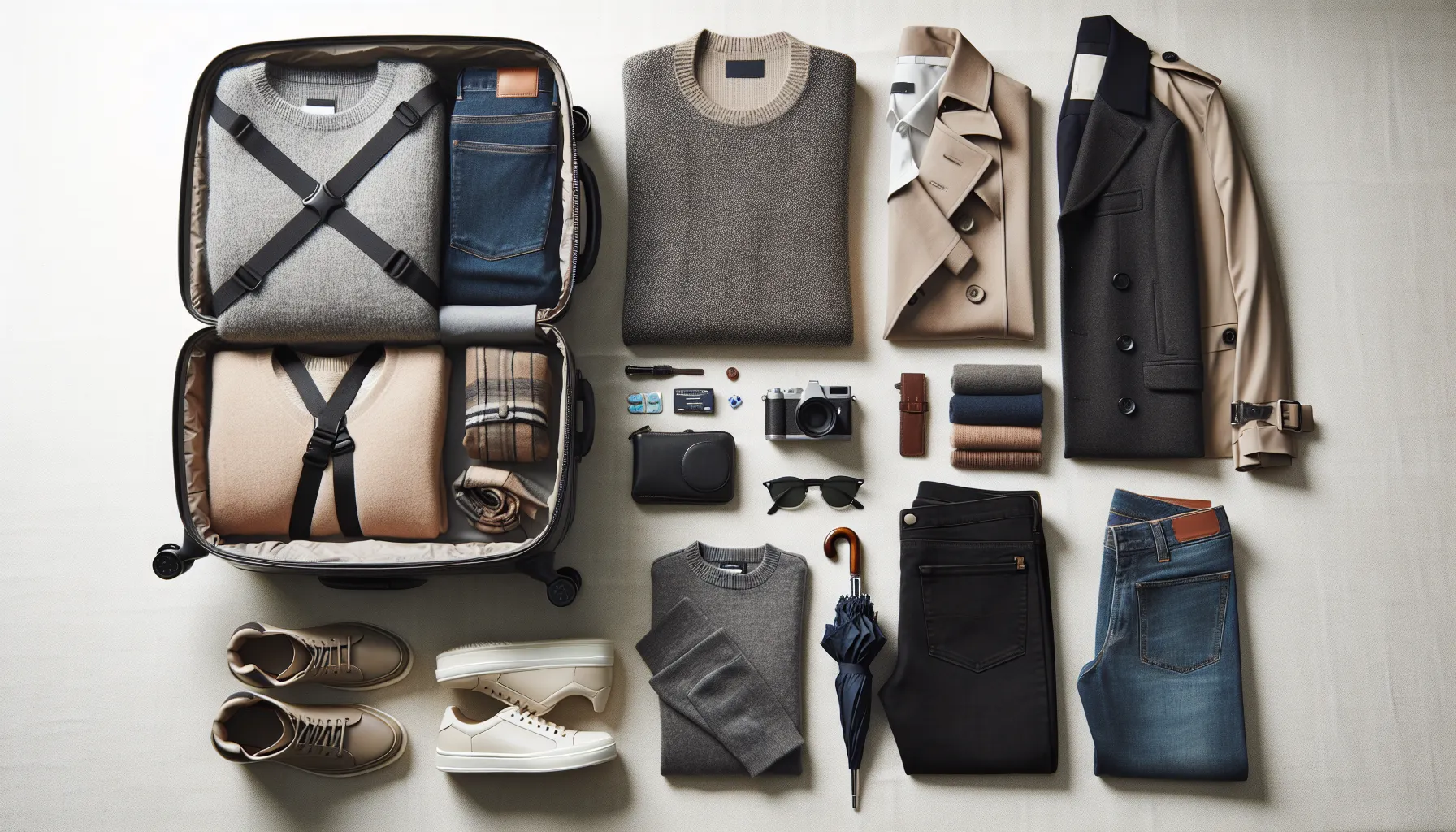
When I pack, I aim for 2–3 base layers, 2–3 mid layers, and 1–2 outerwear pieces that go with everything. That’s usually enough for a 3–5 day December trip without feeling like I’m repeating outfits in every photo.
Core Color Palette And Fabrics That Work Best
To keep outfits chic with zero effort, I pick a color palette before I even open the suitcase. For Monaco in December, I love something like:
Neutrals: black, navy, cream, camel, charcoal
Accent colors: deep red, forest green, burgundy, or soft blush
You don’t need all of these. Even black + camel + white can look wonderfully pulled-together.
Fabrics that work beautifully in Monaco’s winter:
Wool and cashmere – warm but refined, perfect for coats and sweaters.
Merino – great for base or mid layers, doesn’t feel bulky.
Cotton with a bit of stretch – comfortable for shirts and trousers.
Leather (or good faux leather) – for shoes and bags that can handle a bit of rain.
I try to avoid fabrics that crease badly (linen) or feel too summery (very thin, floaty cotton dresses) unless I’m layering them under sweaters and coats. The goal is to look effortlessly put-together, without freezing the minute the wind picks up along the harbor.
What To Wear During The Day In Monaco In December
Sightseeing, Cafés, And Christmas Markets
Daytime in Monaco in December is all about comfortable elegance. You’ll likely be walking up and down hills, wandering through the old town, popping into cafés, and, if you time it right, enjoying pretty Christmas lights and markets.
For this, I usually reach for:
Slim or straight-leg jeans or tailored trousers
A thin thermal top + knit sweater
A wool coat
A cozy scarf
Comfortable ankle boots
That’s your “I can walk for hours but still look nice in photos” uniform.
If you like dresses, a knit dress with tights and ankle boots is perfect. Add a belt if you want a bit more shape, and a wool coat over the top. You’ll look instantly put-together with almost zero effort.
What To Wear For Coastal Walks And Day Trips
For coastal walks along the harbor or a day trip to nearby towns (like Nice or Èze), you’ll want something warm enough for the breeze but easy to move in.
I’d wear:
Comfortable jeans or thicker leggings (not see-through gym ones)
Long-sleeve base layer
A warm sweater or fleece-lined sweatshirt with a nice cut
A wool coat or a slightly more casual padded jacket
A hat (a chic beanie works) if you get cold ears
Shoes matter here. The paths and streets can be:
Hilly
Cobblestoned in older areas
Sometimes slippery after rain
So, leave the delicate stilettos for dinner. For daytime, I prefer low-heeled ankle boots, loafers with a good sole, or sleek sneakers that still look city-appropriate.
I also like to tuck a foldable tote into my bag for any little Christmas gifts or market finds. Monaco has a way of tempting you into “just a quick look” at the shops.
What To Wear In The Evenings: Dining, Bars, And Casinos
Smart-Casual To Dressy Outfits For Dinner And Drinks
Evenings in Monaco are where you can really enjoy dressing up a bit. December dinners feel cozy and festive, with candles, twinkling lights, and a dress code that leans smart-casual to elegant.
For women, I’d pack:
1–2 nice dresses (a knit dress, wrap dress, or a simple black dress you can style up)
Or: tailored trousers + a silk or satin blouse
A light blazer or chic cardigan (optional but useful)
For men, think:
Dark jeans or chinos + a button-down shirt
Or: wool trousers + a fine-knit sweater
A blazer if you like a sharper look
Shoes can be block-heel ankle boots, classic pumps, or polished loafers. You’ll be indoors most of the evening, so you don’t need heavy snow-proof footwear, just something you can comfortably walk a few blocks in.
The trick is to combine comfort and polish. You want to feel like yourself, just a slightly dressier version.
Casino And Nightlife Dress Codes For Men And Women
Daytime can be a bit more relaxed, but evenings are definitely dressier.
For women, I’d go with:
A refined dress (knee-length or midi works well)
Or elegant trousers with a dressy top
Heels or smart flats (nothing too chunky or sporty)
For men:
A collared shirt, dark trousers, and closed shoes are the minimum
A blazer is strongly recommended in the evening, and you’ll never feel overdone in one there
If you’re wondering what to wear in Monaco in December for a “big night out,” this is where a simple, well-fitting outfit in good fabric beats anything too fussy or revealing. Classic always wins in Monaco.
Footwear And Accessories For Comfort And Polish
Shoes That Handle Hills, Marble Floors, And Occasional Rain
Let’s be honest: shoes can make or break a trip.
Monaco has hills, stairs, and slippery marble or tiled floors in many buildings. In December, mix in a bit of rain and you’ll be grateful for a sensible sole.
Here’s what I like to pack:
Comfortable ankle boots (water-resistant if possible, with a low to mid heel)
Smart sneakers (clean, minimal, not gym trainers)
Dressy flats or loafers for evenings when you don’t want heels
If you love heels, bring one pair of stable heels, think block heel or kitten heel, not sky-high stilettos you’ll curse on cobblestones.
Bags, Scarves, Jewelry, And Other Finishing Touches
Accessories are where you can have fun without taking up half your suitcase.
I usually bring:
One crossbody bag for daytime (hands free, secure, fits phone, glasses, small wallet)
One small evening bag or clutch for dinners and the casino
1–2 scarves – a warm wool or cashmere scarf in a neutral, and maybe one in a festive color
Jewelry – simple gold or silver pieces, plus one “statement” pair of earrings or a necklace
A good scarf in December is like traveling with your own little portable blanket. You can wrap up on windy viewpoints, or just drape it over your shoulders indoors when you want to feel extra cozy and chic.
These small touches make even basic jeans and a sweater feel like an outfit you’d happily be photographed in front of the Christmas lights.
Special Considerations: Events, Holidays, And Etiquette
What To Wear For Holiday Events And Luxury Experiences
December in Monaco may include:
Holiday concerts or performances
Fancy afternoon teas
Luxury spa visits
Upscale restaurant reservations
For slightly more formal events, I like to have one “just in case” outfit that feels a bit elevated:
For women:
A midi dress in a classic color (black, navy, deep green)
Or tailored trousers + a dressy top with subtle shine or lace
A pair of elegant shoes you can walk in
For men:
Dark trousers + a crisp shirt + blazer
Or a fine-knit sweater over a shirt, with smart shoes
Nothing needs to scream “gala.” You’re aiming for refined, not red carpet, unless you’re actually going to a gala, in which case, absolutely bring the gown.
Cultural Norms To Avoid Looking Under- Or Overdressed
A few gentle etiquette notes when you’re deciding what to wear in Monaco in December:
Athleisure (gym leggings, hoodies) is fine for actual exercise, but not ideal for restaurants or sights.
Beachwear really is just for the beach or pool, even if it’s layered under other clothes.
Logos and super-flashy designer looks can stand out in a way that feels more tourist than chic.
Instead, focus on:
Clean lines
Good fabrics
Clothes that fit well and aren’t too tight or too revealing
You don’t need to spend a fortune: you just want to look like you’ve made a bit of an effort. Monaco appreciates that.
Sample Packing List For A 3–5 Day December Trip
Women’s Sample Packing List
Here’s a realistic, mix-and-match list for a 3–5 day December stay.
Clothing
1 wool or cashmere coat (knee-length)
1 lighter jacket or blazer (optional but handy)
2 sweaters (one neutral, one with a bit of color)
2 long-sleeve tops or thin thermals
1 knit dress or simple black dress
1 pair of jeans (dark or black)
1 pair of tailored trousers
1 “nicer” blouse or top for dinners
Tights or thermal leggings if you get cold
Shoes
1 pair ankle boots (comfortable, good sole)
1 pair smart sneakers or loafers
1 pair dressier shoes (heels or elegant flats)
Accessories
2 scarves (one neutral, one more fun)
Simple jewelry + 1 statement piece
1 daytime crossbody bag
1 small evening bag
Gloves and a hat if you feel the cold
With this, you can easily rotate: jeans + sweater: trousers + blouse: dress + boots: and never look like you’re repeating yourself.
Men’s Sample Packing List
For men, here’s a similar 3–5 day Monaco in December packing list.
Clothing
1 smart wool coat
1 blazer (optional but great for dinners and the casino)
2 fine-knit sweaters
2 shirts (one more casual, one dressier)
1–2 long-sleeve tees or light base layers
1 pair dark jeans
1 pair chinos or wool trousers
Shoes
1 pair leather or suede boots (weather-friendly)
1 pair smart sneakers or loafers
1 pair more formal shoes if you plan fancier evenings
Accessories
1–2 scarves
Belt that matches shoes
1 everyday bag (satchel or sleek backpack)
Gloves and hat if you run cold
This keeps your suitcase light but your options open, from coastal walks to casino nights.
Conclusion
When I think about what to wear in Monaco in December now, it feels less like a puzzle and more like a pleasant little styling game: a good coat, some thoughtful layers, shoes that can handle hills, and one or two outfits that make you feel quietly fabulous.
You don’t need an enormous wardrobe. You just need the right pieces: warm, polished, and easy to mix and match. With those in your suitcase, you can wander the Christmas markets, linger over coffee, dress up for dinner, and even swan into the casino feeling like you belong there.
If you’re still hesitating over that wool coat or those ankle boots, take this as your gentle nudge. Pack them. Future-you, strolling along the harbor under the December lights, will be very glad you did.
Frequently Asked Questions
What should I wear in Monaco in December during the day?
For daytime in Monaco in December, aim for comfortable elegance: slim or straight-leg jeans or tailored trousers, a thin thermal or long-sleeve top, a knit sweater, and a knee‑length wool coat. Add a cozy scarf and comfortable ankle boots so you can walk hills and explore while looking polished.
How cold does it get in Monaco in December and how should I dress for the weather?
Monaco in December is mildly chilly, not freezing. Daytime temperatures are usually 50–57°F (10–14°C), dropping to the mid‑40s°F (around 7°C) in the mornings and evenings. Plan on clever layering: a warm base layer, a chic sweater, and a wool coat, plus a scarf for coastal wind.
What to wear in Monaco in December for evenings, dinners, and bars?
For evenings, think smart‑casual to elegant. Women can wear a knit or simple black dress, or tailored trousers with a silk or satin blouse, plus ankle boots or pumps. Men should pack dark jeans or chinos with a button‑down or fine‑knit sweater, and optionally a blazer for a sharper look.
What is the dress code for the Casino de Monte-Carlo in December?
The Casino de Monte‑Carlo has a refined dress code, especially at night. No sportswear, beachwear, flip‑flops, or ripped jeans. Women should opt for an elegant dress or tailored trousers with a dressy top and smart shoes. Men need a collared shirt, dark trousers, closed shoes, and ideally a blazer.
Is a heavy winter coat necessary, or what to wear in Monaco in December instead?
You don’t need a bulky ski jacket in Monaco in December. A well‑fitting wool or cashmere coat, worn over light thermals and fine‑knit sweaters, is usually enough. Pair it with ankle boots, a scarf, and optional hat or gloves if you run cold. Focus on warm, layered, yet sleek pieces.
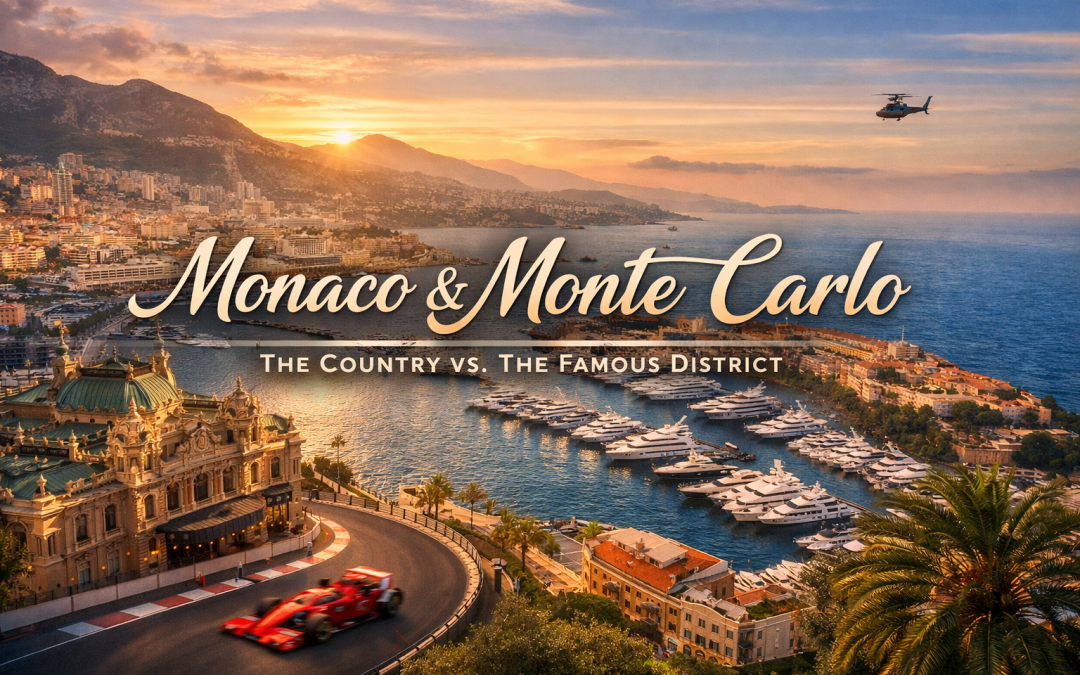
Monaco Is the Country and Monte Carlo Is Its Most Famous District
Imagine you’re sitting in your favorite armchair, feet up, a cup of tea warming your hands. On the TV, a glittering coastline flashes by: blue sea, white yachts, red race cars screaming around tight corners. The commentator keeps saying “Monte Carlo,” but the caption on the screen says “Monaco.” You squint, sip your tea, and think: “Alright, which is it? What’s the actual difference between Monaco and Monte Carlo?”
That little moment of confusion is exactly where this story begins.
When I first tried to figure this out, I felt like I’d opened one of those old family recipes where half the ingredients are written in shorthand. It made sense to someone once, but not to me, yet. Then, slowly, it all clicked into place, and I realized it’s actually quite simple, and even a bit charming.
In this guide, I’ll walk you through Monaco and Monte Carlo like we’re strolling along the harbor together. We’ll talk about the tiny country, the famous district, the casinos, the Grand Prix, and even how to address a postcard properly so it doesn’t go wandering around Europe. By the end, you’ll not only know the real difference between Monaco and Monte Carlo, you’ll also have a great little story to share over tea with your friends.
Key Takeaways
The core difference between Monaco and Monte Carlo is that Monaco is a sovereign country, while Monte Carlo is just one of its districts.
Monaco is a tiny city-state with its own government, laws, and UN seat, organized into several districts including Monaco-Ville, La Condamine, Fontvieille, and Monte Carlo.
Monte Carlo sits within Monaco and is famous for the Casino de Monte-Carlo, luxury hotels, designer shopping, and a glamorous nightlife image.
In practical terms, travel bookings, official forms, and mailing addresses use Monaco as the country name, with Monte Carlo appearing only as the neighborhood or district.
Major events like the Monaco Grand Prix and the Monte-Carlo Masters all take place within the same small country, with the choice of Monaco vs. Monte Carlo in event names driven mostly by branding.
Understanding Monaco: The Tiny Country On The Riviera
Before I talk about Monte Carlo, I need to start with Monaco itself, because Monte Carlo lives inside Monaco.
Geography And Political Status Of Monaco
Monaco is a country. A real, independent, fully recognized country, just very, very small. It’s tucked along the French Riviera, squeezed between southern France and the Mediterranean Sea, with Italy not far away.
To give you a sense of scale, I like to say this: “You could walk across much of Monaco in about an hour or so”. It’s about 2 square kilometers (less than a square mile). If you took a medium-sized neighborhood in a big city, you’d be close.
Monaco is a constitutional monarchy, ruled by the Prince of Monaco (the Grimaldi family has been in charge there, on and off, since the 1200s). It has:
Its own government
Its own laws
Its own flag and national anthem
Even a seat at the United Nations
French is the official language, the euro is the currency, and the people are called Monegasques (that’s a fun one to roll around on your tongue).
So when someone says, “I’m going to Monaco,” they’re talking about visiting the country.
Districts Of Monaco And How The City-State Is Organized
Here’s where it gets interesting. Monaco is a city-state, which means the entire country is basically one big city, divided into districts or quarters.
The main districts are:
Monaco-Ville – the old town on the rock, with the Prince’s Palace
Monte Carlo – the glamorous area famous for the casino
La Condamine – the port area with the harbor
Fontvieille – a newer district built partly on reclaimed land from the sea
There are a few more named areas, but these are the stars.
So if I picture Monaco as a little jewelry box, each district is a separate compartment. Monte Carlo is just one compartment in that box, sparkly, loud, and dramatic, but still only one part of the whole.
And that’s the first key difference between Monaco and Monte Carlo:
Monaco = the entire country
Monte Carlo = one district within that country
Monte Carlo Explained: District, Lifestyle, And Myth
Now, let me zoom in on Monte Carlo, because this is where the confusion usually begins.
Where Monte Carlo Fits Inside Monaco
Monte Carlo sits on a hill above the sea, like a glamorous balcony looking over the Mediterranean. On a map of Monaco, you’ll see it as one of the central, most famous districts.
What’s actually in Monte Carlo?
The legendary Casino de Monte-Carlo
Luxury hotels (the kind with more chandeliers than you have light bulbs at home)
Designer shops
Elegant restaurants and bars
And streets where you’re more likely to see a Ferrari than a family minivan
People sometimes imagine Monte Carlo as a separate city or even its own country. But no: Monte Carlo is part of Monaco, like a neighborhood. Think of it as the “Las Vegas strip” of Monaco, only with the sea, old-world architecture, and a lot more diamonds.
Why Monte Carlo Became More Famous Than Monaco
So if Monaco is the country, why do I hear “Monte Carlo” in movies and TV more often than “Monaco”?
Because Monte Carlo became a brand.
In the 19th century, Monaco was struggling financially. Then came an idea: build a casino and resort area to attract the wealthy. They chose the location that became Monte Carlo, and named it after Prince Charles III (Carlo = Charles in Italian).
The formula worked. The rich and curious poured in, the casino became legendary, and Monte Carlo turned into a shorthand for:
Glamour
High-stakes gambling
Evening gowns and tuxedos
Luxury cars and yachts
Hollywood loved this image. So did novelists and advertisers. Saying “Monte Carlo” sounded more dramatic and mysterious than “Monaco.” Over time, people began to use Monte Carlo when they really meant Monaco, kind of like saying “Hollywood” when you actually mean the wider Los Angeles film world.
That’s how Monte Carlo, a district, ended up more famous in popular culture than Monaco, the country that contains it.
Monaco vs. Monte Carlo: Key Differences At A Glance
Now I’ll line things up more clearly, like putting two recipe cards side by side.
Government, Population, And Everyday Life
Monaco:
Is a sovereign country with a prince, government, and its own legal system.
Has a population of around 38,000–39,000 people in total.
Has ordinary life going on: schools, supermarkets, offices, apartment buildings.
Monte Carlo:
Is not a country and has no separate government. It’s governed by Monaco.
Is one of the country’s districts, so its residents are counted as living in Monaco.
Is more associated with tourism, nightlife, and luxury than everyday chores and errands (though people do live there).
So when we talk about laws, elections, or citizenship, we’re talking about Monaco. Monte Carlo doesn’t make its own rules: it follows Monaco’s.
Tourism, Casinos, And Luxury Experiences
Here’s where Monte Carlo really steals the spotlight.
Monaco, as a whole, is known for being chic and wealthy, but Monte Carlo is the dramatic stage where that image is most obvious.
In Monaco overall, visitors can:
Walk around the old town (Monaco-Ville) and see the Prince’s Palace
Visit the Oceanographic Museum above the sea
Stroll around different neighborhoods and marinas
Enjoy gardens, viewpoints, and quieter streets
In Monte Carlo specifically, the focus is on:
The Casino de Monte-Carlo – a masterpiece of Belle Époque architecture
Iconic luxury hotels like the Hôtel de Paris
High-end shopping streets
Bars and restaurants where the bill can be as dazzling as the chandeliers
So if someone says, “I want to see the casino and all the glam,” they’re really saying, “Take me to Monte Carlo.” If they say, “I want to explore the whole place, museums, palace, and all,” they’re talking about seeing Monaco.
Addresses, Maps, And Practical Travel Details
Now for the practical side, the bit that matters when you’re booking a trip or sending a postcard.
On maps:
You’ll see Monaco as a tiny country along the coast.
Zoom in, and you’ll see districts like Monte Carlo, Monaco-Ville, La Condamine, and Fontvieille.
On addresses:
A hotel in Monte Carlo might write something like:
[Hotel Name] Avenue de Monte-Carlo 98000 Monaco
Notice the last line: it ends with Monaco, not Monte Carlo. That’s because the country is Monaco. Monte Carlo is used like a neighborhood name within the address.
When you travel:
You don’t fly into “Monte Carlo Airport.” You typically fly into Nice, France, then travel by car, bus, train, or even helicopter into Monaco.
Your booking sites will usually say “Monaco” as the location, and may specify Monte Carlo as the neighborhood.
So, when I keep it simple in my head:
Monaco is what you write on a map and passport forms.
Monte Carlo is what you look for when you want the casino, race views, and extra sparkle.
Common Misconceptions And How To Avoid Confusion
Once you know the difference, you start hearing people mix the two up all the time. It’s a bit like listening to someone call your daughter by your granddaughter’s name, you know what they mean, but it’s technically wrong.
When People Say “Monte Carlo” But Mean Monaco
Here are a few common mix-ups I notice:
“Monaco? Oh yes, I love Monte Carlo, that country is so pretty.”
“He’s the Prince of Monte Carlo.”
“We’re flying into Monte Carlo next week.”
In almost all of those, the person means Monaco, the country.
Why do people say Monte Carlo instead?
Movies and TV made Monte Carlo sound more glamorous.
The casino scenes and race footage are usually filmed there.
It’s a catchy name, so it sticks.
The good news? Locals and travel staff are used to this confusion. If you say, “I’m going to Monte Carlo,” they’ll understand you’re heading to Monaco and likely want the casino district.
But if you like getting things right (I do), it helps to be precise.
Using The Right Name For Travel, Events, And Mail
Here’s how I keep it straight when there’s something important at stake, like tickets, reservations, or making sure Grandma’s postcard arrives.
For travel bookings:
When you book flights, trains, or transfers, search for Monaco (or Nice, France, as the nearest big hub).
When choosing a hotel, check if its neighborhood is Monte Carlo or another district, depending on the atmosphere you want.
For events and tickets:
Big events might have Monaco in the official title even if they take place around Monte Carlo.
Always read the location details on the ticket: it may say “Circuit de Monaco (Monte Carlo area)” or list a specific district.
For mail and packages:
The country line of the address should say Monaco.
You can include Monte Carlo as part of the street address or neighborhood, but the country is always Monaco.
If you remember that Monte Carlo can be in the middle of the address, but Monaco belongs at the bottom line as the country, you’ll avoid most of the confusion.
Monaco, Monte Carlo, And The World Of Sports And Events
Sports and big events are another place where the names get tangled, especially with all the marketing.
Grand Prix, Yachting, And Other Major Attractions
When I picture Monaco, I almost hear the scream of Formula 1 engines.
The Monaco Grand Prix is one of the most famous car races in the world. The track winds right through the streets of Monaco, including the Monte Carlo area. The race is officially called the Grand Prix de Monaco, not the “Monte Carlo Grand Prix,” even though some people say it that way casually.
The circuit passes by:
The harbor filled with superyachts
The tight, twisting streets near the casino
Tunnels and corners that make even experienced drivers sweat
On top of the Grand Prix, Monaco hosts:
The Monaco Yacht Show, full of jaw-dropping boats
Tennis tournaments like the Monte-Carlo Masters (here’s that name again.)
Various fashion, arts, and charity events
How Events Are Branded: Monaco vs. Monte Carlo
Event names are where you really see how both labels get used:
Monaco Grand Prix – Uses the country name (Monaco), even though the route includes Monte Carlo.
Monte-Carlo Masters (tennis) – Uses the district name (Monte Carlo), even though the event is associated with the whole Principality.
Sometimes organizers choose Monaco to emphasize prestige and the country itself. Other times they use Monte Carlo to tap into that glamorous, casino-and-nightlife image.
So if you’re ever wondering, “What’s the difference between Monaco and Monte Carlo in this event name?” the short answer is:
The location is within the same tiny country.
The choice of Monaco vs. Monte Carlo is often about marketing and tradition, not about a change of country.
Once I understood that, I stopped overthinking it. Whether it’s the Monaco Yacht Show or the Monte-Carlo Masters, I know they’re all happening in that same small stretch of coastline, just in different corners of it.
Conclusion
When I strip away the glitz and the movie scenes, the answer to what is the difference between Monaco and Monte Carlo is actually quite homely and simple:
Monaco is the country.
Monte Carlo is one famous district inside that country.
Monaco holds the history, the government, the flag, the citizenship, and all the everyday life that doesn’t make it into the films. Monte Carlo holds much of the glitter: the casino, the luxury hotels, the racing images you see on television.
Knowing the difference means you can:
Book your trip more confidently
Address postcards correctly
And gently impress your friends when they mix up “the Prince of Monte Carlo” and “the Prince of Monaco.”
So the next time you see those bright race cars dashing past the harbor and someone sighs, “Ah, Monte Carlo… what a country,” you’ll smile to yourself. You’ll know the secret: it’s Monaco, the tiny principality, and Monte Carlo is just its most flamboyant neighborhood.
And that, I think, is a lovely little travel fact to tuck into your mental recipe book and share over your next cup of tea.
Frequently Asked Questions About Monaco and Monte Carlo
What is the difference between Monaco and Monte Carlo?
Monaco is a sovereign microstate on the French Riviera, with its own government, laws, and UN seat. Monte Carlo is one of Monaco’s districts, famous for the casino, luxury hotels, and nightlife. In short: Monaco is the country, Monte Carlo is a glamorous neighborhood within it.
Is Monte Carlo a separate country from Monaco?
No. Monte Carlo is not a separate country; it’s a district of Monaco. It has no independent government or borders of its own and is fully governed by Monaco. Residents of Monte Carlo are counted as living in Monaco, the principality that encompasses several districts.
Why is Monte Carlo more famous than Monaco in movies and TV?
Monte Carlo became a global “brand” after Monaco developed it in the 19th century as a casino and resort area. The Casino de Monte-Carlo, luxury hotels, and high-stakes glamour made it a favorite setting for films, novels, and ads, so people often say Monte Carlo when they really mean Monaco.
How does the Monaco Grand Prix relate to Monte Carlo?
The Monaco Grand Prix is a Formula 1 race that runs through Monaco’s streets, including parts of Monte Carlo. Officially it’s the Grand Prix de Monaco, but TV shots of the casino, harbor, and tight corners in Monte Carlo make some viewers assume the event is separate from Monaco itself.
How do I correctly write an address in Monte Carlo, Monaco?
When addressing mail to Monte Carlo, you treat Monte Carlo as the district and Monaco as the country. A typical format is: [Name], [Street + Monte Carlo], 98000 Monaco. The bottom line must say “Monaco,” since that’s the sovereign state recognized by postal and travel systems.
When planning a trip, should I search for Monaco or Monte Carlo hotels?
For travel bookings, search for “Monaco” as the destination, then filter by neighborhood if you specifically want Monte Carlo’s casino, race views, and luxury atmosphere. Staying elsewhere in Monaco—like Monaco-Ville or La Condamine—offers easier access to sights such as the Prince’s Palace and the Oceanographic Museum.
When I first wondered what people in Monaco do for a living, I pictured one very specific scene: everyone in sunglasses, gliding off superyachts, casually checking their diamonds the way I check my pockets for my keys.
And yes, there are yachts and diamonds. Plenty of them. But that’s only the glossy postcard.
If you and I were sitting together in your favorite chair, tea in hand, I’d tell you that behind every glamorous photo of Monaco, there’s a surprising amount of very normal work happening. Accounting. Teaching. Construction. Office jobs. Bus driving. People cooking breakfast in hotel kitchens before the sun even rises over the harbor.
Monaco is tiny, smaller than many neighborhoods, but its economy is like a well‑packed jewelry box: every inch is used, and almost nothing is random. As I dug into how this little principality actually functions, I found stories and jobs you’d happily retell to your friends: the banker who commutes from France, the teacher who hears six languages at recess, the mechanic who only works on cars most of us will only ever see on TV.
Let me walk you through it, piece by piece, so that by the time you finish reading, you’ll be able to answer, with a small smile, when someone asks, “So what do Monaco people even do all day?”
Article at a Glance (If We’re Being Honest)
Monaco’s economy revolves around money, property, service, and precision, but the work behind it is often quieter and more ordinary than the image suggests.
Banking, real estate, hospitality, retail, events, and public services all coexist in an extremely small space, creating a dense and unusual working rhythm.
Many of the people who keep Monaco running don’t live there, commuting daily from nearby France and Italy.
Languages matter. So do discretion, reputation, and knowing how to move comfortably in international environments.
Behind the yachts and headlines is a city held together by teachers, nurses, planners, cleaners, technicians, and office workers who rarely appear in photographs.
A Different Way to Look at Monaco’s Working Life
Monaco’s job market isn’t just unusual because of how much money flows through it. It’s unusual because of how compressed everything is.
In just over two square kilometers, you’ll find private banks managing enormous fortunes, construction crews carving new space out of rock and sea, hotel kitchens waking before dawn, luxury shops opening their doors with quiet precision, and public workers making sure the whole place stays clean, safe, and functional.
It’s a place where extremes live side by side. A banker and a bus driver might pass each other on the same narrow street. A yacht broker and a nurse might ride the same early train home.
For outsiders, Monaco often looks like a self-contained world of wealth. In reality, it’s a carefully balanced system that depends on thousands of people doing very real, very human work every day — often out of sight.
This article isn’t about how to get a job in Monaco, or how to optimize a career there. It’s about understanding what kind of work actually happens, who does it, and how the principality functions once you look past the postcard.
If you’ve ever wondered what keeps Monaco running when the champagne glasses are empty and the yachts are quiet, you’re in the right place.
Let me show you.
Who Actually Lives And Works In Monaco
When people think of Monaco, they often imagine it’s full of movie stars and billionaires living off investments while their money quietly multiplies in the background. Some of that is true. But here’s the twist: a lot of the people who work in Monaco don’t actually live there at all.
Monaco has roughly 38,000 residents, but more than 60,000 people come into Monaco to work on a typical weekday. So from Monday to Friday, the country literally has more workers coming in than people living there.
I like to think of it like this: Monaco is the fancy living room, but most of the people who dust, polish, cook, count, and organize that living room go home to nearby France or Italy at night.
Here’s who you’ll find:
Wealthy residents: business owners, investors, celebrities, retired executives. Many of them don’t “go to work” in a traditional sense. Their money often works harder than they do.
Professionals: bankers, lawyers, accountants, managers, tech workers, consultants. Some live in Monaco, but many commute from the surrounding region.
Service workers: hotel staff, restaurant workers, cleaners, security guards, shop assistants, hairdressers, drivers.
Skilled trades: electricians, plumbers, construction workers, mechanics, technicians.
Public sector staff: teachers, police, health workers, administrative staff.
So when I talk about what people in Monaco do for a living, I’m really talking about two overlapping groups:
Residents who often work in high‑paying sectors like finance, real estate, and executive roles.
Commuters from France and Italy who keep the restaurants, hotels, offices, and public services running day to day.
It’s not just a playground for the rich. It’s also a very busy workplace squeezed into less than one square mile.
The Structure Of Monaco’s Economy
For such a tiny place, Monaco’s economy is surprisingly diverse. If it were a kitchen, it would be that small but perfectly organized one where every drawer has a purpose.
Monaco doesn’t survive on natural resources, no oil, no big farms, no mines. Instead, it leans on services, especially high‑end ones.
The main pillars are:
Finance and banking
Real estate and construction
Tourism and hospitality
Luxury services and retail
Yachting, events, and entertainment
Public services, health, and education
There’s also a smaller slice of light industry and tech: pharmaceutical labs, cosmetics, some advanced manufacturing, and digital services. You don’t really see those as a tourist, but they’re there in the background.
Another big piece of the puzzle is Monaco’s tax system. For most residents, there’s no personal income tax, which attracts high‑net‑worth individuals and entrepreneurs. That, in turn, creates demand for wealth managers, lawyers, property agents, and all the other professionals who help manage significant sums of money.
So if you’re trying to picture what people in Monaco do for a living, think less “factory belts” and more “offices, meetings, hotels, and harbor docks.” It’s a white‑collar and service‑heavy economy, wrapped in luxury packaging.
Finance And Banking: The Backbone Of White‑Collar Work
If Monaco’s economy had a nervous system, finance and banking would be it.
A lot of Monaco residents are wealthy, sometimes extremely so. They need places to put that money and people they trust to manage it. That’s where Monaco’s financial sector steps in.
Some of the main roles you’ll find:
Private bankers and wealth managers – They help wealthy clients invest their money, plan inheritance, and organize their global finances.
Portfolio managers – People who decide where to put large sums of money: stocks, bonds, funds, sometimes private investments.
Compliance and risk officers – They make sure everything follows international rules against money laundering and fraud.
Accountants and auditors – Keeping the books straight for companies and wealthy families alike.
Legal and tax advisors – Especially for cross‑border issues: many clients have homes, companies, or investments in multiple countries.
It’s not the sort of work that makes for glamorous Instagram photos, but it’s central to what people in Monaco do for a living. The image might be champagne and casinos, but the reality often looks more like spreadsheets and very polite meetings.
And because the money involved is huge, these jobs can pay extremely well. That’s part of why so many professionals are willing to deal with tiny offices, high rents, and crowded train rides into Monaco each morning.
Luxury Real Estate, Construction, And Property Management
In Monaco, space is the real luxury. There’s almost no land left, so what do they do? They build up and sometimes even out into the sea.
That creates a whole ecosystem of work:
Real estate agents showing apartments that cost more than entire apartment buildings elsewhere.
Property managers handling tenants, maintenance, security, and services in high‑end residences.
Construction workers and engineers building or renovating towers, tunnels, and even land‑reclamation projects.
Architects and interior designers specializing in squeezing comfort and style into every square meter.
Imagine working on a building where a single apartment might sell for several million euros. Every tile and window becomes a serious decision.
Because the demand for homes and offices in Monaco is sky‑high and the space is tiny, real estate prices are among the highest in the world. That keeps this sector buzzing:
Developers plan new towers
Construction crews work in incredibly tight spaces
Maintenance staff quietly keep everything spotless for residents who are used to perfection
So yes, some people in Monaco make their living by literally carving out more Monaco, one construction site, balcony, and underground parking level at a time.
Tourism, Hospitality, And Luxury Services
Now we’re getting to the Monaco most visitors recognize: hotels, restaurants, casinos, and luxury everything.
Tourism is a huge employer. When people arrive expecting glamour, someone has to provide it.
You’ll find:
Hotel staff – from reception and concierge to housekeepers, chefs, and room service.
Restaurant and café workers – waiters, bartenders, sommeliers, dishwashers, managers.
Casino employees – croupiers, security staff, hosts, bar staff.
Spa and wellness staff – therapists, beauticians, personal trainers.
Luxury retail workers – people selling jewelry, watches, designer clothes, and perfumes.
A lot of these jobs are fast‑paced and demanding. Long hours, high expectations, international guests who arrive tired and want everything “just so.” But many of the workers I read about or spoke to described a strange joy in it: you might serve breakfast to a famous singer one day and help a nervous newlywed find the perfect anniversary gift the next.
This is also where Monaco’s reputation for excellent service comes from. Tips can be generous, but the standards are, too. You can’t really hide in a place this small: word gets around quickly if a restaurant or hotel doesn’t live up to the image.
So when you see photos of people clinking glasses at a rooftop bar with the harbor behind them, remember: there’s a whole team of locals and commuters who made that moment look effortless.
Yachting, Events, And Entertainment Industries
If finance is Monaco’s brain, yachting and events are its show business side.
Look at a picture of Monaco’s harbor during the summer or the Grand Prix, and you’ll see yachts packed so tightly it looks like you could walk from one side of the bay to the other just by hopping from deck to deck.
Behind those boats are:
Captains and crew – often living on board, working long seasons.
Yacht brokers – the real‑estate agents of the sea.
Maintenance and technical staff – engineers, electricians, cleaners, painters.
Provisioning services – people who supply yachts with everything from fuel to fresh strawberries and vintage champagne.
Then there are the events:
The Monaco Grand Prix (Formula 1)
The Monaco Yacht Show
High‑profile charity galas and cultural festivals
These bring work for:
Event planners and coordinators
Sound and lighting technicians
Security staff and ushers
Caterers and bartenders
Media crews, photographers, and logistics teams
For a lot of people, especially freelancers, these major events are like harvest season. The weeks around the Grand Prix can be absolutely exhausting but also some of the most profitable of the year.
So yes, some people in Monaco literally make their living making sure other people have the time of their lives.
Formula 1, Sports, and the Business of Big Events
When people think about work in Monaco, Formula 1 usually flashes through their mind at some point — the roar of engines, the yachts lined up like front-row seats, the sense that the entire city has turned into a stage.
And for a few days each year, it really does feel that way.
But what most people don’t realize is that the Monaco Grand Prix isn’t just a long weekend of noise and champagne. It’s the visible tip of a year-round operation that keeps a surprising number of people busy long before the first car ever touches the track.
Months ahead of race week, teams are already at work planning how to turn everyday streets into a race circuit. Barriers have to be installed and removed. Grandstands appear where traffic lights usually stand. Timing systems, safety infrastructure, and broadcast equipment are mapped out in meticulous detail.
For the people involved, this isn’t glamorous work. It’s logistics, project planning, and coordination carried out in one of the most tightly packed urban spaces in the world. The fact that the city returns to normal within days of the race ending is, in itself, a small miracle — and the result of careful, often invisible labor.
Then there’s the hospitality side of Formula 1, which operates almost like a parallel industry. Corporate guests, sponsors, and long-time attendees don’t just show up; their experience is curated months in advance. Private viewing terraces, yacht access, catered events, and invitation-only gatherings all require teams of people who specialize in managing expectations at the highest level.
And while race week is intense, much of this work happens quietly throughout the year: planning, selling, coordinating, refining.
Formula 1 may be the headline, but it’s far from the only sporting engine in Monaco.
Beyond the Grand Prix, the principality hosts a steady calendar of major events — international tennis tournaments, yachting showcases, charity competitions, and cultural exhibitions that blur the line between sport, business, and social life. Each one brings its own ecosystem of planners, technicians, marketers, security teams, venue staff, and behind-the-scenes organizers.
What ties all of these events together is scale and proximity. Monaco is small, which means the same people often cross paths from one event to the next. Relationships matter. Reputation matters. If someone handles pressure well during one major event, they’re remembered for the next.
There are also quieter roles connected to sport that never make it into highlight reels. Facilities need maintenance year-round. Stadiums, courts, and training spaces don’t look after themselves. Schedules have to be coordinated around international calendars, media needs, and visiting teams.
And then there’s sponsorship — the subtle art of connecting luxury brands, wealthy patrons, and global audiences. Much of that work happens in meetings, not arenas. Conversations over coffee. Long email threads. Carefully negotiated partnerships that keep events financially viable while preserving Monaco’s polished image.
From the outside, it can look like Monaco simply hosts glamorous events. From the inside, it feels more like a permanent backstage area — full of people making sure the spotlight lands exactly where it should, every single time.
So when the engines fade and the streets reopen, the work doesn’t really stop. It just shifts shape, waiting quietly for the next moment when the city once again turns itself into a spectacle — and then, just as quickly, back into a place where people still have to get to work the next morning.
Luxury Retail: The Quiet Theatre of Shopping
If you walk through Monaco’s shopping streets slowly — not rushing between appointments, not ducking into a store just to look — you start to notice how different retail feels here.
The windows are immaculate. The lighting is soft and deliberate. Inside, things move at an unhurried pace. No sales racks. No loud promotions. No one asking if you’re “just browsing.” Browsing, in Monaco, is almost beside the point.
Luxury shopping here isn’t really about impulse. It’s about relationships.
Most of the big global brands are present, of course. But what distinguishes Monaco’s retail scene isn’t the logos — it’s the clientele. Many customers are regulars. Some stop in every season. Some every time they’re in town. Staff know their preferences, their sizes, the colors they avoid, the pieces they already own.
A purchase might take ten minutes. Or it might take weeks.
Behind the scenes, this creates a very particular kind of work. Retail staff here aren’t just selling objects; they’re managing long-term relationships. They remember anniversaries. They coordinate private appointments. They quietly source items before they ever reach the shop floor. Sometimes they deliver purchases directly to homes or yachts, where the transaction feels more like a continuation of a conversation than a sale.
From the outside, it looks serene. Inside, it’s precise.
There are also boutiques that don’t belong to a single brand — carefully curated spaces where clothing, jewelry, and accessories are selected almost like pieces in a gallery. These shops reflect the taste of the people who run them, and the trust they’ve built with their clients. Nothing is accidental. Nothing is overstocked.
Then there’s the more invisible side of luxury retail: personal shoppers and stylists who don’t belong to any one store at all. They move between brands, between boutiques, sometimes between countries. Their work often happens away from the shop floor — in fitting rooms after hours, in private residences, on yachts preparing for a gala or a long summer season.
Some clients want help building a wardrobe from scratch. Others want someone who knows what to replace, what to keep, what to quietly retire. It’s part fashion, part psychology, part logistics.
What’s striking is how calm all of this feels on the surface.
There’s very little pressure. Very little urgency. Everything is designed to feel effortless — even though a great deal of effort is involved. In a place as small as Monaco, discretion matters as much as taste. Word travels quickly. Trust, once broken, is hard to rebuild.
So while luxury retail elsewhere can feel flashy or transactional, in Monaco it often feels almost domestic. Familiar. Personal. Like being welcomed back into a space where someone already knows your story.
And if you pause long enough outside one of those spotless windows, you might realize that the real work isn’t in selling at all — it’s in remembering, anticipating, and quietly getting things exactly right.
Public Sector, Education, and Essential Local Services: The Quiet Structure Beneath the Shine
Under all the glitz, Monaco is still a place where kids need schools, sick people need doctors, buses have to run on time, and trash needs to be collected. None of that happens by magic — or by money alone.
A solid share of people in Monaco earn their living doing work that rarely appears in glossy photos but makes daily life possible. Teachers unlock classrooms each morning. Nurses start night shifts in quiet hospital corridors. Police officers patrol streets so calmly and consistently that safety becomes something people barely think about.
It’s easy to forget how much effort that takes.
Behind the scenes, Monaco’s public sector hums along at a steady pace. Government offices open their doors. Forms are processed. Permits are issued. Systems are checked and checked again. It’s the kind of work that only draws attention when something goes wrong — which, in Monaco, is rarely.
These roles attract people who value structure and continuity in a city otherwise defined by movement and spectacle. Compared to finance, hospitality, or events, public sector work follows a different rhythm. The days are more predictable. The pressure is quieter. The goal isn’t to impress, but to keep things working — smoothly, reliably, without drama.
Teachers work in classrooms that often sound like miniature versions of the United Nations. Children speak several languages before lunchtime. Lessons unfold against a backdrop of international families constantly arriving and departing, which makes patience and adaptability just as important as subject matter.
Healthcare workers move through immaculate clinics and hospital wards, tending to residents and visitors alike. Night shifts pass in a low, steady hum. Daytime clinics run on tight schedules. Care is delivered efficiently and calmly, without spectacle.
Then there are the people most visitors never notice at all: bus drivers navigating narrow streets, maintenance crews working before dawn, traffic teams managing the flow during major events, utility workers keeping water, electricity, and waste systems running without interruption.
Monaco’s reputation for safety, cleanliness, and order doesn’t happen by accident. It’s the result of people showing up every day and doing work that rarely earns applause.
Whenever someone says, “Everyone in Monaco is rich,” I think of a nurse halfway through a night shift, or a teacher trying to explain fractions to a classroom full of kids who each learned math in a different language last year.
They may not be famous. They may not live in penthouses or arrive by yacht. But they are the reason Monaco works at all.
And in a place built on precision, that kind of quiet reliability might be the most valuable work there is.
Cross‑Border Commuters And Hidden Workforce Dynamics
Here’s one of the most interesting things I learned while figuring out what people in Monaco do for a living: most of the workforce doesn’t sleep there.
Tens of thousands of people commute every day from:
France (especially from towns like Nice, Menton, Beausoleil)
Italy (from just over the border)
They come by train, bus, scooter, car, some leave home before sunrise and don’t get back until late evening.
Why? Two main reasons:
Housing in Monaco is extremely expensive. Many workers simply can’t afford to live there.
The jobs are in Monaco, but the affordable homes are outside it.
So you get this interesting pattern:
Wealthier residents and executives are more likely to live in Monaco itself.
Many service workers, tradespeople, and even mid‑level professionals live nearby and cross the border daily.
It means that during work hours, Monaco swells with life and activity. After dark, especially outside the summer season, it can feel surprisingly quiet. Almost like a theater after the audience has left and the set has been cleared.
When I think about what keeps Monaco running, I picture that early‑morning train: full of chefs, cleaners, office workers, engineers, and shop staff, all heading into this tiny country that depends on them.
Income Levels, Cost Of Living, And Career Paths In Monaco
Talking about what people in Monaco do for a living isn’t complete without touching on money, both how much people earn and how much it costs just to exist there.
A few key truths:
Salaries can be high, especially in finance, executive roles, and specialized luxury services.
The cost of living is also extremely high, mainly because of housing.
So you get this split:
A top‑level banker or successful entrepreneur might live in a waterfront apartment and send their kids to private schools.
A hotel cleaner or shop assistant might earn more than they would in many other places, but still find housing in Monaco totally out of reach, so they commute.
Career paths often look like this:
In finance: assistant → analyst → manager → director/partner.
In hotels and restaurants: trainee → waiter or receptionist → supervisor → manager.
In public services: competitive exams and structured progress over many years.
In yachting and events: seasonal work that can turn into stable careers for those who build strong networks.
Because Monaco is small, reputation matters a lot. If you’re reliable, discreet, and good at your job, word can spread quickly. That helps people climb the ladder faster than they might in a big anonymous city.
On the flip side, if someone is careless or unprofessional, that can spread quickly too. It’s a village wrapped in skyscrapers and luxury brands.
Conclusion
When I step back and look at everything people in Monaco do for a living, the picture is much richer than the postcard of yachts and champagne.
Yes, there are the ultra‑wealthy residents, the glittering events, and the famous harbor. But there are also:
Bankers in modest offices carefully managing giant fortunes.
Teachers greeting kids from all over the world every morning.
Nurses on night shifts in quietly humming hospital corridors.
Bakers shaping croissants before dawn for hotel breakfasts.
Mechanics fixing engines on boats most of us will only ever see in magazines.
Monaco may be tiny, but its working life is packed: finance, real estate, tourism, yachting, events, public services, and an army of cross‑border commuters who slip in and out each day like a hidden tide.
So the next time someone shrugs and says, “Oh, Monaco, that’s just where rich people go to play,” you’ll know better. You’ll know about the early trains, the busy kitchens, the quiet offices, and the patient teachers behind the sparkle.
And if you share any of this over tea with friends, you can smile and say, “Let me tell you what really goes on in that little country by the sea.”
Frequently Asked Questions about What People in Monaco Do for a Living
What is the average salary in Monaco?
The average salary in Monaco exceeds €65,000 annually across all sectors, approximately 50% higher than neighboring French regions. However, this figure obscures substantial variation between industries, with financial services and real estate professionals earning significantly more than this average. Entry-level professional positions typically start at €45,000-€55,000, while mid-career roles in Monaco’s core industries frequently exceed €100,000 annually. For more context on the region, you can explore where Monaco is in the world.
What do people in Monaco do for a living besides being rich or retired?
Beyond wealthy residents and retirees, many people in Monaco work in finance, banking, real estate, tourism, hospitality, yachting, events, education, healthcare, public administration, and essential services. There’s a large mix of white‑collar professionals, service workers, and skilled trades who keep the city‑state running every day.
Is everyone who lives and works in Monaco rich?
No. Monaco has some of the world’s wealthiest residents, but many workers are regular middle‑income earners. Hotel staff, cleaners, teachers, nurses, bus drivers, and shop assistants often earn decent salaries but cannot afford housing in Monaco, so they commute daily from nearby France and Italy.
What are the main jobs and industries in Monaco’s economy?
The main industries in Monaco are finance and banking, real estate and construction, tourism and hospitality, luxury retail and services, yachting, major events like the Grand Prix, and public services such as health, education, and administration. There’s also some light industry, pharmaceuticals, cosmetics, and tech‑related services.
How do you get a job in Monaco if you don’t live there?
Many workers live in France or Italy and commute, so it’s possible to get a job without residing in Monaco. Typically, you need the right to work in the EU or relevant permits, French or English language skills, and a strong CV. Hospitality, retail, finance, and construction are common entry paths.
Why do so many people commute to Monaco for work every day?
More than 60,000 people commute to Monaco on workdays mainly because housing in the principality is extremely expensive and space is limited. Many jobs—especially in services, trades, and even mid‑level professional roles—are based in Monaco, while more affordable homes are found in nearby French and Italian towns.
A Monaco weekend trip in November feels a bit like getting a VIP pass to a place that usually plays hard-to-get.
The yachts are still in the harbor, the pastel facades still glow in the sun, and the views over the Mediterranean are just as cinematic. But the cruise crowds are gone, hotel prices soften, and suddenly Monaco becomes easier, slower, and far more relaxed.
This guide walks through what November in Monaco is really like, how to plan a 2‑day itinerary, where to stay, what to pack, and how to make the most of the off-season charm, whether you’re there for the sea views, the F1 nostalgia, or simply to soak up a little Riviera glamour before winter fully sets in.
Key Takeaways
A Monaco weekend trip in November offers the same iconic harbor views and glamour with far fewer crowds, lower hotel prices, and a calmer local vibe.
Expect mild but changeable November weather in Monaco, so plan for layers, a light waterproof jacket, and front‑load outdoor sights before early sunsets.
A 2‑day Monaco weekend itinerary works well by pairing classic sights like Monaco‑Ville and Casino Square with coastal walks, the Oceanographic Museum, and garden viewpoints.
Staying in areas like Monte‑Carlo, La Condamine, or nearby towns such as Beausoleil or Cap d’Ail can balance convenience, charm, and off‑season savings.
Smart budgeting—using lunch as your main splurge meal, leveraging markets and bakeries, and relying on local buses and TER trains—makes a Monaco weekend trip in November surprisingly manageable.
Easy day trips to Nice, Menton, Èze, or nearby Italian towns add extra variety to a November Monaco base without much extra time or cost.
Why Visit Monaco In November
For anyone wondering if a Monaco weekend trip in November is worth it, the short answer is: yes, if you like glamour with a side of calm.
Fewer crowds, same postcard views
High season (May–September) brings packed sidewalks and sold-out restaurants. By November, most visitors have disappeared, but the scenery hasn’t gone anywhere. You can wander the old town streets on Le Rocher, find space along Port Hercule, and actually pause on viewpoints without being nudged along.
Better value on hotels and flights
November is comfortably in shoulder/off-season. While Monaco will never be a budget destination, nightly rates dip compared with summer and Grand Prix periods. It’s often possible to stay in a four-star hotel for what a three-star might cost in June.
A taste of local life
With fewer short-term visitors, the pace shifts. Locals reclaim their favorite cafes, runners fill the coastal paths, and there’s a more everyday Riviera atmosphere. It’s a good time for people who love to people‑watch and are curious about the “real” Monaco behind the headlines.
Pre‑holiday mood without full holiday chaos
By mid to late November, Christmas markets and festive lights often begin to appear around Monte-Carlo and Port Hercule. It’s a low-key, cozy build-up to the festive season, pretty, but not yet overwhelmed by school holidays.
For travelers who don’t need beach weather but do enjoy clear air, walkable temperatures, and a quieter version of the principality, November hits a very sweet spot.
Monaco Fall Weather And What To Expect
Monaco’s November weather is mild but changeable, and that’s exactly why a bit of planning pays off.
Temperatures
You can generally expect:
Daytime highs: around 13–17°C (55–63°F)
Nighttime lows: around 8–11°C (46–52°F)
It rarely feels bitterly cold, especially compared with much of northern Europe, but it’s not beach‑lounging season either.
Rain and sunshine
November is one of the wetter months on the French Riviera. That doesn’t mean days of relentless downpour, but rather short, sometimes intense showers mixed with bright, clear spells. A traveler might wake up to clouds, have a sunny lunch on a terrace, and pull on a rain jacket by late afternoon.
Sea conditions
The Mediterranean hovers around 16–18°C (low 60s°F). A few brave swimmers or wetsuit‑wearing locals may still be in the water, but most visitors are happier with coastal walks and balcony views.
Daylight
Expect roughly 9–10 hours of daylight. Sunset comes early, often around 5 p.m., so the key is to front‑load outdoor walks and viewpoints in the late morning and early afternoon, leaving museums, cafes, and the casino for later.
Overall, a Monaco weekend trip in November feels a bit like late fall in a very mild coastal city: light layers, occasional showers, but plenty of crisp, bright days that make the sea and cliffs look even more dramatic.
Planning Your November Weekend Itinerary
With just a couple of days, it helps to keep things simple: mix classic sights, sea views, and a bit of Riviera indulgence. Here’s a realistic way someone might structure a Monaco weekend trip in November, without overpacking the schedule.
Day 1: Classic Sights, Old Town, And Casino Night
Morning: Harbor Stroll & Monte-Carlo
You can start your Monaco weekend trip in November with a walk around Port Hercule. In cooler weather, the marina is peaceful, and it’s easy to admire the yachts without jostling crowds. From there, it’s a short climb or elevator ride up toward Place du Casino.
Late morning is perfect for exploring the casino square: the Casino de Monte-Carlo, the Café de Paris, and the surrounding designer boutiques. Even if you don’t gamble, visitors can step into the casino’s public areas (ticketed) to see the Belle Époque interiors.
Lunch:
Nearby cafés and brasseries offer terrace seating with heaters in November. It’s a good time to linger over a long lunch, maybe seafood or a Niçoise-style salad with a glass of local wine.
Afternoon: Monaco-Ville (Le Rocher)
After lunch, you can walk or take the bus up to Monaco-Ville, the Old Town perched on the rock. Highlights include:
Prince’s Palace – Home of the Grimaldi family
Saint Nicholas Cathedral – Where Princess Grace is buried
Panoramic viewpoints over the sea and harbor
The quieter November atmosphere makes it easier to wander the narrow lanes, stop for coffee, and browse small shops without feeling rushed.
Early Evening: Sunset Viewpoints
On clear days, November sunsets can be spectacular. The viewpoints around the palace and the ramparts above Port Hercule are ideal spots to watch the sky change colors and the city lights flicker on.
Night: Casino And Drinks
After a quick change into evening clothes, it’s time for Monaco’s classic experience: a night at the casino.
You might:
Start with a pre‑dinner drink at one of the bars around Place du Casino
Enjoy a leisurely dinner at a nearby restaurant
Try your luck at the gaming tables or just people‑watch in the casino’s opulent rooms
Even in November, the casino scene feels glamorous, just a little less intense than in summer, which many travelers actually prefer.
Day 2: Coastal Walks, Museums, And Harbor Views
Morning: Coastal Promenade or Nearby Walk
If the weather is clear, Day 2 can begin with fresh air. Monaco has lovely seaside promenades and easy access to nearby coastal paths. You can:
Walk along Avenue Princesse Grace toward Larvotto, enjoying sea views
Or take a short bus or train ride to start a section of the Sentierdu Littoral (coastal path) in nearby towns
In November, these paths are usually quiet, and the cooler temperatures are ideal for walking.
Late Morning to Early Afternoon: Oceanographic Museum
Back in Monaco, the Oceanographic Museum is a must, especially in shoulder season. Housed in a cliff-top palace, it combines impressive aquariums, exhibitions, and rooftop terraces with sweeping Mediterranean views.
Visitors can easily spend 2–3 hours here, making it a perfect choice if the weather turns cloudy or windy.
Lunch:
You might grab a casual lunch in Monaco-Ville or head back down toward the port for something heartier. November is a good time to try seasonal dishes from the wider region, think truffle-infused specials, rich sauces, and comforting seafood stews.
Afternoon: Leisure Time & Shopping
The final afternoon can stay flexible:
Shopping: Browse boutiques in Monte-Carlo or the Metropole Shopping Center.
Café time: Settle into a terrace (with heaters) overlooking the harbor for a warm drink and some quiet people-watching.
Spa or hotel time: Many hotels have wellness areas, perfect for a slow, cozy afternoon.
Evening: Harbor Views And Farewell Dinner
For the last night, a relaxed dinner overlooking Port Hercule or the sea wraps up the weekend nicely. In November, it’s easier to get a table by the windows, and the reflections of the city lights on the water feel almost cinematic.
After dinner, you can take one final stroll along the harbor or up to a viewpoint, savoring the quieter side of Monaco that many summer visitors never see.
Seasonal Highlights And Things To Do Indoors
Museums, Aquariums, And Rainy-Day Activities
A Monaco weekend trip in November should always include a few indoor backup plans in case the weather turns.
Good options:
Oceanographic Museum: As mentioned, it’s one of Monaco’s standout sights, and November is a great time to explore without crowds.
NouveauMusée National de Monaco (NMNM): Contemporary art spread across different villas and spaces, for travelers who enjoy culture beyond the usual tourist circuit.
Prince’s Palace State Apartments: Depending on the time of year and opening schedule, visitors can tour the ceremonial rooms and get a glimpse of Monaco’s royal history.
Shopping galleries and covered arcades: Ideal for staying dry while still enjoying the city.
If it’s simply chilly rather than rainy, many people opt for long café stops, wine tastings, or leisurely lunches as a way to warm up.
Events, Performances, And Seasonal Food
While November is calmer than spring and summer, Monaco doesn’t go into hibernation.
Travelers can look out for:
Performances at the Opéra de Monte-Carlo or the Monte-Carlo Philharmonic Orchestra
Occasional sports events or smaller festivals
Exhibitions at cultural venues around the principality
Food-wise, late autumn brings more comforting, rich flavors to local menus:
Dishes with mushrooms, truffles, and game
Hearty fish and seafood preparations
Warming desserts and excellent French pastries
An off‑season visit is also a chance to linger in restaurants that can feel rushed in summer. Service tends to be more relaxed, and staff often have more time to chat and recommend local specialties.
Where To Stay For A November Weekend
Best Neighborhoods for Short Stays
Because November is off‑season, travelers often get more for your money, and a bit more freedom to choose location over pure price.
Monte-Carlo area
Best for first‑timers who want to be in the thick of it.
Easy walk to Casino Square, upscale shops, and many restaurants.
Ideal if you plan to lean into the classic Monaco image and don’t mind slightly higher prices.
La Condamine and Port Hercule
Great for a balance of atmosphere and practicality.
Near the port, markets, and plenty of casual food spots.
Flat streets make it easier for anyone with mobility issues compared with hilly areas.
Monaco-Ville (Le Rocher)
Good for those who like charm and quieter nights.
Historic atmosphere with narrow lanes and small guesthouses or apartments.
You should be comfortable with hills and stairs, and check late check‑in options if arriving at night.
Nearby towns (Beausoleil, Cap d’Ail, Menton)
For travelers watching their budget more closely, staying just outside Monaco can be a smart move.
Beausoleil sits just above Monaco and can be only a short walk or bus ride down into the principality.
Cap d’Ail and Menton are accessible by train or bus and often offer better hotel deals in November.
Wherever you stay, it’s wise to double‑check what’s included (breakfast, spa access, parking), because off‑season packages can be quite generous.
Luxury Accommodations at Off-Season Prices
The iconic Hotel de Paris Monte-Carlo, recently renovated to enhance its Belle Époque splendor, offers November rates sometimes 40% below summer prices. This historic property adjacent to Casino Square provides an unparalleled Monaco experience with direct access to the casino, three-Michelin-starred Louis XV restaurant, and the new Thermes Marins Monte-Carlo spa complex. November guests often receive room upgrades and welcome amenities not typically offered during peak season. For more tips on planning your Monaco weekend trip, check out our guide.
For a more contemporary luxury experience, the Monte-Carlo Bay Hotel & Resort offers spacious rooms with Mediterranean views and a stunning indoor/outdoor pool complex that remains heated year-round. November packages frequently include dining credits or spa treatments, creating exceptional value at this seafront property. The hotel’s landscaped gardens provide pleasant walking spaces even in autumn, while the central heating system ensures comfort regardless of outside temperatures.
The Columbus Monte Carlo in Fontvieille represents a more accessible luxury option with a boutique atmosphere. Originally co-owned by Formula 1 driver David Coulthard, this stylish property offers harbor views and a sophisticated atmosphere at rates significantly below Monaco’s palace hotels. Its location near the heliport makes airport transfers convenient, while the Princess Grace Rose Garden across the street provides a tranquil space for morning walks.
Best Areas to Book for Easy Access to Attractions
Monte Carlo remains Monaco’s premier district for visitors, placing you within walking distance of the casino, luxury shopping, and fine dining. November’s reduced crowds make this central location particularly appealing, as the district’s normally bustling streets adopt a more relaxed atmosphere. Properties like Hotel Metropole Monte-Carlo offer central convenience with Belle Époque elegance, while the Fairmont Monte Carlo provides modern luxury with its distinctive seaside position.
La Condamine district offers a more authentic neighborhood experience while maintaining walking access to most attractions. This area surrounding Port Hercules features a daily market, local boutiques, and restaurants catering to residents rather than tourists. Hotels like Port Palace and Novotel Monte-Carlo provide excellent value with Port Hercules views and easy access to Monaco’s efficient public transportation network.
Monte Carlo: Best for casino access and luxury shopping
La Condamine: Ideal for port views and local atmosphere
Fontvieille: Quieter district with marina views and moderate pricing
Monaco-Ville: Historic district with palace access but limited accommodation options
Larvotto: Beachfront location with easy access to Japanese Gardens
For weekend visitors, proximity to Monaco’s efficient bus network should influence accommodation choices. Properties near bus stops for lines 1 and 2 provide easy transportation throughout the principality, reducing the need to climb Monaco’s notorious hills. The principality’s compact size means that no hotel is truly inconvenient, with most attractions accessible within a 30-minute walk from any district.
November’s reduced demand means that last-minute bookings often yield surprising values, with luxury properties sometimes offering unexpected promotions to maintain occupancy. Consider booking directly with hotels rather than through third-party sites, as properties frequently offer exclusive benefits for direct reservations, especially during shoulder seasons like November.
Monaco’s November Culinary Scene
Monaco’s gastronomic landscape shifts beautifully in November as summer’s seafood-dominant menus evolve to embrace autumn’s richer flavors. Local chefs celebrate seasonal Mediterranean ingredients with dishes featuring wild mushrooms, truffles, and game meats that rarely appear during warmer months. This seasonal transformation offers visitors a different perspective on Monégasque cuisine that many summer tourists never experience.
Seasonal Mediterranean Specialties to Try
November brings a cornucopia of seasonal specialties to Monaco’s tables that reflect both the principality’s French connections and Italian influences. Local restaurants showcase wild mushrooms harvested from nearby Alpine foothills, incorporated into everything from delicate risottos to hearty ragouts. Truffles from nearby Provence make their appearance, shaved over pasta or incorporated into subtle sauces that highlight their earthy aroma.
Game meats feature prominently on November menus, with dishes like pheasant with cognac sauce or venison medallions with forest berries reflecting the hunting traditions of the region. The cooler weather also welcomes heartier fish preparations, with Mediterranean sea bass or local dorade prepared with warming herbs rather than summer’s lighter lemon and olive oil treatments. For the complete November experience, finish your meal with seasonal desserts featuring chestnuts, quince, or late-harvest figs transformed into elegant pastries by Monaco’s skilled pâtissiers.
Top Restaurants for a Romantic Dinner
Le Louis XV-Alain Ducasse remains Monaco’s ultimate gastronomic temple, where three Michelin stars crown a dining experience that epitomizes French Riviera luxury. In November, the restaurant’s seasonal menu might feature game terrines, wild mushroom compositions, and perfectly executed fish from the morning’s catch. With advance reservations now possible without summer’s months-long waiting lists, November visitors have a realistic chance of securing a table at this legendary establishment.
For a romantic setting with panoramic views, Blue Bay at the Monte-Carlo Bay Hotel offers a more accessible Michelin-starred experience. Chef Marcel Ravin blends Mediterranean traditions with Caribbean influences in innovative dishes that showcase seasonal ingredients. The restaurant’s large windows frame the Mediterranean, particularly dramatic during November evenings when the sun sets early over the sea. The tasting menu changes regularly to reflect market availability, making each dining experience unique to the moment. If you’re planning a Monaco weekend trip, this dining spot is a must-visit.
For a more intimate experience, La Montgolfière in Monaco-Ville offers a cozy setting in the principality’s historic quarter. This family-run establishment with just a handful of tables serves sophisticated French cuisine with Italian touches, reflecting Monaco’s geographical position between these culinary giants. November specials might include house-made pasta with white truffles or slow-braised local lamb with herbs from the nearby mountains.
Café Culture: Where to Enjoy Pastries and People-Watching
Café de Paris Monte-Carlo represents the epitome of Monaco’s café culture, where the principality’s elite and visitors alike gather throughout the day. In November, the terrace often remains usable with strategically placed heaters, allowing for people-watching without summer’s crowds. The café’s interior provides a warm refuge on cooler days, with Belle Époque décor creating an atmosphere of timeless elegance.
For exceptional pastries in a less touristy setting, locals favor Pâtisserie Riviera on Boulevard des Moulins. Their seasonal offerings might include chestnut Mont Blanc, caramelized pear tarts, or chocolate creations infused with warming spices. The shop’s small seating area fills quickly with residents enjoying mid-morning coffee, providing an authentic glimpse into daily Monégasque life away from the main tourist areas. If you’re planning a Monaco weekend trip, this patisserie is a must-visit.
Café de Paris Monte-Carlo: Classic setting on Casino Square
Pâtisserie Riviera: Local favorite for authentic pastries
Crock’In: Casual spot for quick bites with harbor views
Sass Café: Evening spot where coffee transforms to cocktails after dark
Métropole Shopping Center Café: Elegant indoor option on cooler days
What To Pack For Monaco In November
Packing for a Monaco weekend trip in November is all about layers and versatility. It doesn’t have to be elaborate: a small carry‑on can easily cover a 2–3 day stay.
Clothing essentials
Light waterproof jacket or trench
1–2 sweaters or cardigans
Long‑sleeve tops and maybe one short‑sleeve for warmer midday spells
Comfortable walking shoes (sneakers or low boots)
Nicer shoes or ankle boots for dinner or the casino area
Dark jeans or tailored pants, plus one slightly dressier outfit
Accessories
Compact umbrella (showers can be sudden)
Scarf – helpful on breezy coastal walks and easy to dress up an outfit
Sunglasses – surprisingly necessary even in late fall on bright days
Practical extras
Small daypack for water, camera, and layers
Travel‑size umbrella or rain cover for any camera gear
Any needed medications and basic painkillers (available locally, but often pricier)
You don’t need heavy winter gear, but you also shouldn’t pack as if it’s midsummer. Think city‑break in fall, with just a touch of Riviera polish with a smart selection of pieces that can be mixed and matched. Locals tend to dress neatly and fashionably, so athleisure and hiking gear stand out more here than in other European cities.
Dress Codes For Casinos, Bars, And Fine Dining
Monaco still cares about dress codes, especially at night. In November, you’re enforced just as seriously as in high season.
Casinos (especially Casino de Monte-Carlo):
Evening: Smart attire is expected. For men, a collared shirt, dress pants, and proper shoes: a blazer is a good idea. For women, a cocktail dress, chic jumpsuit, or stylish blouse with tailored pants or a skirt.
Daytime: Slightly more relaxed, but still no sportswear, flip‑flops, or beachwear.
Note: Visitors should bring valid ID (passport) for entry.
Bars and lounges:
Most higher‑end spots in Monte-Carlo expect smart casual at a minimum, no gym wear, beach shorts, or worn sneakers. A neat shirt or blouse, dark jeans or tailored trousers, and clean shoes usually work fine.
Fine dining restaurants:
At Monaco’s upscale restaurants, guests will feel more comfortable if you lean elegant rather than casual.
For a November weekend:
Pack one dressy outfit for a big night out.
Choose fabrics that travel well (wool, knit, or wrinkle-resistant blends).
Coordinate colors, so one pair of shoes works with multiple outfits.
That way, a traveler can go from exploring the Old Town by day to sipping champagne at the casino bar at night without overpacking.
Budgeting And Practical Tips For Off-Season Travel
Monaco has a reputation for being expensive, and that’s not entirely unfair. But a Monaco weekend trip in November can be surprisingly manageable with a few smart choices.
Accommodation savings
Compare rates for Monaco proper and nearby French towns: sometimes a 10‑minute bus or train ride saves a lot.
Look for weekend or off‑season packages that include breakfast or spa access.
Eating without overspending
Use lunch as the main splurge meal: many restaurants offer better‑value lunch menus than dinner.
In La Condamine market and surrounding streets, there are snack bars and simple eateries where locals actually eat.
Supermarkets and bakeries are handy for breakfast on the go or picnic‑style snacks.
Transport tips
Within Monaco, buses are frequent and inexpensive, and the city has a network of public elevators and escalators that help with steep hills.
Regional TER trains link Monaco to Nice, Menton, and Italy, making day trips simple.
Tickets and opening hours
In November, some attractions shorten their hours or close certain days, so it’s worth checking official sites before you go.
You don’t always need to prebook outside of special events, but for places like the Oceanographic Museum or guided tours, a quick online reservation can save time.
Travel insurance and weather flexibility
Off‑season means more chance of rain or choppy seas. Flexible plans (and basic travel insurance) help if boat trips are canceled or you decide to reshuffle activities to chase the sunshine.
By combining a few indulgences with thoughtful budget choices, travelers can enjoy the Monaco experience without dreading their credit card statement later.
Walking Routes With the Best Views
The Champions Promenade along Larvotto Beach offers a flat, scenic walking route with spectacular Mediterranean views. This November stroll provides glimpses into Monaco’s maritime heritage as yachts remain moored in the harbor, though in smaller numbers than during summer months. The path continues past the Monte Carlo Beach Hotel to the border with France, where ambitious walkers can continue to the village of Cap d’Ail for a more extended coastal experience.
For panoramic vistas showcasing Monaco’s dramatic setting between mountains and sea, the Chemin des Révoires provides an unparalleled walking route. This path climbs from Monaco-Ville to the principality’s highest point, offering increasingly spectacular views with each elevation gain. November’s clear days following rainfall provide exceptional visibility, sometimes extending all the way to Corsica on the horizon. While moderately challenging, frequent benches allow for rest stops to appreciate the changing perspectives.
Best Day Trips And Short Detours From Monaco
One of the perks of planning a Monaco weekend trip in November is how easy it is to hop along the Riviera. Even with just two or three days, you can slip in a half‑day or short excursion.
Nice
About 20–25 minutes away by TER train, Nice offers:
The famous Promenade des Anglais for seafront strolls
Atmospheric Old Town (Vieux Nice) with markets and narrow streets
A broader choice of restaurants and bars, often at lower prices than Monaco
Menton
Closer to the Italian border, Menton is usually quieter and has a slightly warmer microclimate.
Pretty old town cascading toward the sea
Colorful facades and a slower pace
Good if you want a relaxed, scenic few hours rather than big‑city buzz
Èze Village
Perched on a hill between Nice and Monaco, Èze is one of the most photogenic spots on the Riviera.
Steep, medieval lanes
Exotic Garden (Jardin Exotique) with extraordinary views over the Mediterranean
Best on a clear day: in November, the crowds thin but the views remain.
For a complete experience, consider hiking the famous Nietzsche Path that connects Èze Village to Èze-sur-Mer below. This moderately challenging trail descends through fragrant pine forests with spectacular coastal views. November’s cooler temperatures make this 45-minute downhill hike particularly pleasant, with the option to return to Monaco via train from the lower village.
Wine Tasting in the French Countryside
November marks the end of harvest season in Provence’s wine regions, creating perfect conditions for wine tasting excursions. The area around Nice and beyond features small vineyards producing distinctive wines that reflect the unique Mediterranean terroir. With harvest activities completed, winemakers have more time to spend with visitors, offering insights into their production methods and regional wine traditions.
The nearby village of Saint-Paul-de-Vence combines wine culture with artistic heritage, making it an ideal day trip destination. After visiting the renowned Fondation Maeght modern art museum, stop at La Petite Cave de Saint-Paul to sample local wines from small producers not typically exported. November’s tranquility allows for unhurried conversations with knowledgeable staff who can explain the characteristics of regional grape varieties like Rolle and Tibouren. For more events in the area, check out My Guide Monaco.
Italian border towns (Ventimiglia, Bordighera)
If you feel like adding another country to the weekend, Italy is only about 20–30 minutes away by train.
Ventimiglia has a large weekly market (often on Fridays) and a more lived‑in Italian feel.
Prices for coffee, snacks, and even sit‑down meals tend to be lower than in Monaco.
Most of these day trips are simple, inexpensive train rides, ideal if the weather turns or if you just want to see how dramatically the Riviera’s personality shifts from town to town.
Conclusion
A Monaco weekend trip in November offers a quieter, more approachable version of the Riviera dream. The yachts still line the harbor, villas gleam on the cliffs, and the casino lights still glow—but the pace is slower, the sidewalks are clearer, and the city feels more like itself.
With mild weather, fewer crowds, and better-value stays, November is ideal for travelers who’d rather linger over wine on a terrace than stand in line in the summer heat. In just a couple of well-planned days, you can explore the palace and old town, stroll the harbor, enjoy an elegant evening at the casino, visit a museum or two, and even slip away to nearby towns like Èze or Nice.
Monaco’s compact size means a short visit still delivers a full experience—luxury, history, culture, and dramatic Mediterranean scenery—without the intensity of peak season. For anyone curious about the Côte d’Azur beyond its glossy summer image, November reveals a side of Monaco that’s calmer, more authentic, and, in many ways, even easier to enjoy.
Frequently Asked Questions
Are most attractions open in Monaco during November?
Monaco maintains nearly all its major attractions and cultural institutions throughout November, with only a few seasonal closures affecting visitors. The Prince’s Palace State Apartments typically remain open until mid-November before closing for winter, making early November an ideal time to visit this historic residence without summer crowds. The Monte Carlo Casino, Oceanographic Museum, and Japanese Gardens maintain year-round operations with regular hours, sometimes with reduced pricing during this shoulder season.
How do I dress for Monaco’s casinos in November?
Monaco’s casinos maintain their dress code standards year-round, with November’s cooler temperatures actually making elegant attire more comfortable than during summer months. The Casino de Monte-Carlo enforces a smart casual minimum during daytime hours, requiring sport coats for men after 8 PM in the private gaming rooms. Jeans, sneakers, and overly casual attire remain prohibited regardless of the season. Women typically opt for cocktail dresses or elegant trouser outfits complemented by tasteful jewelry and closed-toe shoes.
For other casinos like the Casino Café de Paris or Sun Casino, dress codes relax slightly but still prohibit beachwear, flip-flops, and athletic attire. November evenings may require a light coat or wrap when traveling between venues, though Monaco’s mild climate rarely demands heavy winter outerwear. The principality’s residents dress impeccably year-round, making attention to personal presentation an important aspect of the Monaco experience regardless of season.
Which airport should I fly into for a Monaco weekend in November, and how do I get there?
Most travelers fly into Nice Côte d’Azur Airport (NCE), about 35–40 minutes from Monaco. From the airport, you can take a direct bus, a taxi, rideshare, or tram plus train from Nice-Ville station. Trains run frequently along the coast, making it easy to reach Monaco without renting a car.
Is Monaco in November expensive compared with summer?
Monaco is never truly cheap, but November is noticeably more budget‑friendly than peak season or Grand Prix time. Hotel rates often drop a category (four‑star for what a three‑star might cost in June), restaurants are easier to book, and you can save by staying in nearby French towns and using trains or buses.
Can I swim in the Mediterranean in Monaco during November?
Swimming remains technically possible in Monaco during November, with sea temperatures averaging 63°F (17°C)—cool but not prohibitively cold for brief immersion. Larvotto Beach stays accessible year-round, though beach amenities like chair rentals and water sports operators typically close after October. Morning swims offer the most pleasant conditions, as the sea retains warmth from the previous day while the air temperature rises with the sun.
For those seeking guaranteed swimming opportunities, several Monaco hotels maintain heated pools throughout November. The Monte-Carlo Bay Hotel features a remarkable sand-bottomed lagoon that remains heated year-round, while the Thermes Marins Monte-Carlo offers a seawater therapy pool with Mediterranean views. These facilities provide the pleasure of aquatic activities without the challenge of November’s cooler sea temperatures.
“November swimmers in Monaco are treated to extraordinary solitude—imagine having stretches of the famous Larvotto Beach entirely to yourself while enjoying water temperatures similar to the Atlantic in midsummer.” – Mediterranean Swimming Association
For the ultimate Monaco November swimming experience, consider the traditional “Swim Challenge” held annually between Monaco and neighboring Cap d’Ail. This 1.5km open water swim attracts hardy local swimmers celebrating the Mediterranean’s year-round accessibility. While participation requires significant cold water swimming experience, observing this cultural tradition offers insight into the enduring relationship between Monaco’s residents and their maritime environment.
Monaco captivates the imagination like few places on earth. This tiny principality, smaller than New York’s Central Park, somehow manages to concentrate more luxury, glamour and wealth per square meter than anywhere else in the world.
Article-At-A-Glance: Monaco’s Allure
Monaco boasts the world-famous Monte-Carlo Casino, an architectural masterpiece and playground for the global elite since 1863
The Monaco Grand Prix represents Formula 1’s most prestigious race, transforming the principality’s streets into the world’s most challenging circuit each May
As a tax haven with zero income tax, Monaco attracts ultra-high-net-worth individuals, resulting in the world’s most expensive real estate per square meter
The House of Grimaldi, Europe’s longest-ruling monarchy, gained global attention through Grace Kelly’s fairytale royal marriage
Port Hercules hosts the annual Monaco Yacht Show, showcasing billions of dollars worth of superyachts in the world’s luxury yachting capital
This microstate has cultivated a reputation that far exceeds its 2.02 square kilometers. From royalty to racing, casinos to tax policies, Monaco has transformed itself from a modest monarchy into the ultimate playground for the global elite. As you explore the unique elements that make Monaco famous, you’ll discover why this diminutive nation continues to fascinate travelers and celebrities alike.
Monaco at a Glance: Luxury Beyond Imagination
Monaco defies ordinary descriptions. With approximately 38,000 residents squeezed into just under one square mile, it maintains the world’s highest population density. Yet, somehow, it never feels crowded—instead, it exudes exclusivity. The principality boasts more millionaires per capita than anywhere else globally, with nearly one in three residents holding millionaire status. This concentration of wealth has created an ecosystem of luxury that permeates every aspect of Monégasque life.
World’s highest GDP per capita at over $185,000
Zero unemployment and zero national debt
More police officers per resident than any other country (ensuring exceptional security)
Home to over 12,000 millionaires and 116 ultra-high-net-worth individuals with assets exceeding $30 million
Average real estate prices exceeding €48,000 ($53,000) per square meter
Despite its lavish reputation, Monaco offers surprising accessibility. The principality provides free public transportation, including electric buses and public elevators that help navigate the territory’s steep geography. The Mediterranean climate ensures mild winters and sun-drenched summers, making Monaco a year-round destination that seamlessly blends natural beauty with man-made perfection.
Monaco’s Royal Glamour: The House of Grimaldi
Monaco’s identity remains inseparable from its ruling family—the Grimaldis—who have governed the principality since 1297, making them Europe’s longest-ruling monarchy. Their storied history blends medieval drama with modern celebrity, creating a royal narrative that continues to captivate global attention. The royal palace, perched dramatically atop the “Rock of Monaco,” stands as a symbol of the family’s enduring legacy and their transformation of this once-modest territory into a global luxury capital. Discover more about the family’s impact on Monaco by exploring Prince Albert’s influence on the principality.
The Grimaldis’ influence extends far beyond ceremonial duties. Prince Rainier III, often called the “Builder Prince,” masterminded Monaco’s evolution from a fading gambling resort into a diversified economic powerhouse during his 56-year reign (1949-2005). His vision included reclaiming land from the sea, developing luxury real estate, and establishing Monaco as a center for culture and sport—all while maintaining its sovereign independence amid powerful neighbors.
Daily at 11:55 am, visitors gather in the palace square to witness the changing of the guard ceremony, a tradition dating back centuries. The palace itself opens its state apartments to visitors during summer months, offering glimpses into the royal family’s private world, including Renaissance frescoes, Flemish tapestries, and the throne room where official ceremonies continue to take place.
Grace Kelly’s Fairytale Legacy
No discussion of Monaco’s fame would be complete without acknowledging how Grace Kelly—the Oscar-winning Hollywood actress who became Princess Grace after marrying Prince Rainier III in 1956—transformed the principality’s global image. Their wedding, dubbed “the wedding of the century,” brought unprecedented media attention to Monaco and elevated its status as a glamour destination. Princess Grace’s elegance, philanthropy, and tragic death in 1982 have cemented her as Monaco’s most iconic figure, whose influence on the principality’s reputation continues decades after her passing.
Prince Albert II’s Modern Leadership
Since ascending the throne in 2005, Prince Albert II has modernized Monaco while honoring its traditions. His focus on environmental sustainability, financial transparency, and diplomatic relations has helped secure Monaco’s position in the 21st century. The prince, an Olympic bobsledder in his younger years, continues his mother’s philanthropic legacy while navigating Monaco through changing global attitudes toward tax havens and wealth concentration. Under his leadership, Monaco has pledged carbon neutrality by 2050 while maintaining its status as a luxury haven.
The Monte-Carlo Casino: Playground of the Elite
The Monte-Carlo Casino stands as Monaco’s most recognizable landmark and perhaps its greatest claim to fame. Opened in 1863, this gambling palace literally saved the principality from financial ruin and transformed it into a destination synonymous with sophisticated gaming. Ironically, Monaco’s citizens are forbidden from gambling here—a prohibition that dates back to Princess Caroline’s decree that only foreigners should contribute to the casino’s profits. For more on what Monaco is famous for, explore additional insights.
Legendary Architecture and Hollywood Fame
The Monte-Carlo Casino isn’t merely a gambling venue—it’s an architectural masterpiece designed by Charles Garnier, the same architect behind the Paris Opera. Its Belle Époque façade, ornate gaming rooms, and spectacular atrium with marble columns and gold detailing have made it an iconic backdrop for countless films, most notably several James Bond movies including “GoldenEye” and “Never Say Never Again.” Even visitors who don’t gamble come to admire its splendor and soak in the atmosphere that has defined luxury for generations.
Inside, different salons offer varying atmospheres and minimum bets, from the relatively accessible European gaming rooms to the ultra-exclusive private salons where stakes can reach millions of euros per hand. The casino’s mystique has been carefully cultivated over decades, with a strict dress code and an atmosphere of refined indulgence that stands in stark contrast to the flashy gaming palaces of Las Vegas or Macau.
The Golden Square: Casino, Opera, and Hotels
The Monte-Carlo Casino anchors the famed “Carré d’Or” or Golden Square, Monaco’s most prestigious district. This area includes the adjoining Salle Garnier opera house—which hosts the Monte-Carlo Philharmonic and Opera—and legendary hotels like the Hôtel de Paris Monte-Carlo. This concentration of luxury establishments creates a self-contained universe of opulence where visitors can experience world-class gaming, performing arts, and accommodations within a few steps of each other.
The recent €600 million renovation of the district has only enhanced its allure, adding contemporary luxury while preserving the Belle Époque charm that makes it uniquely Monégasque. As day turns to night, the casino square transforms into a showcase of exotic supercars and fashion, with visitors from around the world gathering to see and be seen in what many consider the world’s most glamorous public space.
Formula 1 Monaco Grand Prix: The Crown Jewel of Racing
Each May, Monaco’s winding streets transform into Formula 1’s most legendary circuit, hosting what drivers and fans universally recognize as the sport’s most prestigious race. The Monaco Grand Prix, first run in 1929, represents the ultimate test of driving precision, with narrow streets, elevation changes, and the infamous hairpin turn creating a challenge unlike any other in motorsport. Winning here is considered the pinnacle of achievement for Formula 1 drivers, regardless of championship standings.
What makes Monaco’s race truly unique is how it integrates with the city itself. Unlike purpose-built tracks, the Monaco circuit runs through the heart of the principality, passing casino squares, luxury apartments, and even tunneling beneath hotels. For four days, the roar of engines echoes off Mediterranean cliffs and buildings, creating an atmosphere that has to be experienced to be believed.
The World’s Most Challenging Street Circuit
Monaco’s 3.337 km circuit demands absolute precision from drivers, with guardrails mere centimeters from the cars at speeds approaching 290 km/h on the fastest sections. The track features dramatic elevation changes—46 meters from lowest to highest point—and the tightest corner in Formula 1 at the Grand Hotel Hairpin, where cars slow to just 50 km/h. Three-time world champion Nelson Piquet famously compared driving the Monaco circuit to “riding a bicycle around your living room”—a testament to the extraordinary concentration required to navigate these streets at racing speeds.
The circuit’s famous sections—Casino Square, the tunnel beneath the Fairmont Hotel, and the swimming pool chicane—have become iconic in motorsport. Despite being the shortest and slowest track on the Formula 1 calendar, it’s universally regarded as the most demanding test of driver skill, where the slightest error results in immediate retirement from the race. For those planning a visit, consider making it a Monaco weekend trip to fully experience the glamour and excitement of the event.
Celebrity Spotting During Race Weekend
Monaco’s Grand Prix weekend transforms the principality into the ultimate celebrity-spotting destination, with film stars, musicians, athletes, and billionaires converging on this small territory. The paddock and yacht parties become extensions of Hollywood, with A-listers mingling with racing royalty in exclusive events throughout the weekend. These four days represent the pinnacle of Monaco’s social calendar, with invitations to certain parties becoming as coveted as the race tickets themselves.
Yacht Parties With Million-Dollar Views
Perhaps the most iconic images of the Monaco Grand Prix are the superyachts lining the harbor, creating floating VIP sections with unparalleled views of the race. These vessels, often chartered for millions for the weekend, host the most exclusive parties in Formula 1, with swimming pools, DJs, and gourmet catering just feet from the racing action. The harbor section of the track allows yacht guests to experience the cars thundering past at full speed while enjoying champagne and gourmet cuisine—an experience that epitomizes Monaco’s unique blend of sport and luxury.
Beyond the race itself, the entire weekend includes historic grand prix events, charity galas, and fashion shows, creating a festival atmosphere that extends far beyond motorsport. For many wealthy visitors, the race provides the perfect excuse to experience Monaco at its most vibrant and exclusive moment of the year, often enjoying events at venues like the Grimaldi Forum.
Tax Haven Status: Why the Wealthy Choose Monaco
Monaco’s perhaps most controversial claim to fame is its status as the world’s premier tax haven. Since abolishing income taxes for residents in 1869, the principality has attracted wealthy individuals seeking to protect their fortunes. Today, this zero-income tax policy—combined with no capital gains or wealth taxes—creates a financial environment unmatched anywhere else for high-net-worth individuals.
This tax advantage has directly contributed to Monaco’s astronomical real estate prices and concentration of wealth. The principality makes no secret of its tax advantages, though it has signed agreements in recent years to increase financial transparency and prevent tax evasion (as opposed to legal tax avoidance) through information sharing with other nations.
Zero Income Tax Policy
Monaco’s zero income tax policy applies to all residents regardless of nationality (except French citizens, who remain subject to French taxes under a bilateral agreement). This policy has attracted entrepreneurs, athletes, entertainers, and business leaders from high-tax jurisdictions worldwide. While critics point to tax avoidance, Monaco’s defenders note that the principality maintains one of the world’s highest standards of living with universal healthcare, excellent public services, and virtually no poverty—all without burdening its residents with income taxes. For those planning a visit, here’s a guide on a Monaco weekend trip to explore this unique principality.
The Exclusivity Factor: Citizenship and Residency Requirements
Monaco doesn’t just give residency to anyone with money—the principality maintains strict requirements that ensure only the truly wealthy can call it home. To become a resident, applicants must typically demonstrate substantial financial resources (unofficially, liquid assets exceeding €500,000), purchase or rent qualifying real estate, and open a Monaco bank account with a significant deposit. The application process includes background checks and interviews, with the final approval coming from the Prince’s government.
This selectivity has created an environment where neighbors are likely to be CEOs, Formula 1 drivers, fashion designers, or tech entrepreneurs. While Monaco’s citizenship is extraordinarily difficult to obtain (requiring 10 years of residency and relinquishment of other nationalities), residency alone provides the tax benefits that attract most wealthy individuals. The principality processes approximately 500-800 new residency applications annually, with acceptance rates kept deliberately low to maintain exclusivity.
Port Hercules: Billionaires’ Floating Palaces
Monaco’s natural harbor, Port Hercules, has evolved into the world’s most prestigious yachting haven, where vessels worth collectively billions of dollars create an incomparable display of floating luxury. This deep-water port, protected by massive seawalls, accommodates superyachts up to 135 meters in length, making it one of the few Mediterranean harbors capable of hosting the world’s largest private vessels. The sight of these gleaming ships, many with helicopters perched on their decks and swimming pools built into their structures, has become as symbolic of Monaco as its casino or palace.
The port’s transformation reflects Monaco’s broader evolution from fishing village to luxury capital. What once sheltered modest fishing boats now hosts vessels with crew complements larger than some naval ships, each representing investments of tens or hundreds of millions of euros. Year-round, these floating mansions line the harbor, but the true spectacle comes during the Grand Prix and the Monaco Yacht Show, when the world’s most impressive vessels converge on this tiny harbor.
Monaco Yacht Show: The Ultimate Luxury Exhibition
Each September, Port Hercules hosts the Monaco Yacht Show, the planet’s most prestigious yachting event. For four days, approximately 120 superyachts valued at over €4 billion collectively transform the harbor into the epicenter of the luxury maritime world. Unlike other boat shows, Monaco focuses exclusively on superyachts (typically over 30 meters), with the average vessel on display measuring over 50 meters in length.
The show attracts more than 30,000 visitors, including yacht owners, industry professionals, and prospective buyers with the financial capacity to purchase vessels starting at tens of millions of euros. Beyond the yachts themselves, the exhibition features luxury cars, helicopters, submersibles, and every imaginable maritime accessory—creating a comprehensive display of wealth that reinforces Monaco’s status as the capital of ultra-luxury.
Superyacht Culture and Status
In Monaco, superyachts represent more than just vessels for maritime enjoyment—they’re floating embassies of personal wealth and power. The hierarchy is clear: larger yachts with prime berths closest to the circuit during Grand Prix weekend confer the greatest status. The principality’s residents and regular visitors understand the subtle distinctions between a 50-meter charter yacht and a 100-meter custom-built vessel with its dedicated owner and permanent crew.
The yachting scene reflects Monaco’s broader social structure, where visible displays of prosperity—always tasteful, never gauche—define one’s place in society. For many ultra-high-net-worth individuals, maintaining a yacht in Monaco represents the ultimate achievement in a world defined by exceptional success. The port itself has become so prestigious that securing a permanent berth can be more difficult than purchasing the yacht itself, with waiting lists stretching years for prime positions.
World’s Most Expensive Real Estate
Monaco consistently ranks as the world’s priciest real estate market per square meter, with average prices exceeding €48,000 ($53,000) per square meter—more than triple New York’s or London’s most expensive neighborhoods. This astronomical valuation stems from a perfect storm of limited supply (the entire country is just 2.02 km²), enormous demand from the global ultra-wealthy, and the significant tax advantages of residency. These factors have created a market where a modest two-bedroom apartment can easily cost €8-10 million, while premium penthouses can exceed €100 million. For more about this unique place, check out where Monaco is located in the world.
The principality’s land constraints have led to remarkable engineering solutions, including major land reclamation projects that have expanded Monaco’s territory by 20% over the past century. The newest such project, Portier Cove, adds 6 hectares of prime waterfront land at a cost of €2 billion—creating luxury residences that sold off-plan for record prices even before construction completed. For those planning a Monaco weekend trip, these developments offer a glimpse into the principality’s luxurious lifestyle and innovative urban planning.
Larvotto’s Exclusive Beachfront Properties
The Larvotto district represents Monaco’s prime beachfront real estate, where apartments overlooking the Mediterranean command the highest premiums in the principality. Recently renovated with expanded public beaches and promenades, this area blends public accessibility with ultra-exclusive private residences. The apartments in this district feature floor-to-ceiling windows maximizing sea views, private terraces, and amenities like 24-hour concierge services, securing their status as some of Europe’s most coveted addresses.
Buildings like Le Méridien, Les Floralies, and the legendary Miami Palace create a stunning architectural profile along this prestigious stretch of coastline. For residents, Larvotto offers the perfect combination of Monaco’s security and tax benefits with direct beach access—an exceptionally rare combination in the Mediterranean’s luxury property market.
Tour Odéon: The Billion-Dollar Tower
The 49-story Tour Odéon exemplifies Monaco’s vertical luxury development, holding multiple real estate records since its completion in 2015. This double-skyscraper complex includes the “Sky Penthouse,” a 3,300-square-meter multi-level residence that commanded an asking price exceeding €300 million, making it one of the world’s most expensive apartments. The tower’s amenities match its price tag: private cinema, multiple swimming pools including the penthouse’s infinity pool with water slide, and a dedicated concierge staff larger than many luxury hotels.
Beyond its price tag, Tour Odéon symbolizes Monaco’s approach to growth—building upward with uncompromising luxury rather than outward due to geographical constraints. The tower’s distinctive silhouette has become part of Monaco’s skyline, representing the principality’s embrace of contemporary architectural excellence alongside its Belle Époque heritage.
Apartments Smaller Than Parking Spaces Elsewhere
Monaco’s real estate paradox includes the existence of “chambre de bonne” studio apartments as small as 8-15 square meters that still command prices of €500,000 or more. These micro-apartments, originally designed as staff quarters, illustrate how even the most modest spaces in Monaco carry luxury price tags due to the principality’s address and tax advantages. Some residents purchase these tiny studios to establish residency while maintaining larger homes elsewhere, creating a unique market segment that exists solely due to Monaco’s tax policies.
The extreme valuation of space has created a market where parking spaces alone can sell for €250,000-€500,000—more than entire luxury homes in many European countries. This phenomenon has led to innovative storage solutions, automated parking systems, and the conversion of traditional spaces to maximize every square centimeter in the world’s most expensive real estate market.
Michelin-Starred Dining Capital
For a territory smaller than Central Park, Monaco boasts an extraordinary concentration of Michelin-starred restaurants, making it a global culinary powerhouse. The principality currently hosts seven Michelin-starred establishments within its 2.02 square kilometers—giving it the highest density of starred restaurants per capita and area in the world. This gastronomic excellence reflects Monaco’s broader commitment to offering unparalleled luxury experiences across every aspect of life.
The principality’s culinary scene balances traditional Mediterranean influences with cutting-edge innovation, often incorporating the freshest seafood from waters visible from the dining rooms themselves. Top Monaco chefs maintain close relationships with regional producers along the French and Italian Rivieras, ensuring ingredients of exceptional quality arrive daily at the principality’s finest tables.
Le Louis XV: Alain Ducasse’s Mediterranean Masterpiece
Le Louis XV at the Hôtel de Paris represents the pinnacle of Monaco’s gastronomic prestige. Under the direction of culinary legend Alain Ducasse, this three-Michelin-starred institution has defined Mediterranean haute cuisine for over three decades. Set in a dining room reminiscent of Versailles with crystal chandeliers and gold leaf detailing, the restaurant creates an experience that transcends mere dining. The restaurant made history as the first hotel restaurant to receive three Michelin stars, cementing Monaco’s place on the global culinary map.
Ducasse’s “cuisine of essential flavors” emphasizes the Mediterranean’s finest ingredients—line-caught fish, vegetables from nearby gardens, and olive oils from specific groves—prepared with technical perfection but minimal intervention. Signature dishes like gamberoni from San Remo with rockfish jelly and caviar showcase the region’s exceptional products through preparations that appear simple yet require extraordinary skill. The restaurant’s 400,000-bottle wine cellar stands as one of the world’s finest, housed in tunnels beneath the hotel.
Joël Robuchon Monte-Carlo: Culinary Legend
The late Joël Robuchon’s Monaco restaurant continues his legacy of culinary excellence, maintaining two Michelin stars through perfect execution of his signature style—French technique applied to the finest ingredients with Japanese-inspired precision. Located in the Hotel Métropole, the restaurant features an open kitchen where diners can observe the meticulous preparation of dishes that have influenced a generation of chefs worldwide. The restaurant’s Mediterranean garden terrace, designed by Karl Lagerfeld, provides one of Monaco’s most atmospheric dining settings.
Robuchon’s famous pommes purée (potato purée) exemplifies his philosophy that perfection often lies in elevating simple ingredients through extraordinary technique. The restaurant’s tasting menus guide diners through seasonal highlights, while the bread and dessert carts have achieved legendary status among gastronomes. For many culinary tourists, dining at Robuchon’s Monaco establishment represents a pilgrimage to experience the work of one of history’s most influential chefs.
Cultural Treasures of Monaco
Beyond its reputation for wealth and glamour, Monaco nurtures a rich cultural landscape that might surprise first-time visitors. The principality invests heavily in the arts, with world-class museums, performance venues, and cultural institutions that rival those of much larger nations. This cultural commitment reflects the Grimaldi family’s centuries-long patronage of the arts and Prince Rainier III’s specific vision of Monaco as more than just a tax haven—but as a center for cultural excellence.
Throughout the year, Monaco hosts internationally recognized ballet performances, orchestral concerts, art exhibitions, and theatrical productions. Many of these events take place in historic venues that blend architectural heritage with cutting-edge technical facilities, creating unique cultural experiences in extraordinary settings.
Oceanographic Museum: Jacques Cousteau’s Legacy
Dramatically perched on Monaco’s cliffside “Rock,” the Oceanographic Museum represents one of the principality’s most impressive cultural institutions. Founded by Prince Albert I in 1910, this monumental Baroque Revival building houses aquariums containing over 6,000 specimens and historical collections documenting oceanographic exploration. For 31 years, the museum was directed by Jacques Cousteau, the legendary marine explorer whose work revolutionized underwater filming and conservation.
The museum blends historical exhibits—including extraordinary model ships, scientific instruments, and marine skeletons—with state-of-the-art aquariums showcasing Mediterranean and tropical marine ecosystems. The “Shark Lagoon” features a coral reef environment with multiple shark species, while the “Cabinet of Curiosities” displays rare specimens collected during the pioneering days of oceanography. Beyond its scientific importance, the museum’s terrace offers some of Monaco’s most spectacular panoramic views, stretching across the Mediterranean.
Monte-Carlo Philharmonic Orchestra
Monaco’s commitment to musical excellence shines through its support of the Monte-Carlo Philharmonic Orchestra, an ensemble whose origins date back to 1856. Performing primarily in the ornate Salle Garnier (Monte-Carlo Opera House) adjacent to the casino, this world-class orchestra presents a year-round program of symphonic concerts, opera performances, and chamber music. Under the high patronage of the Prince, the orchestra has maintained standards comparable to Europe’s most prestigious ensembles while developing a distinctive Mediterranean sensibility in its interpretations.
The orchestra’s summer series of open-air concerts in the palace courtyard represents one of Monaco’s most magical cultural experiences, with performances set against the backdrop of illuminated palace walls under Mediterranean stars. These concerts often attract international soloists of the highest caliber, who frequently cite the unique atmosphere as a highlight of their performing calendar.
Japanese Garden: A Serene Escape
Tucked between high-rise apartments and the Mediterranean, Monaco’s Japanese Garden provides an unexpected oasis of tranquility within the densely developed principality. Created in 1994 at the request of Prince Rainier III, this 7,000-square-meter garden was designed by Japanese landscape architect Yasuo Beppu following Zen principles. The garden incorporates traditional elements including a tea house, stone lanterns, bamboo fences, and a koi pond crossed by an iconic red bridge.
What makes this garden remarkable isn’t just its authentic design but the contrast it creates with Monaco’s surrounding urbanity. Within moments of leaving busy streets and luxury boutiques, visitors find themselves in a contemplative space where flowing water and carefully placed stones create an atmosphere of perfect balance. The garden exemplifies Monaco’s commitment to providing exceptional public spaces despite its limited territory.
Shopping Paradise: Avenue de Monte-Carlo
Monaco’s status as a luxury shopping destination centers around the Avenue de Monte-Carlo and Allée François Blanc, collectively known as the “Golden Circle” of retail. This compact but spectacular shopping district surrounds the casino gardens with the highest concentration of luxury brands in the world. Unlike larger shopping streets in Paris or London, Monaco’s retail heart compresses global luxury into a walkable enclave where virtually every premium brand maintains a flagship boutique.
What distinguishes Monaco’s shopping experience is not just the concentration of brands but the exclusivity of the offerings. Many luxury houses create Monte-Carlo-specific collections or limited editions available only in their Monaco boutiques, recognizing the unique clientele that shops in the principality. These stores often receive priority access to limited-production items due to the extraordinary purchasing power of local customers. For more on Monaco’s unique attractions, check out the Grimaldi Forum Monaco exhibition.
Hermès Monaco: Often features Riviera-exclusive scarves and special-order yacht accessories
Louis Vuitton: Maintains a VIP suite for high-value clients with Monaco-only leather goods
Graff Diamonds: Showcases multi-million-euro pieces rarely displayed in other locations
Prada: Offers pre-access to runway pieces for Monaco’s fashion-forward clientele
Chanel: Features seasonal French Riviera collections with limited distribution
The shopping experience itself reflects Monaco’s broader approach to luxury—discreet, personalized, and exceptionally attentive. Many stores maintain detailed preferences for their regular clients, offer private shopping appointments outside normal hours, and provide delivery services to yachts, hotels, or private residences. This level of service transforms shopping from a transaction into an experience tailored to the principality’s discerning visitors.
Haute Couture Flagship Stores
Monaco’s haute couture flagships distinguish themselves through architectural design and exclusive services beyond typical luxury retail. Dior’s Monaco boutique occupies a Belle Époque building with a garden terrace for private viewings, while Chanel’s two-story flagship includes a dedicated space for its high jewelry collections. These boutiques function almost as private clubs, where known clients receive champagne upon arrival and access to merchandise not displayed on the main floor.
Métropole Shopping Center’s Opulent Experience
“The Métropole Shopping Center represents the perfect synthesis of Monaco’s approach to luxury—understated, elegant, and comprehensive. With over 80 premium boutiques arranged around a marble atrium beneath a magnificent crystal dome, it creates a shopping experience that feels more like visiting a palace than a retail center. The absence of ordinary chain stores or fast-fashion brands maintains an atmosphere of exclusivity found in few shopping destinations worldwide.” —Vogue Magazine
Beyond its architectural beauty, the Métropole distinguishes itself through personalized services including private shoppers, a dedicated concierge desk for hotel and yacht deliveries, and a valet service that allows clients to shop hands-free. The center’s underground connection to the Hotel Métropole allows discreet access for celebrities and high-profile visitors seeking privacy during their shopping expeditions.
The Métropole’s carefully curated tenant mix ensures that every category of luxury is represented, from bespoke fragrances at Parfumerie Marionnaud to handcrafted watches at Chopard. The center hosts regular trunk shows and designer appearances, giving shoppers direct access to creative directors and designers rarely available in conventional retail settings.
Perhaps most distinctively, the Métropole embraces Monaco’s family-friendly approach to luxury with a children’s play area supervised by multilingual staff, allowing parents to shop while their children enjoy age-appropriate activities in a secure environment. This thoughtful touch exemplifies Monaco’s understanding that true luxury includes consideration for every family member’s experience.
Luxury Living: Why Monaco Defines Exclusivity
Monaco’s fame ultimately derives from its creation of a lifestyle that exists nowhere else on earth—a unique combination of security, climate, convenience, culture, and fiscal advantages within a tiny, perfectly maintained territory. The principality has mastered the art of making the extraordinary seem effortless, whether through its spotless streets, blooming gardens, or seamless public services. This environment attracts not just the wealthy seeking tax advantages but those pursuing a specific quality of life unavailable elsewhere at any price.
What distinguishes Monaco from other luxury enclaves is its remarkable density of exceptional experiences. Within minutes, residents can move from world-class restaurants to cultural performances, designer shopping to Mediterranean beaches, all while enjoying unparalleled safety and discretion. This concentration of life’s finest offerings—combined with the principality’s respected legal system, political stability, and central European location—creates an unmatched proposition for those with the means to access it. As Monaco continues evolving while honoring its heritage, its position as the world’s ultimate luxury destination seems assured for generations to come.
Frequently Asked Questions (FAQ)
Monaco’s unique status generates many questions from potential visitors. Here are answers to the most common inquiries about this fascinating microstate that balances exclusivity with accessibility for those wishing to experience its charm.
Is Monaco a country or part of France?
Monaco is a fully sovereign nation—the world’s second-smallest independent state after Vatican City. While surrounded by France and sharing many cultural connections with its neighbor, Monaco maintains its own government under the constitutional monarchy of the Grimaldi family, issues its own passports, and conducts independent foreign policy. The principality uses the euro through a monetary agreement with the European Union but is not an EU member state. French is the official language, but Monégasque (a dialect related to Ligurian Italian) is taught in schools and appears on official signage as part of cultural preservation efforts.
How can I visit the Monte-Carlo Casino if I’m not wealthy?
The Monte-Carlo Casino welcomes visitors regardless of wealth level. For tourists seeking to experience this legendary venue without substantial gambling, the casino offers morning tours (€17) before gaming operations begin, allowing visitors to explore the historic salons and gaming rooms. For those wishing to gamble, the casino’s European gaming rooms have relatively accessible minimum bets (typically €5-10 for roulette) and require only proper attire (no shorts, sportswear, or flip-flops) and a valid ID showing you’re over 18 and not a Monaco resident. The more exclusive private gaming rooms maintain higher minimums and stricter dress codes, but the main casino areas remain accessible to casual visitors wanting to experience its ambiance. For more insights, check out what Monaco is known for.
What’s the best time to visit Monaco?
Monaco offers distinct experiences throughout the year, with optimal visiting times depending on your interests. April through June provides ideal weather (18-24°C/65-75°F) and special events including the Monaco Grand Prix (late May) and Monte-Carlo Television Festival (June). September and October offer warm seas for swimming (22-25°C/72-77°F water temperatures) with fewer crowds and events like the Monaco Yacht Show. Winter (November-March) brings mild temperatures (12-15°C/55-60°F), lower hotel rates, and festive decorations including the spectacular Christmas Village in Port Hercules. Midsummer (July-August) offers warmest temperatures but highest tourist density and peak pricing across accommodations and restaurants.
Can regular tourists afford to stay in Monaco?
While Monaco maintains its reputation for luxury, accommodations exist for various budgets. For travelers willing to adjust expectations, options include the Columbus Monte-Carlo hotel (from €150-250/night depending on season), several three-star properties like Hotel de France (from €120/night), and the Ambassador Monaco (from €180/night). Budget-conscious visitors can also consider staying in nearby French towns like Beausoleil (literally across the street from Monaco) or Cap d’Ail (10 minutes by train) where rates drop significantly while maintaining easy access to Monaco’s attractions. Monaco’s compact size and excellent public transportation (including free electric buses) make commuting from nearby accommodations simple and affordable.
Is it possible to see the Monaco Grand Prix without spending a fortune?
“Monaco offers several ‘insider’ options for experiencing the Grand Prix without premium pricing. The Rocher (Rock) area provides standing-room viewpoints overlooking the circuit for €100 per day—by far the most affordable official ticket. For Thursday practice sessions, general admission tickets start around €80. Alternatively, several public areas along higher elevations of the circuit provide partial views without tickets, though you’ll need to arrive early to secure spots. These budget-friendly options won’t provide the luxury experience of yacht or grandstand seating, but they deliver the authentic atmosphere and racing action that make Monaco legendary.”
—Formula 1 Travel Guide
Beyond official tickets, Monaco’s unique topography creates opportunities for race viewing from public terraces and elevated restaurants around the circuit. Bars and cafés along the route often offer special Grand Prix packages that, while not inexpensive, provide all-day viewing with food and drinks included for significantly less than grandstand tickets. For those primarily interested in experiencing the atmosphere rather than watching every lap, simply being in Monaco during race weekend provides incomparable people-watching and automotive displays throughout the principality.
For the most budget-conscious Formula 1 fans, attending Friday practice sessions offers much of the excitement with substantially lower prices and crowds. Many Monaco restaurants also televise the race while serving special Grand Prix menus, allowing visitors to experience local cuisine alongside racing action. Whatever your budget, planning a year ahead ensures the widest range of options for this bucket-list sporting event.
From its royal history to its modern luxuries, Monaco continues to captivate the world’s imagination as a place where extraordinary experiences become everyday occurrences. Whether you visit for a day trip from Nice or arrive by helicopter for a weekend of indulgence, the principality delivers a concentration of glamour, heritage, and beauty that justifies its reputation as the world’s most exclusive square mile.
The true magic of Monaco lies not just in its famous attractions but in the seamless blending of its many elements—how a morning visit to a museum can transition to a world-class lunch, an afternoon of shopping, and an evening at the opera, all without ever needing transportation beyond your own feet. This perfect miniaturization of luxury living explains why, despite its small size, Monaco continues to loom so large in our collective vision of the ultimate destination.
Planning what to wear can easily feel more stressful than booking the flights, especially when the destination is somewhere as polished as Monaco. November adds another layer of mystery: it’s not quite winter, not really beach season, and the classic photos of the Riviera’s endless summer don’t match the forecast.
This guide walks through how to dress in Monaco in November so a traveler feels quietly well‑dressed everywhere, from a harbor stroll to a dinner under crystal chandeliers. It focuses on realistic weather, the local style code, and smart outfit formulas that look refined in photos but feel comfortable in real life. Think light layers, elegant sneakers, and outfits that whisper luxury rather than shout it.
What November Weather In Monaco Really Feels Like
Typical Temperatures, Wind, And Rain
November in Monaco is mild by most standards, but it’s not the sun‑lounger fantasy many imagine. Daytime highs usually sit around 57–63°F (14–17°C), with cooler mornings and evenings often dipping to 46–52°F (8–11°C). It’s very much “light coat and scarf” weather, not parka and snow boots.
The sea moderates the temperature, but it also brings breezes along the waterfront, especially in the late afternoon and evening. On still days, the sun can make a light sweater feel almost too warm: on windy days, a person will be glad they brought a proper coat.
Rain becomes more likely in November. Visitors can expect short, sometimes heavy showers and the occasional gray, drizzly day. It’s not a washout month, but it’s wise to assume a few damp spells.
How The Weather Translates Into Layers And Fabrics
So what does this actually mean for someone deciding how to dress in Monaco in November?
Light to medium outerwear: a trench coat, wool coat, or chic quilted jacket does the heavy lifting.
Breathable knits: merino, cashmere, and fine wool layers work better than bulky, heavy sweaters.
Full‑length pants most days: skirts and dresses with tights for those who feel the cold less.
Closed‑toe shoes: loafers, ankle boots, and refined sneakers are ideal.
Fabrics matter. Natural fibers like wool, cashmere, cotton, and silk blends regulate temperature, which is helpful when moving between the cooler streets and warmed indoor spaces. A traveler wants outfits that can be adjusted easily, cardigan off at a sunny café table, scarf back on when the wind picks up along the harbor.
Style Vibe And Dress Etiquette In Monaco In Late Autumn
Local Style: Polished, Understated Luxury
Monaco has a reputation for glitz, but the day‑to‑day style most visitors will see is elegant and discreet, not flashy. Locals favor well‑cut basics, beautiful fabrics, and pieces that fit perfectly.
He or she doesn’t need head‑to‑toe designer labels: instead, think “quiet luxury”:
Tailored trousers instead of leggings
A cashmere sweater rather than a logo hoodie
A simple leather belt, quality watch, or fine jewelry
Clothing is often neutral and timeless. The aim is to look like someone who pays attention to details, pressed trousers, polished shoes, a coat that actually fits the shoulders.
Dress Codes For Streets, Hotels, And Upscale Venues
During the day, dress codes are relaxed but still lean smart‑casual. On the streets, in cafés, or browsing boutiques, tailored jeans, chic knitwear, and sleek sneakers are absolutely fine. Activewear is best kept for actual workouts or hiking, not sightseeing.
In upscale hotels and restaurants, the expectation rises:
For women: dresses, skirts, or tailored pants with a blouse or fine knit: smart flats or heels.
For men: chinos or trousers, collared shirts or elevated knits: loafers or dressy sneakers at a minimum.
The Casino de Monte‑Carlo and some fine‑dining spots often require jackets for men in the evening and strongly discourage overly casual clothing (shorts, sports shoes, beachwear, and sometimes even very distressed denim). Checking the dress code before arriving saves awkwardness.
Color Palette And Patterns That Look Seasonally Appropriate
November isn’t bright‑white linen season. A traveler fits in best with an autumn‑leaning color palette:
Neutrals: camel, cream, navy, charcoal, chocolate, black
Soft tones: dusky rose, muted teal, sage, dove gray
Accents: burgundy, forest green, deep blue, or gold details
Patterns tend to be subtle, pinstripes, small checks, herringbone, or a classic scarf print. Loud tropical prints, neon colors, or very summery florals feel out of step with the late‑autumn mood, especially at night.
A simple rule: if someone could picture the outfit in a chic Parisian café, it will almost certainly look right in Monaco in November.
Daytime Outfits For Exploring Monaco In November
Sightseeing, Shopping, And Café Hopping Looks
For days spent weaving between the Prince’s Palace, the old town, and the yacht‑filled harbor, outfits should be comfortable but polished.
Women might lean on:
Straight‑leg jeans or tailored ankle pants
A fine knit sweater or turtleneck
A trench or wool coat
Leather sneakers or low block‑heel ankle boots
Men can rely on:
Dark, non‑distressed jeans or chinos
A lightweight crewneck, polo, or button‑down
A tailored overshirt, blazer, or wool coat
Clean leather sneakers or loafers
Add a scarf and sunglasses and the look is instantly more “Monaco” than “tourist”. A small crossbody or structured tote keeps hands free for photos and shopping bags.
Comfortable Yet Chic Layers For Coastal Walks And Day Trips
For coastal walks to Cap d’Ail or day trips along the Riviera, the key is easy layers and walkable shoes.
Consider:
A breathable base (cotton tee or lightweight thermal if they run cold)
A cardigan, half‑zip knit, or light fleece in a neutral shade
A wind‑resistant coat, trench or quilted jacket
Tailored joggers or slim, stretchy trousers instead of athletic leggings
Stylish trainers with good support
Along the water, the breeze can feel surprisingly cool, especially toward sunset. A hat or beanie in a refined knit and a compact umbrella can make the difference between a brisk, enjoyable walk and cutting the outing short.
Outerwear, Bags, And Accessories For Daytime
Outerwear sets the tone of the whole outfit. In November, a traveler rarely needs a heavy parka: instead they can bring:
One polished long coat (camel, navy, or black)
One lighter jacket (trench, quilted, or a smart leather jacket)
For bags, think structured and medium‑sized. Huge backpacks and logo‑heavy totes stand out more than they help. A crossbody bag that fits a wallet, phone, sunglasses, and a compact umbrella is usually enough.
Daytime accessories that work hard:
A neutral scarf (cashmere or wool blend)
Sunglasses (yes, even in November)
A watch or simple bracelet
When someone wonders how to dress in Monaco in November without over‑packing, these accessories are often what take a simple outfit from basic to refined.
Evening And Nightlife Dressing In November
What To Wear To Fine Dining Restaurants
Evenings in Monaco feel a touch more formal and glamorous, especially on weekends. Temperatures dip, lights glitter on the harbor, and outfits naturally become dressier.
For women, a reliable formula is:
A midi dress in a substantial fabric (crepe, silk blend, knit)
Or tailored trousers with a silk blouse or fine knit top
A sleek blazer or wrap coat
Heeled ankle boots or classic pumps
For men:
Dark trousers or dressy chinos
A crisp shirt or fine merino turtleneck
A blazer and wool coat
Leather loafers or oxford‑style shoes
November is perfect for rich textures, velvet blazers, satin blouses, cashmere shawls, without the bulk of deep‑winter clothing.
Casino-Ready Outfits And Common Dress Requirements
The Casino de Monte‑Carlo and similar venues expect guests to look put‑together. While exact rules can change, some common guidelines include:
No shorts, flip‑flops, or beachwear
Avoid sportswear, baseball caps, and very casual sneakers
Evening wear is welcomed and often admired
He might opt for: dark suit trousers, a shirt, and blazer (a tie is rarely mandatory but can look sharp). She might choose: a cocktail dress, elegant jumpsuit, or tailored set with elevated jewelry. A compact evening bag and polished shoes complete the look.
It’s worth checking the casino or venue website before packing: that way, the suitcase includes at least one outfit that clearly meets the dress code.
Looks For Casual Wine Bars And Lounges
Not every night demands black‑tie effort. For hotel bars, wine bars, or relaxed lounges, smart‑casual with a touch of polish is enough.
Examples:
Women: dark jeans or cigarette pants, a pretty blouse, ankle boots, and a cropped jacket.
Men: dark jeans or chinos, a knit polo or casual button‑down, and minimalist sneakers or loafers.
A traveler doesn’t need sequins to feel dressed up. Good grooming, a great coat, and one statement accessory, a silk scarf, bold earrings, or a sleek belt, go a long way.
What To Wear For Specific Activities
Sightseeing Outfits
Cultural attractions like the Oceanographic Museum require practical considerations while maintaining Monaco’s standards of presentation. These venues often involve considerable walking and variable indoor temperatures, making adaptable layering particularly important. For these excursions, women might choose dark jeans or wool pants paired with layerable tops and a light jacket, accessorized thoughtfully but minimally.
Men can opt for well-fitted dark jeans or chinos with button-down shirts and lightweight sweaters, maintaining a clean silhouette that transitions well to impromptu cafe stops.
The Oceanographic Museum’s clifftop location exposes visitors to stronger winds than elsewhere in Monaco, making a secure scarf and wind-resistant outer layer essential additions to your outfit. Throughout the museum and other cultural sites, you’ll notice that locals and experienced visitors avoid the typical tourist uniform of athletic wear and hiking shoes, instead choosing outfits that would be appropriate for an upscale casual restaurant.
This approach—practical yet polished—characterizes the Monaco approach to daytime dressing.
Yacht Visits, Harbor/Water Front Strolls & Boat Excursions
Even in November, yacht visits and harbor time are big draws. The challenge is balancing nautical charm with actual warmth.
It can feel cooler on the water than on land, so a scarf and light beanie are smart additions. Avoid anything overly flowy that might whip around in wind.
Business Meetings, Conferences, And Work Dinners
For business, the dress code tends to mirror a modern European city rather than a beach resort.
Women might pack:
A tailored blazer and matching trousers or skirt
A silk or high‑quality blouse
A refined knit dress that works from meeting to dinner
Men can rely on:
A navy or charcoal suit, or blazer with pressed trousers
A shirt in white or pale blue
Polished leather shoes
In November, adding a wool coat and structured briefcase or tote finishes the look. Even if the company culture is relaxed, erring slightly more formal than at home usually feels right in Monaco.
Spa Days, Hotel Lounging, And Breakfast Buffets
Monaco’s hotels often include spas, pools, and generous breakfast spreads. Here, the motto is relaxed but presentable.
For moving between the room, spa, and buffet:
A soft knit set or elevated loungewear
A longline cardigan or wrap
Simple slip‑on shoes or leather slides (weather permitting)
Most spas provide robes, but many guests prefer to have their own comfortable layers for public areas. Sleepwear should stay in the room: at breakfast, think “Sunday brunch outfit” rather than pajamas.
Even downtime outfits can lean stylish, a cashmere jogger set, tidy hair, and a delicate necklace will fit just as well as the chicest dinner clothes.
Smart Packing List For A November Trip To Monaco
Core Clothing Pieces To Pack
To keep luggage under control and still cover every scenario, a traveler can build a compact November Monaco capsule around:
2–3 pairs of pants (jeans, chinos, tailored trousers)
1–2 dresses or skirts (for women)
3–4 tops (mix of blouses, shirts, and elevated tees)
2–3 lightweight knits (crewneck, turtleneck, or cardigan)
1 blazer or smart overshirt
1 long coat + 1 lighter jacket
This base easily supports sightseeing, business events, and nice dinners with just a few accessory changes.
Shoes, Bags, And Accessories That Earn Their Space
Footwear tends to make or break packing. For Monaco in November, three pairs are usually enough:
Comfortable leather sneakers
Smart loafers or ballet flats (or derbies for men)
Ankle boots suitable for rain
Add:
One daytime bag (crossbody or tote)
One small evening bag or slim clutch
A scarf, gloves if they run cold, and possibly a beanie
Jewelry can stay tasteful and minimal: a few pieces worn repeatedly look better than a tangle of options.
Layering, Fabrics, And Luggage Strategy Tips
To really master how to dress in Monaco in November, it helps to plan outfits by layer, not by individual pieces:
Every top should work under the coat and with at least two bottoms.
Colors should mostly coordinate so mixing and matching is effortless.
Fabrics like merino, cashmere, and cotton poplin fold small but deliver a lot of warmth or structure.
Packing cubes, rolling clothes instead of folding, and wearing the bulkiest pieces on the plane (coat, boots, heaviest knit) keep the suitcase lighter. That leaves enough room for what truly matters in Monaco: a little space for shopping finds.
Items to Purchase Upon Arrival (If Needed)
While bringing a complete wardrobe is ideal, Monaco offers exceptional shopping should you find yourself missing essential pieces or wanting to supplement your packed items with local selections. The principality’s boutiques along Avenue de Monte-Carlo provide access to premier global brands, though at premium prices reflecting both quality and location.
For more reasonable supplementary purchases, consider the shops at Metropole Shopping Monte-Carlo, which offer mid-range and luxury options under one roof.
Items worth considering for local purchase include accessories that add Monaco flair to your existing wardrobe—perhaps a silk scarf in Mediterranean hues or a locally crafted leather belt. These pieces serve as both practical wardrobe enhancements and meaningful souvenirs that will remind you of your Monaco experience long after you’ve returned home.
Weather-specific items like umbrellas can be easily acquired locally if November rain materializes, saving valuable luggage space and weight. Monaco’s pharmacies also stock high-quality European skincare products that address the skin’s changing needs in Mediterranean autumn conditions—a practical purchase that supports your overall polished appearance.
The distinguishing factor between tourists and those who truly understand Monaco’s aesthetic lies not in the price tags of their clothing but in their attention to detail and overall composition. Even with a limited travel wardrobe, you can achieve principality-appropriate elegance by ensuring impeccable fit, pristine condition of all garments, and thoughtful coordination.
Monaco style celebrates restraint rather than excess—a perfectly tailored blazer with minimal accessories presents a more sophisticated image than flashier combinations with visible logos or trendy elements.
Consider the principality’s appreciation for timeless design when making your selections, prioritizing classic silhouettes and enduring color combinations that won’t appear dated in the numerous photos you’ll inevitably take against Monaco’s picturesque backdrop.
Style Principle
Monaco Application
Quality over quantity
Fewer, better pieces that can be recombined
Fit is fundamental
Even simple garments should be perfectly tailored
Understated luxury
Materials and craftsmanship speak louder than logos
Thoughtful accessorizing
One or two quality pieces rather than multiple statements
Immaculate maintenance
Pressed, clean clothing without visible wear
Color cohesion creates a sophisticated impression even with a limited travel wardrobe. Build your Monaco packing list around a core palette of 3-4 complementary colors—perhaps navy, camel, cream, and burgundy for fall—ensuring all pieces can be mixed interchangeably. This approach not only simplifies dressing decisions during your trip but also creates a visually harmonious effect that photographs beautifully against Monaco’s dramatic scenery.
Remember that Monaco residents value the balance between appropriate formality and ease—they appear polished without seeming rigid or uncomfortable. Achieve this by selecting natural fabrics with a touch of stretch, designs that move gracefully with the body, and layers that can be adjusted throughout the day.
This physical comfort translates to social comfort, allowing you to focus on experiencing Monaco rather than adjusting uncomfortable clothing or feeling conspicuously under-dressed.
Finally, approach Monaco style as an opportunity to elevate your personal aesthetic rather than attempting to mimic someone else’s. The principality appreciates authentic elegance—visitors who appear comfortable in their carefully considered attire rather than those obviously straining to impress.
By thoughtfully adapting your existing style to meet Monaco’s standards, you’ll create a wardrobe that serves you beautifully throughout your November visit while providing inspiration for more elegant dressing long after you’ve returned home.
Conclusion
Monaco in November has its own quiet magic: fewer crowds, glowing evenings, and enough chill in the air to make coats and cashmere feel inviting. Dressing well there isn’t about chasing labels: it’s about choosing pieces that are simple, refined, and comfortable in mild coastal weather.
By focusing on versatile, quality pieces that layer elegantly, you’ll experience the principality’s variable autumn conditions while honoring its dedication to refined aesthetics. The effort invested in curating appropriate attire yields significant returns—not merely in photographs worthy of sharing but in the complete Monaco experience that opens to those who demonstrate respect for its distinctive culture through their presentation.
With a handful of good layers, a polished coat, and shoes that can manage both cobbled streets and glamorous lobbies, anyone can move from harbor strolls to casino halls without skipping a beat. Once the packing puzzle is solved, they’re free to enjoy what really matters, slow coffees, sparkling views, and the satisfying feeling of blending in just enough with Monaco’s effortless style.
Frequently Asked Questions
What is the best color palette to wear in Monaco in November?
Skip summery whites and neon tones. In Monaco in November, you’ll blend in best with an autumn-leaning palette: camel, cream, navy, charcoal, chocolate, and black, plus soft tones like sage or dove gray. Add accents of burgundy, forest green, or gold. Keep patterns subtle—pinstripes, checks, herringbone, or classic scarf prints.
Do I need a winter coat in Monaco during November?
A true winter coat is generally too heavy for Monaco’s November climate, but a medium-weight wool coat or water-resistant trench represents an essential investment for your trip. Evening temperatures averaging around 45°F (7°C) necessitate substantive outerwear, particularly when dining at outdoor terraces or walking along the wind-exposed harbor. The ideal coat balances warmth with a streamlined silhouette that won’t feel cumbersome when entering Monaco’s heated interiors. Look for wool blends with some cashmere content for the perfect combination of insulation, breathability, and elegant drape that complements Monaco’s sophisticated aesthetic.
Can I wear casual clothes like jeans in Monaco?
Dark, well-fitted jeans without distressing or obvious wear can be appropriate for certain daytime activities in Monaco, particularly when styled with more formal elements like a blazer, fine sweater, and leather shoes. However, jeans alone don’t create a Monaco-appropriate outfit—the overall composition must still reflect thoughtful elegance. Athletic-style jeans, light washes, or distressed designs fall below the principality’s casual standard and should be left at home. For most Monaco settings, elevating your look beyond denim to wool trousers or tailored pants creates a more harmonious presence that aligns better with local dress norms.
Are there strict dress codes for Monaco restaurants?
Monaco restaurants operate with varying levels of formality, but even the most casual establishments maintain higher standards than typical tourist destinations. Fine dining venues like Le Louis XV or Le Grill enforce explicit dress codes requiring jackets for men and equivalent formality for women, regardless of season. Mid-range restaurants may not explicitly state dress requirements but operate with clear expectations that diners will appear polished and presentable.
When researching restaurants, pay attention to specific guidance on their websites, which often include dress code information. If this information isn’t readily available, the restaurant’s price point and Michelin status provide reliable indicators of expected formality—the higher the category, the more formal the dress expectations.
Fine dining/Michelin-starred: Dark suit or sport coat with dress trousers for men; cocktail dress or elegant separates for women
Upscale restaurants: Sport coat or blazer with dress shirt for men; dress or sophisticated separates for women
Casual dining: Collared shirt and pressed trousers for men; dress or refined casual wear for women
Cafés and bistros: Smart casual attire that still reflects attention to detail
Remember that even Monaco’s “casual” represents what might be considered semi-formal in other destinations. When making restaurant reservations, don’t hesitate to inquire about specific dress expectations if you’re uncertain—the staff will appreciate your interest in adhering to their standards.
Many restaurants offer heated outdoor terraces even in November, requiring appropriate layering that maintains your elegant appearance while providing necessary warmth. A stylish wrap, pashmina, or tailored jacket that coordinates with your dinner attire ensures comfort without compromising style during cooler evening dining experiences.
How formal should I dress for the Monte Carlo Casino or upscale venues?
The Monte Carlo Casino maintains specific dress requirements that vary slightly between daytime and evening hours, though both periods demand attire that honors the venue’s historic significance and luxury positioning. During daytime hours (before 8pm), smart casual attire is permitted in the public gaming rooms, though this Monaco interpretation of “casual” still requires collared shirts for men, no denim, and generally polished appearance for all visitors. Evening casino visits call for more formal attire, with men expected to wear jackets (though ties are generally optional in the main gaming rooms) and women dressed in cocktail attire or elegant separates.
The private gaming rooms (salles privées) maintain stricter standards regardless of hour, with jackets mandatory for men at all times and equivalent formality expected from women. Remember that casino staff have complete discretion regarding entry, and borderline attire may result in denied admission even if you’ve technically met the stated requirements. When planning your casino visit, aim to exceed the minimum standards rather than merely meeting them, particularly during November when fewer tourists means greater attention to each visitor’s presentation.
While the casino’s glamorous atmosphere might suggest extremely formal attire, avoid over-dressing with gowns or black tie unless attending a specific formal event. The goal is elegant appropriateness rather than theatrical formality—an approach that characterizes Monaco style across all settings. Your casino outfit should allow comfortable movement between gaming tables while projecting the confident sophistication that complements this legendary venue.
Casino Monte-Carlo Dress Code Summary Daytime (before 8pm): Men: Smart casual with collared shirt, no shorts or sportswear Women: Elegant daywear, no beachwear or overly casual attire Evening (after 8pm): Men: Jacket required (tie optional in main rooms, recommended for private rooms) Women: Cocktail dress or sophisticated evening separates Not Permitted at Any Time: Ripped jeans, shorts, flip-flops, sportswear, beachwear, uniforms
Monaco transforms into a Halloween playground from October 18 to November 2, blending Mediterranean luxury with spooky festivities
Family-friendly daytime activities include makeup workshops, costume sessions, and special brunches at iconic venues
Exclusive evening events at venues like Casino Café de Paris and Buddha Bar offer sophisticated Halloween experiences for adults
Monte-Carlo SBM resorts host some of the most enchanting Halloween celebrations in the principality
Monaco’s Halloween festivities create a unique atmosphere where glamour meets the supernatural across the city from La Condamine to Monte-Carlo
Monaco may be known for its opulent casinos and yacht-lined harbor, but for two magical weeks each autumn, this tiny principality embraces the supernatural with unmatched elegance. The Mediterranean gem transforms its luxury venues into Halloween wonderlands that blend sophistication with spine-tingling fun, creating an experience that’s uniquely Monégasque. Whether you’re traveling with family or seeking an exclusive costume party, Monte-Carlo SBM offers Halloween events that capture both the playful and glamorous spirit of Monaco.
The Principality’s Halloween celebrations have become increasingly elaborate in recent years, establishing Monaco as an unexpected but perfect autumn destination. From the decorated façades of iconic landmarks to exclusive themed evenings, the city-state offers a distinctive take on this global celebration that has made it a favorite among seasonal travelers seeking something beyond the ordinary.
Halloween in Monaco at a Glance
Monaco’s Halloween festivities span from October 18 to November 2, creating a full fortnight of autumnal celebration. This extended timeframe allows visitors to experience the principality’s take on Halloween without the rush of a single-day event. The celebrations feature a perfect balance of family-friendly activities during daylight hours and sophisticated evening events for adults, all set against the backdrop of one of the world’s most glamorous destinations. What makes Monaco’s Halloween unique is how seamlessly the spooky festivities blend with the principality’s inherent luxury and Mediterranean charm.
My Monaco Halloween Revelation
When I first told friends I was spending the end of October in Monaco, their response was always the same: “Casinos and yachts in October? Why?”
Honestly, I was looking for an escape—somewhere glamorous, but with a unique seasonal twist. I’d always loved the sophistication of the French Riviera, but Halloween felt like a celebration reserved for theme parks and neighborhood trick-or-treating. I certainly didn’t expect to find the world’s most elegant spook-fest located between ancient cacti and million-dollar yachts.
My first evening, strolling through the beautifully illuminated Exotic Garden with the twinkling city below, I realized this wasn’t just a holiday because it was a revelation. It was the only place I’ve ever seen where a gourmet pumpkin-spiced socca could be enjoyed just steps away from a legendary, black-tie costume party.
I wrote this guide because Monaco’s Halloween isn’t just an event. It is an experience. It’s the perfect blend of high-end luxury and playful charm, and it’s a secret I couldn’t keep to myself. If you, like me, are looking for a spectacular autumn destination that transcends the ordinary, then read on. I’ll share every detail you need to experience the glamour meets the supernatural for yourself.
Spooky Glamour: Monaco’s Halloween Celebrations from October 18 to November 2
As autumn leaves begin to fall, Monaco adorns itself with Halloween décor that complements rather than contrasts with its elegant surroundings. Pumpkins and ghostly decorations appear alongside the usual luxury storefronts and manicured gardens, creating a festive atmosphere that maintains the principality’s sophisticated character. The celebration encompasses the entire city-state, with decorations and events spanning from La Condamine’s bustling market area to the glitzy heart of Monte-Carlo.
Luxury Meets Halloween Spirit in the Principality
Unlike typical Halloween celebrations focused solely on frights and candy, Monaco adds its signature touch of luxury to the occasion. High-end venues transform with tasteful yet festive decorations that maintain their elegant atmosphere while embracing the playful spirit of the season. The result is a Halloween experience where you might sip champagne while watching professional makeup artists create stunning costume looks, or enjoy a gourmet meal surrounded by sophisticated autumnal décor. This unique blend of Halloween tradition and Monégasque refinement creates an experience that can’t be found elsewhere.
Family-Friendly Activities and Exclusive Evening Events
Monaco’s Halloween calendar is carefully curated to offer something for every visitor throughout the day. Mornings and afternoons feature workshops, special brunches, and magical shows designed with families in mind, ensuring children can enjoy traditional Halloween fun in a safe and enchanting environment. As evening approaches, the principality’s famous venues transform for adults-only events that range from elegant costume dinners to legendary themed parties at world-famous nightclubs. This thoughtful programming makes Monaco an ideal Halloween destination regardless of who you’re traveling with or what kind of experience you seek.
Monte-Carlo’s Most Enchanting Halloween Venues
The heart of Monaco’s Halloween celebration beats strongest in Monte-Carlo, where iconic establishments embrace the festive spirit with characteristic flair. The district’s famous venues temporarily shed their everyday elegance to don mysterious and playful Halloween personas, creating spaces where visitors can experience both the thrill of the season and the legendary service that makes Monaco famous. Each venue offers a distinctly different take on Halloween, from family-friendly to exclusively adults-only, allowing visitors to craft their perfect spooky itinerary.
Casino Café de Paris Transforms with Festive Decorations
The historic Casino Café de Paris trades its usual sophisticated ambiance for a more playful atmosphere during the Halloween season. Pumpkins and autumnal flowers adorn the entrance, while inside, subtle Halloween elements complement the venue’s classic interior design. On October 31st, the café hosts a special festive autumnal lunch where pumpkins and ghostly themes take center stage. The venue strikes a perfect balance between maintaining its elegant reputation and embracing the Halloween spirit, making it an ideal spot for those who want to experience the season without sacrificing luxury.
Monaco’s Exotic Garden Halloween Experience
Monaco Halloween Jardin Exotique
Perched dramatically on the cliffside of Monaco, the Exotic Garden takes on an enchanting Halloween transformation during the festive season. The garden’s natural dramatic setting, with its steep pathways and breathtaking views of the Mediterranean, provides the perfect backdrop for a sophisticated yet thrilling Halloween experience. By day, families explore the haunted corners of this botanical wonder; by night, the garden becomes an otherworldly experience with strategic lighting casting eerie shadows among the ancient cacti and succulents.
Spine-Tingling Decorations Among Rare Succulents
The juxtaposition of Halloween decorations against the garden’s rare collection of succulents creates a visually stunning and uniquely Monégasque Halloween experience. Carefully placed pumpkins and autumn-hued decorations complement rather than overshadow the garden’s botanical treasures, creating Instagram-worthy moments at every turn. The garden staff work meticulously to ensure decorations enhance the natural beauty while adding just enough seasonal flair to capture the Halloween spirit.
As twilight descends, subtle lighting transforms the garden into a mysterious landscape where shadows play among the spiny plants, creating natural “monsters” that delight visitors of all ages. The soft Mediterranean breeze carries whispers through the cacti, adding to the atmospheric experience that feels worlds away from traditional Halloween celebrations. What makes this venue special is how nature itself becomes part of the Halloween storytelling.
Special guided Halloween tours highlighting the garden’s most unusual and “monstrous” plants
Photography opportunities with seasonal decorations against panoramic Mediterranean views
Botanical Halloween hunt for children to discover “spooky” plant facts
Evening illuminations creating dramatic shadows among the century-old specimens
The garden café offers seasonal treats during this period, including pumpkin-spiced delicacies and Monaco’s take on traditional Halloween sweets. Visitors can enjoy these specialties while taking in the spectacular views of the principality and sea beyond, creating a moment of indulgence that epitomizes Monaco’s approach to blending luxury with seasonal celebrations.
For those interested in more than just surface-level Halloween fun, the garden’s famous underground cave system adds another dimension to the experience. The natural limestone formations take on ghostly appearances when illuminated for the season, providing a geological Halloween adventure beneath the botanical wonders above.
Mysterious Pathways and Haunting Surprises
The winding paths of the Exotic Garden become even more intriguing during Halloween, with subtle decorations guiding visitors on a journey through the terraced landscape. Around each bend, thoughtfully placed seasonal surprises await—perhaps a collection of artistically carved pumpkins or an elegant display of autumn flowers arranged to complement the garden’s permanent residents. These touches transform a regular garden visit into a Halloween treasure hunt that appeals to visitors’ sense of discovery.
For the Halloween period, the garden often features special art installations that play with light and shadow among the succulents. Local artists create works that respond to both the garden’s unique plant collection and the Halloween theme, resulting in an elevated seasonal experience that reflects Monaco’s appreciation for both nature and artistic expression. These temporary installations have become increasingly popular with photographers and social media enthusiasts seeking unusual Halloween imagery.
The garden’s dramatic clifftop setting lends itself naturally to Halloween storytelling, with staff occasionally sharing local legends and mythologies that relate to the Mediterranean landscape. These tales, shared at specific points throughout the garden, connect visitors to both Monaco’s natural environment and its cultural heritage, offering a deeper dimension to what might otherwise be merely a decorative Halloween experience.
Surprise musical performances at sunset adding an acoustic dimension to the experience
Hidden Halloween vignettes designed to be discovered rather than obviously displayed
QR-code accessible Halloween stories related to specific garden locations
Special evening opening hours with enhanced atmospheric lighting
What distinguishes the Exotic Garden’s Halloween experience is how it manages to honor both the serious botanical mission of the institution and the playful spirit of the season. Unlike commercial Halloween attractions, here the natural world takes center stage, with seasonal elements serving to highlight rather than overshadow the remarkable plant collection that makes this garden world-famous throughout the year.
Halloween at Monaco’s Port Hercules Autumn Fair
The iconic Port Hercules, typically known for hosting some of the world’s most impressive yachts, transforms into a vibrant Halloween hub during Monaco’s autumn celebration. The annual Autumn Fair coincides perfectly with the Halloween season, creating a lively marketplace where traditional autumn harvests meet Halloween festivities. The contrast between the luxury vessels in the background and the bustling fair creates a uniquely Monégasque setting for seasonal celebrations.
The fair spans the length of the port, with different sections catering to various aspects of autumn and Halloween traditions. From artisanal food stalls to craft workshops, the fair offers both locals and visitors a chance to experience Halloween traditions with a Mediterranean twist. The atmosphere combines Monaco’s refinement with the universal appeal of seasonal celebrations, creating a space where everyone from yacht owners to visiting families can find something to enjoy.
Local Artisans and Seasonal Decorations
Monaco’s commitment to supporting artisanal craftsmanship shines during the Autumn Fair, where local creators showcase Halloween-themed works alongside traditional seasonal items. Visitors can find everything from hand-blown glass pumpkins to intricate autumn-inspired jewelry, all created by artists from Monaco and the surrounding French Riviera. These unique items offer visitors the chance to bring home Halloween mementos that far surpass mass-produced decorations, reflecting both the season and Monaco’s appreciation for craftsmanship. The displays themselves become part of the Halloween experience, with artisans arranging their stalls with theatrical flair that adds to the fair’s festive atmosphere.
Traditional Halloween Treats and Seasonal Delights
The culinary offerings at Port Hercules during Halloween represent a fascinating fusion of traditional Halloween flavors and Mediterranean cuisine. Local chefs and food artisans prepare everything from pumpkin-infused socca (the regional chickpea pancake) to elegant pastries decorated with Halloween motifs. Monaco’s multicultural population influences the food selection, creating a global Halloween taste experience where visitors might sample Italian-inspired pumpkin ravioli alongside French autumn classics. What makes these offerings special is how they maintain Monaco’s reputation for culinary excellence while embracing the playful spirit of Halloween – these aren’t ordinary festival foods but rather sophisticated seasonal creations that reflect the principality’s gastronomic standards.
Interactive Activities and Live Performances
The Autumn Fair excels at offering interactive Halloween experiences that engage visitors of all ages throughout the day and into the evening. Cooking demonstrations teach visitors how to prepare seasonal Monaco specialties, while craft workshops offer the opportunity to create personalized Halloween decorations under the guidance of local artists. As evening approaches, the entertainment shifts to include atmospheric music performances and occasional theatrical elements that enhance the Halloween ambiance without resorting to typical haunted house scares. This thoughtful programming reflects Monaco’s approach to Halloween – sophisticated, engaging, and designed to appeal across generations while maintaining the principality’s signature elegance even during this most playful of seasons.
Events for All Ages in a Sophisticated Setting
What truly sets Monaco apart during Halloween is how the principality creates distinct experiences for different age groups without compromising on quality or elegance. Morning and afternoon events cater specifically to families with imaginative activities that engage children while still appealing to parents’ sophisticated tastes. Evening transforms the principality into an adults-only playground where Halloween serves as inspiration for some of the season’s most exclusive social gatherings. This thoughtful separation allows Monaco to maintain its reputation as a luxury destination while still embracing the playful spirit that makes Halloween beloved worldwide.
Planning Your Monaco Halloween Visit
Experiencing Monaco’s Halloween celebrations requires some advance planning to ensure you don’t miss the principality’s most coveted events. The extended celebration period from October 18 to November 2 provides flexibility, but knowing when specific events occur will help you maximize your visit. Many venues, particularly the Monte-Carlo SBM properties, create comprehensive Halloween programming that allows visitors to experience multiple facets of the celebration without leaving the resort complex. For those planning to include Monaco in a broader French Riviera itinerary, scheduling your visit during Halloween offers the dual advantage of experiencing the principality’s seasonal flair while enjoying more moderate temperatures and smaller crowds than during the summer high season.
Best Times to Experience Monaco’s Halloween Events
While Halloween events span two full weeks, certain dates stand out for travelers wanting to experience the highlights. October 31st naturally features the most concentrated schedule of events, with special dinners, parties, and performances across the principality. The weekends falling within the Halloween period also offer enhanced programming, making them ideal for visitors who can only spend a few days in Monaco. For families specifically, the principality often schedules the most child-friendly activities during daytime hours on weekends and the official Halloween day, allowing parents to plan effectively. Those seeking a more relaxed experience might consider visiting during weekdays when venues maintain their Halloween decorations and special menus but with smaller crowds to contend with.
Accommodation Options During the Festive Period
Monaco’s legendary hotels embrace the Halloween spirit with tasteful seasonal touches that enhance rather than overwhelm their elegant environments. The Hotel de Paris Monte-Carlo and Hotel Hermitage Monte-Carlo both offer special Halloween packages that include access to select events along with themed welcome amenities. These packages often represent good value during what is otherwise considered shoulder season in Monaco, with rates more moderate than during summer or Formula 1 periods.
For those seeking a fully immersive experience, the Monte-Carlo Bay Hotel & Resort transforms more comprehensively for Halloween, with décor throughout public spaces and special programming that makes it particularly suitable for families. Boutique accommodations like the Columbus Monte Carlo offer their own take on Halloween with subtle decorations and convenient access to the Port Hercules Autumn Fair. Booking accommodations well in advance is advised, as Monaco’s limited hotel inventory can fill quickly, especially for Halloween weekend dates when special events attract visitors from throughout the region.
Tips for Accessing Exclusive Halloween Parties
Monaco’s most sought-after Halloween events, particularly the costume parties at venues like Jimmy’z and Buddha Bar, require advance planning to secure entry. Hotel guests at Monte-Carlo SBM properties enjoy privileged access to many events, making accommodation choice strategic for those interested in specific celebrations. For the most exclusive events, consider contacting the venue directly or using the concierge services of your hotel, as public tickets may be limited or unavailable for certain invitation-only gatherings.
When planning for evening events, remember that Monaco maintains its sophisticated standards even during Halloween. While creative costumes are encouraged and celebrated, the principality’s venues expect a level of elegance that distinguishes Monaco’s Halloween celebrations from more casual festivities elsewhere. Many local boutiques offer costume rental services for visitors who wish to participate fully without traveling with elaborate outfits, and the concierge desks at major hotels can direct guests to reputable costume resources.
For those interested in Monaco’s high-end Halloween dining experiences, reservations are absolutely essential and should be made weeks in advance. Many restaurants create special seasonal menus available only during this period, making them particularly popular with both visitors and locals. When making reservations, inquire about dress codes or costume policies, as these vary by venue even during Halloween celebrations.
“Monaco’s Halloween celebration offers a sophisticated alternative to traditional spooky festivities. Here, glamour meets the supernatural in an environment where every detail is carefully curated. From the costumes to the cuisine, expect an elevated experience that maintains the principality’s reputation for excellence while embracing the playful spirit of the season.”
— Monte-Carlo SBM Events Director
More Information, Resources & Reading
For travelers seeking to immerse themselves fully in the Monégasque atmosphere—from its storied royal history to its elegant settings—the following resources will enhance your planning and enjoyment.
I wrote another Monaco Halloween article right here where you can even get more ideas and tips what to do in Monaco during the spookiest time of the year.
Provides details on the garden’s collection, guided tours, and specific timings for seasonal illuminations.
Confirms Halloween-specific tours and botanical hunting activities for families.
Concierge Services at your hotel
If staying at a high-end hotel, your concierge is the best resource for securing reservations and exclusive event access.
Indispensable for booking sold-out parties or obtaining recommendations for customized costume rentals.
Recommended Reading
Dive deeper into the glamour, history, and intrigue that makes Monaco a legendary destination. These books offer a rich context for your visit and make for perfect travel companions (or elegant coffee table additions).
Meet Me in Monacoby Hazel Gaynor – A novel combining the glamorous life of Grace Kelly with a compelling wartime story on the Riviera.
For Fiction Set on the French Riviera and Monaco:
Rebeccaby Daphne du Maurier – The classic Gothic novel whose opening chapters set the scene in Monte Carlo, establishing the atmosphere of wealthy European leisure.
Monaco proves, once again, that it can effortlessly blend tradition with unexpected flair. The two-week transformation from October 18 to November 2 establishes the principality as the premier destination for those seeking a sophisticated alternative to typical Halloween festivities.
Here, the thrills are elegant, the costumes are glamorous, and the setting—from the twinkling lights of Port Hercules to the mysterious shadows of the Exotic Garden—is unlike anywhere else in the world. Monaco’s commitment to creating distinct, high-quality experiences for families and adults alike ensures that whether you’re sipping champagne at a themed party or searching for “spooky” plants by the Mediterranean, your autumn visit will be nothing short of spectacular.
Don’t just celebrate Halloween; celebrate it with the unmatched luxury and style that only Monaco can offer. Plan your itinerary now to secure your spot at the most exclusive events and discover why this glamorous city-state is the French Riviera’s most enchanting autumn secret.
Frequently Asked Questions
As Monaco’s Halloween celebrations continue to gain international attention, first-time visitors often have questions about what makes the principality’s take on this global tradition distinctive. Understanding the unique characteristics of Monaco’s Halloween events helps visitors prepare appropriately and maximize their enjoyment of this special season in the Mediterranean’s most glamorous destination.
When does Monaco celebrate Halloween?
Monaco celebrates Halloween over an extended period from October 18 to November 2, rather than just on October 31st. This two-week celebration allows for a comprehensive program of events spread across multiple venues. While October 31st features the most concentrated schedule of special activities, visitors can enjoy Halloween-themed experiences throughout this period, making Monaco an ideal destination for those who wish to incorporate Halloween into a longer Riviera itinerary.
Are Monaco’s Halloween events suitable for children?
Monaco creates a thoughtful separation between family-friendly daytime activities and sophisticated evening events. During daylight hours, venues throughout the principality offer specialized programming for children including costume workshops, magic shows, face painting, and themed brunches designed with young visitors in mind. These activities maintain Monaco’s standard of excellence while ensuring they remain accessible and engaging for children of various ages.
Do I need to book Halloween activities in advance?
Advance booking is strongly recommended for most Halloween activities in Monaco, particularly special meals, workshops, and evening events. The most popular experiences, such as the Halloween costume parties at signature venues like Buddha Bar and Jimmy’z, often sell out well in advance. Family activities at major hotels and restaurants also require reservations to guarantee participation. General access to decorated areas and the Port Hercules Autumn Fair does not require advance booking, providing options for spontaneous Halloween experiences.
For the best experience, consider booking accommodations and priority events at least one month in advance, especially if your visit coincides with weekend dates or October 31st itself. Monte-Carlo SBM’s website offers comprehensive information about their Halloween programming and booking options, serving as an excellent starting point for planning your Halloween visit to Monaco.
What type of costumes are appropriate for Monaco’s Halloween parties?
Monaco’s Halloween celebrations maintain the principality’s reputation for sophistication, and this extends to costume expectations at evening events. While creativity is encouraged, the most successful costumes blend Halloween themes with the elegance expected in Monaco’s premier venues. Many locals and regular visitors opt for glamorous interpretations of classic Halloween characters or conceptual costumes that prioritize style alongside spookiness. For exclusive venue parties, consider costumes that would not be out of place at an elegant masquerade rather than focusing solely on the frightening aspects of traditional Halloween attire.
Can visitors participate in all Halloween events in Monaco?
Most Halloween events in Monaco are open to visitors, though some exclusive parties may require special invitation or hotel guest status. Public spaces like Port Hercules and the Casino Square feature Halloween decorations and ambiance that everyone can enjoy. Restaurants, while requiring reservations, welcome non-local guests for their special Halloween menus. The most exclusive events, particularly private parties at clubs like Jimmy’z, may have limited accessibility, but concierge services at major hotels can often secure access for their guests who express interest in advance.
Monaco’s approach to Halloween reflects its broader philosophy as a destination – creating experiences that are accessible while maintaining an air of exclusivity and sophistication. This balance allows visitors to feel welcome while still experiencing the unique atmosphere that makes Monaco distinct from other destinations.
The principality’s Halloween celebrations continue to evolve each year, with new elements added to complement traditional favorites. This ongoing reinvention ensures that even repeat visitors discover fresh experiences, making Monaco an unexpected but rewarding destination for Halloween enthusiasts seeking something beyond the ordinary.
Your Next Steps: Where to Go From Here for a Relaxing Monaco Halloween Trip
You now have the complete guide to experiencing Monaco’s signature blend of luxury and the supernatural. To ensure your trip is as glamorous as the principality itself, here is a concise, stress-free action plan for the next 72 hours of your planning:
1. Confirm Your Dates & Book Accommodations
Action: Immediately secure your hotel, prioritizing properties like the Monte-Carlo SBM resorts for privileged access to exclusive parties (like those at Buddha Bar or Jimmy’z).
Why it’s important: Monaco’s hotel inventory is limited. Booking early locks in your spot and can provide concierge access, your ultimate stress-relief tool.
2. Prioritize Your Must-Dos & Reserve Now
Action: Review the calendar (October 18 – November 2) and select your absolute top priority events:
Adults: Book your table for the Casino Café de Paris festive lunch or reserve tickets for an evening party.
Families: Pre-book slots for makeup workshops or the Exotic Garden’s special botanical tours.
Why it’s important: The most exclusive events sell out weeks in advance. Reserving your key activities now guarantees you won’t miss the highlight of your trip.
3. Plan Your Halloween Style
Action: Decide on your costume approach. Will you bring your outfit, or use the local concierge to arrange a rental?
Why it’s Important: Monaco favors elegant, sophisticated costumes. By planning your look (or contacting a rental service) now, you avoid last-minute wardrobe stress and ensure your attire meets the high standards of the principality’s venues.
4. Review Transport Logistics
Action: Confirm your flight into Nice Côte d’Azur Airport (NCE). Research transport options (helicopter, taxi, or express bus) to Monaco.
Why it’s Important: Knowing how you’ll arrive and move around (Monaco is very walkable, but taxis are available) eliminates the biggest travel anxiety point before your luggage even hits the carousel.
Final Takeaway: Monaco’s Halloween is defined by its elegance. By handling these critical reservations early, you shift your focus from frantic planning to effortless enjoyment. All that’s left is to embrace the mysterious glamour and watch as the Mediterranean transforms into your sophisticated Halloween playground.
Affiliate Disclosure:Please note that the links above are affiliate links. If you choose to purchase any of my recommendations, I may receive a small commission at no extra cost to you. I only recommend products, services, and books that I use and read myself. This helps support my blog and allows me to continue providing detailed travel guides.
October offers the perfect balance of mild 65°F (18°C) weather, fewer crowds, and reduced hotel rates in Monaco
The Prince’s Palace, Monte Carlo Casino, and Oceanographic Museum provide unforgettable experiences without summer lines
Monaco’s October calendar features exclusive events like the International Boat Show and Jazz Festival at the Opera House
A strategic 48-hour itinerary allows you to experience both Monaco’s glamorous atmosphere and breathtaking Mediterranean views
Shoulder season dining means easier reservations at world-class restaurants like Café de Paris and Le Louis XV
Monaco in October delivers all the glamour without the summer crush. The tiny principality—second smallest country in the world—transforms into a more accessible playground for travelers while maintaining its luxury appeal and perfect Mediterranean climate.
Quick Glance: Your Monaco Weekend in October
Planning a weekend in Monaco requires strategy—even this tiny country (less than 1 square mile) packs in more luxury and experiences than seems physically possible. An October visit gives you the advantage of comfortable temperatures, more availability at top restaurants, and the space to actually enjoy those iconic views without jostling through summer crowds.
Monaco in October: Perfect Weather and Fewer Crowds
October marks Monaco’s golden transition from high season to quieter months, delivering the perfect sweet spot for travelers. The summer tourists have departed, leaving behind a more relaxed atmosphere where locals reclaim their territory and visitors can experience a more authentic side of this glittering principality.
Mid-60s Temperatures Make for Ideal Exploring Conditions
Monaco’s October climate hits the travel jackpot with average temperatures ranging from 54-65°F (12-18°C). These mild conditions create the perfect environment for exploring Monaco’s notoriously steep streets and staircases without the summer sweat. Mornings might require a light jacket, but by midday, the Mediterranean sun provides comfortable warmth for outdoor dining and coastal walks. The evening brings a refreshing coolness that’s perfect for enjoying Monaco’s celebrated nightlife without the humidity of summer months.
Shoulder Season Benefits: Lower Hotel Rates and Restaurant Availability
October delivers remarkable value in a destination known for extravagance. Hotel rates drop by 15-30% from their summer peaks, even at iconic properties like Hotel Hermitage and Monte-Carlo Bay Hotel. Restaurant reservations that require booking months ahead in summer become surprisingly accessible, giving you the chance to dine at celebrated venues without planning your entire trip around a dinner slot. This accessibility extends to attractions as well—no long lines at the Prince’s Palace or Oceanographic Museum means more actual enjoying, less waiting.
October Savings Snapshot
Hotel Hermitage: €450/night (vs. €650 in August)
Monte-Carlo Bay: €320/night (vs. €490 in July)
Restaurant reservations: 2-3 days notice (vs. 2 months in summer)
Average attraction wait times: 10 minutes (vs. 45+ minutes in peak season)
For those interested in beachside accommodations, consider exploring Monaco beach hotels for a unique experience.
These shoulder season benefits don’t mean compromising on the Monaco experience—the principality maintains its vibrant atmosphere and full calendar of cultural events throughout October. What you sacrifice in swimming weather (though some brave souls still take dips), you gain in comfort and accessibility.
Stunning Mediterranean Views Without Summer Haze
October’s clear skies create postcard-perfect conditions for Monaco’s legendary vistas. The summer haze lifts to reveal razor-sharp views of the Mediterranean coastline stretching toward Italy in one direction and France in the other. From the panoramic vantage points at the Exotic Garden or Palace Square, you’ll capture photographs with a crystalline quality impossible during summer months. The slanting autumn light adds golden warmth to Monaco’s cream and terracotta buildings, creating magical conditions during the “golden hour” before sunset.
Day 1: Monte Carlo’s Glamorous Heart
Your weekend Monaco adventure begins in its most famous district—Monte Carlo. This neighborhood embodies everything that makes Monaco legendary: opulence, elegance, and that unmistakable air of exclusivity. With just 48 hours to experience the principality, starting at its glamorous center lets you immediately immerse yourself in Monaco’s distinctive atmosphere.
Morning at the Prince’s Palace for the Changing of the Guard
Begin your day with a morning ascent to Monaco-Ville (the Old Town) perched dramatically above the Mediterranean. Aim to reach the Prince’s Palace square by 11:55 AM to witness the daily Changing of the Guard ceremony. In October, you’ll enjoy this centuries-old tradition with space to actually see the precision movements without summer crowds blocking your view. The ceremony lasts approximately 15 minutes, after which you can explore the State Apartments (open until November) with their Renaissance frescoes, 16th-century Flemish tapestries, and the impressive Throne Room.
After touring the palace, take time to wander Monaco-Ville’s charming medieval lanes. These narrow streets offer glimpses into Monaco’s past before it became synonymous with luxury. The Cathedral of Our Lady Immaculate houses the tombs of Monaco’s royal family, including Princess Grace and Prince Rainier III, and displays a remarkable contrast to the modern glamour below.
Afternoon Exploring the Casino Square and Luxury Boutiques
Descend from the old town to Monte Carlo’s pulsing heart—Casino Square. Even in October, this legendary plaza buzzes with energy as exotic supercars parade before the Belle Époque façade of the Monte Carlo Casino. The casino opens for gambling at 2 PM, but morning tours allow you to appreciate the stunning architecture and ornate interiors without placing a single bet. The square’s glamorous atmosphere extends to the surrounding streets, where luxury boutiques from Chanel to Louis Vuitton display their latest collections in windows that rival art installations.
October’s pleasant temperatures make this the perfect time to enjoy a leisurely coffee at the Café de Paris terrace. This prime people-watching spot places you at the epicenter of Monaco’s see-and-be-seen culture, where you might spot celebrities, business moguls, and racing drivers going about their day.
Evening Dinner at Café de Paris with Celebrity Spotting
As dusk falls over Monaco, the principality undergoes a magical transformation. The buildings illuminate against the darkening Mediterranean, creating a glittering backdrop for your evening adventures. The Café de Paris brasserie offers front-row seats to this nightly spectacle from its prime position on Casino Square. In October, securing a terrace table becomes refreshingly possible without the weeks-long reservation lists of summer.
The brasserie’s classic French menu showcases seasonal autumn specialties that incorporate the bounty of both land and sea. The restaurant’s signature dishes include a delicate truffle risotto and a perfectly executed sole meunière that demonstrates why Monaco’s culinary reputation extends far beyond its casinos and yachts. Keep your camera handy—Monaco’s elite regularly stroll through Casino Square, making celebrity sightings part of the evening entertainment.
Day 2: Coastal Beauty and Cultural Treasures
Your second day in Monaco balances natural splendor with cultural exploration, showcasing the principality’s remarkable diversity within its compact borders. October’s mild weather creates ideal conditions for combining outdoor exploration with Monaco’s world-class museums and gardens. The refreshing autumn air adds clarity to coastal views that stretch for miles in both directions.
Start at the Oceanographic Museum for Marine Wonders
Begin your day at Monaco’s iconic Oceanographic Museum, perched dramatically on the Rock of Monaco 279 feet above the Mediterranean. This century-old institution houses more than 6,000 specimens in its aquariums, from colorful tropical fish to intimidating shark species. The museum’s October opening hours (10 AM-6 PM) allow for leisurely exploration without the summer crush of visitors. The building itself merits attention—its monumental Baroque Revival façade took 11 years to construct and seems to grow directly from the cliffside.
The museum’s crown jewel, the Shark Lagoon, showcases multiple species swimming serenely overhead as you walk through its underwater tunnel. The October timing means educational presentations run on their regular schedule without summer overcrowding, giving you better access to the knowledgeable marine biologists who bring the exhibits to life. Don’t miss the rooftop terrace, where the October Mediterranean spreads before you in crystalline blue perfection.
Lunch in Fontvieille Harbor with Yacht Views
From the museum, follow the coastal path to Fontvieille, Monaco’s newest district reclaimed from the sea in the 1970s. This modern marina offers a more relaxed atmosphere than the glamorous Port Hercules, though the yachts remain impressive by any standard. October brings a golden quality to the midday light that photographers dream about, creating perfect conditions for capturing Monaco’s unique blend of natural beauty and human luxury.
The harbor restaurants offer front-row seats to this nautical parade. Les Perles de Monte-Carlo presents the freshest possible seafood—oysters harvested that morning from their sustainable farm just offshore. Their sea-to-table concept perfectly captures Monaco’s intimate relationship with the Mediterranean, especially during autumn when seasonal seafood reaches its peak flavor profile. The restaurant’s outdoor terrace allows you to bask in October’s gentle sunshine while sampling oysters paired with crisp local wine.
Exotic Garden Visit When October Temperatures Are Perfect
Post-lunch, ascend to Monaco’s Exotic Garden (Jardin Exotique), where October provides ideal temperatures for exploring this remarkable cliffside botanical collection. The garden’s microclimate supports over 1,000 succulent species from around the world, creating otherworldly landscapes against the Mediterranean backdrop. Summer’s scorching temperatures can make exploring the steep garden paths uncomfortable, but October delivers perfect conditions for appreciating the rare plants and panoramic views.
The garden’s clifftop position rewards visitors with Monaco’s most comprehensive vistas—from Italy’s coastline to the east all the way to Nice and beyond in the west. October’s clear atmosphere enhances these already spectacular views, bringing distant landmarks into sharp focus. The garden’s attached Observatory Cave reveals another world beneath Monaco’s surface, with guided tours of the dramatic limestone formations available throughout October.
Japanese Garden Stroll to See Fall Colors
As afternoon transitions toward evening, visit Monaco’s Japanese Garden near the beachfront Larvotto district. This meticulously designed garden follows traditional principles of harmony and balance, creating a tranquil refuge from Monaco’s energetic atmosphere. October brings subtle color changes to the garden’s maples and other deciduous elements, adding seasonal beauty impossible to experience during summer months.
The garden’s koi ponds, stone lanterns, and ceremonial tea house create authentic Japanese aesthetics in the heart of the Mediterranean. October’s comfortable temperatures make this the perfect time to practice the Japanese concept of shinrin-yoku (“forest bathing”)—the mindful experience of nature that research shows reduces stress and improves wellbeing. The garden remains open until sunset, allowing you to witness the changing light play across its carefully composed landscapes.
October-Only Events You Shouldn’t Miss (The Essential Guide for Key Events and Access Info)
Monaco’s event calendar doesn’t slow down after summer—it simply transforms to embrace autumn’s unique character. October features exclusive cultural and sporting experiences that showcase different facets of Monaco’s personality. These events attract a more sophisticated crowd than summer’s tourist influx, creating opportunities to mingle with both locals and international visitors who appreciate Monaco beyond its surface glamour.
For visitors to the Principality, October offers a seamless blend of exclusive industry conventions, high-tech sport, and beloved local traditions. Here are the must-know events running in October 2025.
Monaco International Boat Show (*Monaco Yacht Show*)
If your trip aligns with the very beginning of the month, you may catch the final days of this professional showcase, one of the yachting world’s most prestigious gatherings. Hundreds of vessels transform Port Hercules into a floating exhibition of nautical excellence.
1. Luxury & Local Traditions (Early October)
The start of the month captures the residual buzz of the yachting season while launching a popular local food festival.
Monaco Yacht Show (MYS) Activity
The Date: Concluded in September, but the aftermath of the event (departure of superyachts, clearing of Port Hercule, and related industry meetings) takes place on October 1-2, 2025.
The Place:Port Hercule.
Access Info: The actual exhibition ended on September 27. While no official public access is permitted to the stands or yachts in October, the first few days of the month offer a unique opportunity to see the world’s most impressive fleet slowly depart from Port Hercule, providing a spectacular sight from the surrounding quays and viewpoints.
Oktoberfest at the Condamine Market
The Date: Thursday, October 2 to Saturday, October 4, 2025
The Place: The historic Marché de la Condamine (Condamine Market).
Access Info: This popular local Bavarian-themed festival features food, beer, and music in the evenings. Entry is free. To guarantee a spot for dinner and entertainment, you must secure a table by making an advance reservation directly with one of the participating market merchants (traiteurs).
2. High-Tech Sports and Industry
The middle and end of the month are dedicated to leading professional conventions and unique sporting challenges.
e-Rallye Monte-Carlo (Electric/Hydrogen Vehicles)
The Date: Wednesday, October 15 to Saturday, October 18, 2025
The Place: Race routes run across the region, with the key finish line and public viewing events held at Quai Albert 1er, Port Hercules.
Access Info: This rally showcases the latest in electric and hydrogen vehicle technology. Public viewing along the route and at the finish line is free of charge. Check the Automobile Club de Monaco (ACM) website for the exact schedule and viewing points.
SPORTEL Monaco Convention & Awards
The Date: Monday, October 20 to Wednesday, October 22, 2025
The Place: The convention is hosted at the Grimaldi Forum Monaco.
Access Info: SPORTEL is the world’s leading sports media rights and technology convention. The main exhibition floor is strictly for accredited industry delegates. However, the associated SPORTEL Awards ceremony often has related public events (such as athlete appearances or free exhibits) that may be free to attend but could require an online reservation to secure your spot.
3. Entertainment and Family Fun
As October concludes, the main port area hosts its annual fair.
The Funfair (Fête Foraine)
The Date: This long-running attraction traditionally starts in mid-October and continues through mid-November, covering the Toussaint (All Saints’ Day) holiday.
The Place:Quai Albert 1er, Port Hercules.
Access Info: Entry onto the quay and to the funfair grounds is free. You purchase tickets for individual rides and attractions on-site. No advance booking is required.
Luxury Accommodations Without Summer Prices
October delivers the paradoxical pleasure of Monaco’s legendary accommodations at their most accessible prices of the year. The principality’s luxury hotels maintain their impeccable standards while reducing rates by 20-30% from summer peaks. This value proposition extends beyond room rates to include better availability for suite upgrades, more attentive service with improved staff-to-guest ratios, and better access to exclusive hotel facilities like spas and private beaches.
Hotel Hermitage for Classic Elegance (October Special Rates)
The Belle Époque masterpiece Hotel Hermitage offers October visitors an experience of timeless Monaco glamour. Its stained-glass cupola designed by Gustav Eiffel bathes the winter garden in golden autumn light, creating an atmosphere of refined elegance that captures Monaco’s aristocratic heritage. October rates often include value-added packages with spa credits, guaranteed restaurant reservations at Michelin-starred establishments, and occasionally complimentary airport transfers – perks rarely available during peak season. The hotel’s Thermes Marins spa complex provides direct underground access to one of Europe’s most advanced wellness centers, where October’s reduced occupancy means more personalized attention and easier booking for signature treatments.
Request a harbor-view room to witness October’s magical transformation of the Mediterranean from deep summer blue to a more complex palette of azure tones that change with the weather. The Hermitage’s signature attention to detail extends to seasonal in-room amenities, with October guests often receiving locally-made chestnut liqueurs and autumn-inspired patisserie that showcase regional flavors at their peak.
Monte-Carlo Bay Hotel for Modern Luxury
For contemporary luxury with expansive outdoor spaces, the Monte-Carlo Bay Hotel delivers October’s perfect balance of sophistication and relaxation. The hotel’s magnificent sand-bottomed lagoon remains heated through October, allowing for swimming even as temperatures cool. The surrounding gardens showcase Mediterranean flora at its autumn best, with mature olive trees and cypress creating natural wind protection that makes outdoor dining pleasant even on cooler October evenings.
The Bay’s October rates often include half-board packages that represent significant value, allowing you to experience the hotel’s acclaimed restaurants as part of your stay. The property’s Blue Bay restaurant showcases Chef Marcel Ravin’s innovative cuisine that blends Mediterranean ingredients with Caribbean influences – a unique culinary perspective in Monaco’s traditional dining landscape.
Budget-Friendly Options in Beausoleil Just Across the Border
Travelers seeking Monaco’s experience without its typical price tag should consider accommodations in Beausoleil, the French town that borders Monaco with no physical demarcation between them. October rates at boutique hotels like Hotel Capitole and Résidence Le Quorum drop significantly while still placing you less than a five-minute walk from Casino Square. These properties offer clean, comfortable rooms with the same spectacular Riviera views as their Monaco counterparts at one-third the price.
The border location offers another advantage – easy access to more affordable dining options in France while maintaining walking distance to all Monaco attractions. Many Beausoleil accommodations include kitchenettes, allowing you to prepare breakfast or simple meals using ingredients from local French markets. This strategy creates significant savings that can be redirected toward splurging on one unforgettable Monaco dinner or experience.
Getting Around the Principality Efficiently
Monaco’s compact size can be deceiving – while everything looks close on a map, the principality’s vertical topography means distances feel considerably longer in practice. October’s comfortable temperatures make walking more pleasant than in summer months, but strategic use of Monaco’s unique public transportation system will maximize your weekend experience.
Monaco’s Public Elevators and Escalators: The Local Secret
Monaco’s network of public elevators represents the principality’s ingenious solution to its mountainous terrain. These free-to-use vertical transporters connect Monaco’s different levels, saving your energy for experiences rather than climbs. The most valuable elevator connects the train station directly to the exotic garden level, compressing what would be a 30-minute uphill walk into a 30-second ride. October’s reduced visitor numbers mean these elevators operate without the summer queues, making them even more efficient for navigating between Monaco’s neighborhoods.
Look for the “ascenseur public” signs throughout Monaco, particularly useful when transitioning between the harbor level and Monte Carlo’s higher elevation. Each elevator operates from early morning until midnight, making them reliable transportation options throughout your stay. The elevator system includes some engineering marvels, like the six-story escalator cut directly through Monaco’s cliff face near the Oceanographic Museum.
Bus Routes That Cover Every Attraction
Monaco’s comprehensive bus network offers remarkable coverage despite the principality’s small size. The number 1 and 2 routes create a figure-eight pattern that connects all major attractions, with buses arriving every 10-15 minutes throughout October. The €2 single ticket represents excellent value, but the €6 daily pass offers unlimited rides and becomes cost-effective after just three journeys. October’s reduced traffic means buses maintain reliable schedules, making them dependable options for timing-sensitive activities like the Changing of the Guard.
The night bus service (Mobinuit) continues until after midnight, providing safe transportation after evening entertainment. All buses feature low floors for easy boarding and clear electronic displays announcing upcoming stops, making the system exceptionally user-friendly even for first-time visitors.
When to Splurge on a Taxi vs. Walking
Monaco’s taxis deliver convenience at premium prices, with fares starting at €15 even for the shortest journeys within the principality. Reserve these splurges for specific situations – late-night returns to your hotel after casino visits, transportation to hilltop restaurants on rainy evenings, or airport transfers with luggage. October’s pleasant weather makes walking viable for most daytime activities, and Monaco’s dramatic topography means walking routes often reveal hidden viewpoints and photo opportunities you’d miss in vehicles. For those planning to enjoy the sun, Monaco beach hotels offer a perfect retreat after a day of exploration.
If you’re dressed for an elegant evening and want to avoid compromising your appearance before arrival, taxis become a worthwhile investment. For maximum value, ask your hotel concierge to arrange fixed-price transfers rather than using metered taxis, particularly for airport journeys where established rates can save 20-30% compared to running meters.
Dining Experiences Worth the Splurge
Monaco’s gastronomic reputation rivals its glamour, with October offering the perfect opportunity to experience its legendary restaurants without summer’s reservation challenges. The season brings autumn-specific menus featuring prized ingredients like cèpes mushrooms, game, and truffles that aren’t available during summer months. October’s more relaxed pace also means more attentive service and often the opportunity to meet chefs who emerge from kitchens more frequently during quieter periods.
Le Louis XV for Michelin-Starred Excellence
Alain Ducasse’s three-Michelin-starred Le Louis XV represents the pinnacle of Mediterranean gastronomy. The restaurant’s October menu showcases autumn’s bounty through dishes that balance technical perfection with emotional resonance. The dining room itself—inspired by Versailles with frescos, chandeliers, and gilded moldings—creates an atmosphere of timeless elegance that epitomizes Monaco’s refined luxury. October reservations become surprisingly accessible with just one week’s notice (compared to three months in summer), and lunch reservations offer the same exceptional cuisine at approximately 30% less than dinner prices.
The restaurant’s signature Mediterranean Cruise tasting menu evolves with the seasons, featuring October specialties like line-caught red mullet with artichokes and wild mushroom risotto with white truffles. The sommelier team excels at pairing regional wines that highlight local terroir, often showcasing small producers from nearby Provence and Liguria whose limited production never reaches international markets.
La Marée for Fresh October Seafood
Located directly on Port Hercules, La Marée captures Monaco’s maritime heritage through sustainable seafood preparations that showcase the Mediterranean’s autumn harvest. October brings the season’s first sea urchins, wild Mediterranean lobster, and line-caught sea bass prepared with classical techniques that respect the ingredients’ natural flavors. The restaurant’s terrace remains comfortable throughout October thanks to discrete heaters that extend outdoor dining season, allowing you to enjoy harbor views while protected from occasional evening breezes.
La Marée’s market-driven approach means the menu changes daily based on fishing boats’ arrivals, creating authenticity impossible to find in larger establishments. The restaurant’s signature bouillabaisse reaches its peak flavor profile in October when cooler waters intensify the fish flavor and newly-harvested saffron from nearby Provence adds complex aromatic notes to the traditional fish stew.
Budget-Friendly Options That Still Feel Monaco-Special
Monaco’s culinary landscape includes accessible options that deliver memorable experiences without premium prices. A Roca specializes in authentic Monégasque cuisine in a family-owned setting where three generations work together creating traditional dishes like barbajuan (Swiss chard and ricotta pastries) and stockfish (salt cod stew). Their three-course lunch menu (€29) represents Monaco’s best culinary value, particularly in October when they add seasonal game dishes and mushroom specialties.
For the ultimate insider experience, visit Monaco’s Les Halles market in the Condamine district. This covered market houses food vendors where locals actually shop, with prepared food counters offering everything from freshly-sliced Iberian ham to traditional socca (chickpea pancakes). October brings special seasonal stands featuring autumn products like chestnuts, wild mushrooms, and newly-pressed olive oil from nearby groves.
October Food Finds at Les Halles Market
Discover the vibrant culinary scene of Monaco this October by visiting Les Halles Market.
Socca chickpea pancakes: €3
Barbajuan (Monaco’s national dish): €2.50 each
Fresh pasta with seasonal porcini: €9
Local goat cheese with chestnut honey: €7
Fresh-pressed pomegranate juice: €5
Monaco’s strategic location makes it the perfect base for exploring the wider French Riviera and Italian border region. October’s reduced traffic and comfortable temperatures create ideal conditions for venturing beyond Monaco’s borders to experience the region’s diverse attractions. These carefully selected day trips complement your Monaco experience without requiring early departures or exhausting travel times.
Eze Village: Medieval Charm on a Mountain
Perched dramatically on a 1,400-foot cliff just 15 minutes from Monaco, Eze Village delivers medieval atmosphere and breathtaking Mediterranean panoramas. This perfectly preserved stone village dates from the 12th century, with narrow cobblestone streets winding between ancient buildings now housing artisan workshops and boutiques. October brings perfect hiking conditions for the moderately challenging Nietzsche Path that connects Eze Village with the coastline below – a trail the philosopher walked daily while writing “Thus Spoke Zarathustra.” The village’s Jardin Exotique showcases rare Mediterranean plants with 360-degree views stretching from Italy to Saint-Tropez, with October’s clear atmospherics revealing distant landmarks invisible during summer haze.
Italian Markets in Ventimiglia for a Quick Border Crossing
Just 30 minutes east of Monaco, Ventimiglia’s Friday market represents Italy’s vibrant market tradition at its most accessible. This sprawling market stretches along the seafront promenade, with hundreds of vendors selling everything from artisanal pasta to leather goods at prices 30-50% lower than similar items in Monaco. October’s harvest brings seasonal specialties like fresh porcini mushrooms, white truffles from Piedmont, and newly-pressed olive oil that hasn’t yet reached international markets. The market visit provides an immersive Italian experience without requiring a full day commitment, allowing plenty of time to return to Monaco for evening activities.
Beyond the market, Ventimiglia’s old town (centro storico) rewards exploration with authentic Italian ambiance undiluted by tourism. Family-run trattorias serve regional Ligurian specialties like pesto-dressed trofie pasta and focaccia col formaggio (cheese-filled flatbread) at prices that seem impossibly reasonable after Monaco. October brings harvest festivals to the surrounding hillside villages, where age-old traditions celebrate the grape and olive harvests that have sustained the region for centuries.
Pack These Essentials for October in Monaco
Monaco’s October climate requires strategic packing to accommodate temperature variations and social expectations. The principality’s dress codes remain in effect year-round, with certain venues maintaining strict entrance requirements regardless of season. Your packing strategy should balance comfort for daytime exploration with appropriate attire for Monaco’s sophisticated evening scene.
Light Layers for Day-to-Night Temperature Shifts
October’s temperature swing between midday warmth (65°F/18°C) and evening coolness (54°F/12°C) necessitates adaptable wardrobes. Start with breathable base layers in natural fabrics, adding lightweight sweaters or unstructured blazers that can be removed during warmer daylight hours. A packable water-resistant jacket serves double duty, protecting against both occasional October showers and evening sea breezes during harbor-front dining. Consider bringing a stylish scarf that functions both as a fashion accessory and practical neck protection when temperatures drop after sunset.
Smart-casual daytime attire allows seamless transitions between activities without requiring hotel returns for changing. Men can pair chinos or dark jeans with collared shirts and leather loafers, while women find dresses with light cardigans or palazzo pants with silk blouses offer versatility for Monaco’s varied environments. Sunglasses remain essential year-round in this Mediterranean climate, with polarized lenses enhancing the spectacular coastal views.
Lightweight merino wool sweater or cardigan
Water-resistant jacket with packable design
Polarized sunglasses for enhanced Mediterranean views
Versatile scarf for style and temperature regulation
Cross-body bag with secure closure (practical yet stylish)
Remember that Monaco’s boutiques offer world-class shopping if you find yourself unprepared for weather shifts or social occasions. The principality’s compact nature means you’re never far from retail opportunities, though prices reflect Monaco’s luxury positioning.
Casino-Appropriate Attire Requirements
Monaco’s legendary Casino de Monte-Carlo maintains strict dress codes that aren’t relaxed during off-peak months. Evening casino visits require proper attire: sports jackets for men (ties optional but recommended) and elegant dresses or sophisticated pantsuits for women. Jeans, sneakers, and overly casual attire are explicitly prohibited regardless of designer labels or price points. The casino’s gaming rooms represent Monaco at its most traditional, with standards of elegance that have remained consistent for over a century.
These requirements extend beyond the casino to Monaco’s fine dining establishments and the Opera House. October’s cooler evening temperatures actually make formal dressing more comfortable than during summer months, when Monaco occasionally relaxes strictest requirements due to extreme heat. Proper evening shoes deserve particular attention—Monaco’s hills and steps quickly reveal the impracticality of extreme heels, while men find that quality leather shoes with proper support prevent fatigue during evening promenades between venues.
Comfortable Walking Shoes for Monaco’s Hills
Monaco’s dramatic vertical topography demands footwear that balances style with serious functionality. The principality’s numerous stairways, hillside paths, and polished stone surfaces require shoes with proper support and traction. October’s occasionally damp conditions make this even more critical, as decorative stone surfaces can become surprisingly slick after light rain. Invest in walking shoes that offer arch support and cushioning without sacrificing style—European brands like Geox, Ecco and Camper excel at creating options that transition seamlessly from daytime exploration to casual evening dining.
Make the Most of Your Last Few Hours
Departure day doesn’t mean sacrificing Monaco experiences. With strategic planning, your final hours can include memorable activities while ensuring stress-free transitions to your next destination. October’s reduced traffic and more relaxed pace make last-day logistics considerably easier than during summer months when congestion can complicate departures.
Monaco Souvenirs That Are Actually Worth Buying
Avoid generic souvenirs in favor of authentic Monaco mementos that capture the principality’s essence. The Monaco Stamp and Coin Museum offers limited-edition commemorative coins and stamps that represent both Monaco’s history and its modern sovereignty. These collectibles hold their value while requiring minimal luggage space. For culinary souvenirs, La Maison du Caviar packages vacuum-sealed smoked salmon and preserves featuring Mediterranean flavors in travel-friendly containers that easily withstand journeys home.
Monaco’s commitment to environmental conservation appears in unexpected souvenir opportunities. The Oceanographic Museum’s gift shop offers adoption certificates for Mediterranean marine species, with proceeds supporting conservation programs. These meaningful souvenirs provide lasting connections to Monaco’s environmental leadership while avoiding unnecessary material consumption.
For lasting Monaco luxury, the Fragonard perfumery creates signature scents that capture the Mediterranean’s botanical heritage. Their travel-sized perfume sets meet aviation liquid restrictions while delivering authentic French Riviera fragrance experiences that trigger sensory memories long after your return home.
Monaco Souvenirs Price Guide
Commemorative Monaco coins: €15-120
Oceanographic Museum species adoption: €30
Fragonard perfume travel set: €45
Monte Carlo Casino playing cards: €15
Locally-produced olive oil (250ml): €18
These thoughtfully selected souvenirs provide more meaningful connections to Monaco than mass-produced trinkets while respecting luggage limitations for international travelers.
Perfect Spots for Final Photos
October’s clear atmospherics create ideal conditions for capturing Monaco’s photogenic landscapes. Before departure, visit the Japanese Garden near Larvotto Beach for serene compositions that contrast with Monaco’s more famous architectural landmarks. This meticulously maintained garden offers professional-quality photo opportunities with minimal crowds in October, allowing you to capture peaceful moments amid Monaco’s energetic atmosphere.
Quick Bites Before Departure
Monaco’s diverse culinary options include quick yet memorable final meals that won’t compromise travel schedules. Marché de la Condamine houses food counters serving authentic Monégasque specialties in an atmospheric setting where locals gather daily. Their socca (chickpea pancakes), pissaladière (caramelized onion tart), and freshly-filled cannoli provide delicious final tastes of Monaco that can be enjoyed within 30 minutes.
Crêperie du Rocher offers sweet and savory crepes prepared in minutes with outdoor seating overlooking the Prince’s Palace
Bouchon Monégasque serves traditional small plates with local wines by the glass in a casual bistro setting
Mozza provides handmade pasta dishes ready within 15 minutes in their pasta bar format
Saphir Deli prepares gourmet sandwiches featuring regional ingredients packaged for travel if needed
These efficient dining options ensure your Monaco experience extends to the final possible moment without creating departure stress. Many offer packaging suitable for taking aboard trains or airport transport if time constraints require truly on-the-go final meals. If you’re interested in exploring more about the region, consider visiting the Grimaldi Forum Monaco for an enriching cultural experience.
As your weekend in Monaco concludes, you’ll find that October has provided a perfect introduction to this remarkable destination. Without summer’s crowds and heat, you’ve experienced Monaco’s authentic character through its cultural treasures, natural beauty, and legendary elegance.
Frequently Asked Questions
Monaco’s unique status as both an independent principality and a Mediterranean destination creates understandable questions for first-time visitors. These practical answers address the most common concerns while providing insights that enhance your October visit experience.
Planning your first Monaco trip involves navigating a destination that’s simultaneously one of the world’s smallest countries and one of its most exclusive playgrounds. These frequently asked questions cover practical concerns while revealing insider perspectives that make your October visit smoother and more rewarding.
Do I Need a Visa to Visit Monaco in October?
Monaco maintains open borders with France and follows Schengen Area visa requirements despite not being an official Schengen member. Visitors from the US, Canada, UK, Australia, and most European countries can enter without visas for stays under 90 days. Your passport should remain valid for at least six months beyond your planned departure date. October visits involve fewer border formalities than summer months, with reduced traffic at Nice Airport and train stations creating smoother arrival experiences.
What’s the Currency in Monaco and Should I Exchange Money?
Monaco uses the Euro (€) as its official currency despite not being an EU member state. The principality mints its own Euro coins with Monaco-specific designs that function identically to other Euro coins throughout Europe. Credit cards receive nearly universal acceptance at established businesses, though American Express sees less acceptance than Visa and Mastercard. Some smaller vendors, particularly at markets, may require cash for transactions under €20.
ATMs throughout Monaco provide the most favorable exchange rates, significantly better than airport currency exchange services. The principality’s banking system ensures ATMs remain well-stocked even during October’s special events. Most prices display with tax included, and tipping culture generally involves rounding up bills rather than calculating percentage-based gratuities.
Is Monaco Safe for Solo Travelers?
Monaco consistently ranks among the world’s safest destinations, with comprehensive CCTV coverage, visible police presence, and extraordinarily low crime rates. Solo travelers, including women, report feeling exceptionally secure even during evening walks between venues. October’s moderate tourist numbers create a perfect balance – enough visitors to maintain vibrant atmosphere without the disorienting summer crowds that can create minor safety concerns in any destination.
The principality’s compact nature means you’re never far from well-lit main streets and populated areas. Monaco’s reputation for security attracts solo luxury travelers year-round, creating an environment where independent exploration feels completely comfortable at any hour. This security extends to health concerns, with Monaco’s healthcare system ranking among Europe’s finest and English widely spoken in medical facilities.
Can I Visit Monaco on a Budget in October?
While Monaco embodies luxury, October creates surprising opportunities for budget-conscious travelers. Accommodations in nearby Beausoleil or Cap d’Ail provide affordable options with easy walking access to Monaco attractions. October’s shoulder season status brings hotel rates down 20-30% even within Monaco itself, particularly midweek. Public beaches remain accessible without cost, though Mediterranean waters cool significantly by October (averaging 68°F/20°C). For a unique experience, consider visiting the Grimaldi Forum, which often hosts fascinating exhibitions.
Will Attractions Be Open During October or Is It Off-Season?
October represents Monaco’s ideal shoulder season – all major attractions maintain regular operating hours while summer’s crushing crowds disappear. The Prince’s Palace State Apartments remain open until mid-November, the Oceanographic Museum operates daily year-round, and the Casino de Monte-Carlo maintains full gaming operations. Some seasonal beach clubs begin closing in early October, but Monaco’s permanent restaurants and cultural venues maintain regular schedules, often with more available reservations than during peak months.
October actually brings enhanced cultural programming as Monaco’s residents return from summer travels, creating a calendar filled with opera performances, gallery openings, and culinary events targeted at sophisticated local audiences rather than casual tourists. These authentic experiences provide deeper connections to Monaco’s contemporary culture than possible during the more tourist-oriented summer season.
Monaco is a stunning destination to visit in October, offering a blend of luxury and culture. With its mild weather and fewer tourists, it’s the perfect time to explore the city. If you’re planning a trip to Monaco in October, you’ll find a variety of events and activities to enjoy. From the Monte Carlo Philharmonic Orchestra performances to the Monaco Yacht Show, there’s something for everyone.
Related articles:
If you’re planning to explore the nearby coastal areas, consider checking out some of the Monaco beach hotels for a relaxing stay.